Join us on a literary world trip!
Add this book to bookshelf
Grey
Write a new comment Default profile 50px
Grey
Subscribe to read the full book or read the first pages for free!
All characters reduced
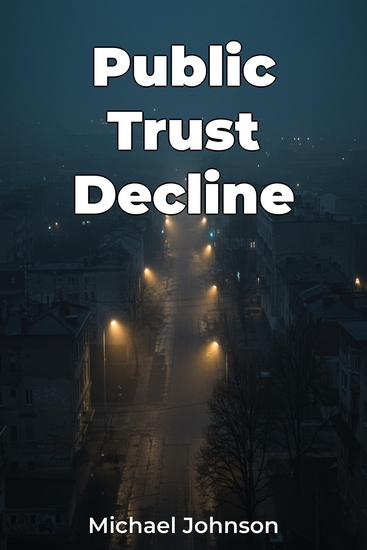
Public Trust Decline - cover

Public Trust Decline

Michael A Johnson

Translator A ai

Publisher: Publifye

  • 0
  • 0
  • 0

Summary

Public Trust Decline examines the widespread erosion of confidence in institutions like government and media, a crucial issue as societal health depends on trust. The book uniquely offers a comparative analysis across different countries, revealing that declining public trust isn't a singular issue but a complex mix of perceived corruption, lack of transparency, and a disconnect between citizens and those in power. Intriguingly, the rise of social media and economic inequality significantly contribute to this decline, fueling political polarization and hindering effective governance. 

 
The book adopts an analytical and objective approach, drawing from diverse sources like public opinion surveys and case studies. Initially, it establishes a historical context, then analyzes survey data to compare trends across various institutions. Subsequent chapters explore specific factors like the role of media, political polarization, and economic inequality. 

 
The final chapters propose actionable solutions, emphasizing transparency, accountability, and ethical leadership to restore faith in institutions, aiming to inform policymakers, journalists, and engaged citizens.
Available since: 02/21/2025.
Print length: 85 pages.
Other books that might interest you

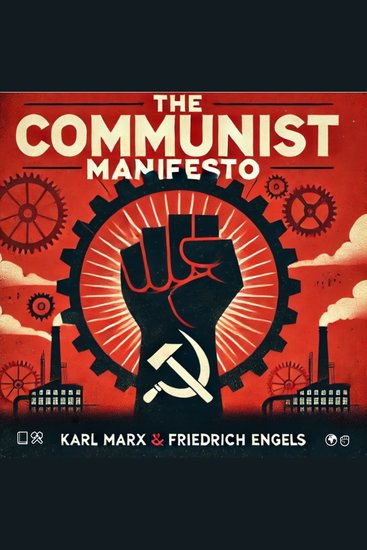
  • Communist Manifesto The: 1888 Translated Edition (The Political Classic of Karl Marx And Friedrich Engels) - cover

    Communist Manifesto The: 1888...

    Karl Marx, Friedrich Engels

    • 0
    • 0
    • 0
    Experience one of history’s most influential political texts in its definitive English edition. 
    This audiobook presents the authorized 1888 English translation of The Communist Manifesto, rendered by Samuel Moore and personally approved by Friedrich Engels. Originally published in 1848 during a time of revolutionary upheaval across Europe, The Communist Manifesto (Manifesto of the Communist Party) was written by German philosophers Karl Marx and Friedrich Engels for the Communist League. 
    A cornerstone of modern political thought, this powerful work offers a compelling analysis of class struggle, economic systems, and the inevitable conflicts arising under capitalism. Rather than offering utopian speculation, Marx and Engels dissect the mechanisms of capitalist production and explain the material conditions that, they argue, will give rise to socialism and ultimately communism. 
    With its famous declaration that “The history of all hitherto existing society is the history of class struggles,” this manifesto has echoed through generations—shaping ideologies, inspiring movements, and fueling debates across the globe. 
    Whether you're a student of history, politics, or philosophy—or simply curious about the roots of revolutionary theory—this essential classic continues to challenge, provoke, and inform.
    Show book
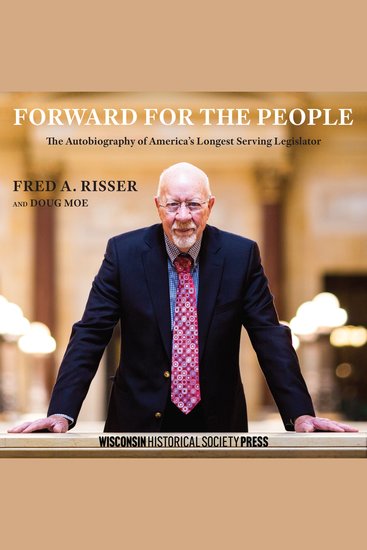
  • Forward for the People - The Autobiography of America’s Longest Serving Legislator - cover

    Forward for the People - The...

    Fred A. Risser, Doug Moe

    • 0
    • 0
    • 0
    When Fred Risser retired from the Wisconsin Senate in 2021, his sixty-four years in state government made him the longest serving legislator in US history. Now, in this candid and illuminating autobiography, Risser shares his singular perspective on events that transformed the state and the nation over the course of his remarkable career. From his role in the “Joe Must Go” drive to recall US Senator Joseph McCarthy in the 1950s to his position as the senior senator among the “Fab Fourteen” Wisconsin Democrats who opposed Governor Scott Walker’s Act 10 legislation against collective bargaining in 2011, Risser was a leader in state politics for decades, always maintaining an unwavering belief that political action can change people’s lives for the better.  
     
    Risser worked with thirteen governors and authored more than 240 bills that became law, championing public health and safety, environmental protection, women’s and reproductive rights, organized labor, civil rights, and social justice, among many other causes. Risser also recounts interactions with prominent national politicians, including Robert La Follette Jr., Hubert Humphrey, Jimmy Carter, and Bill Clinton. 
     
    Forward for the People details Risser’s experiences out of state, from a stint in the Panama Canal Zone as a navy hospital corpsman to his undergraduate debate-team days at Minnesota’s Carleton College to his years studying law at the University of Oregon and his travels to all seven continents. The book also depicts the quirky habits that made Risser a memorable and beloved politician: biking his age in miles every birthday and never taking the elevator in his sixty-four years at the Wisconsin State Capitol. Enhanced with details sourced from correspondence, personal notes, newspaper accounts, and recollections from friends and former colleagues, Risser and coauthor Doug Moe have crafted an engaging account of an extraordinary life in public service.
    Show book
  • Our Common Land - cover

    Our Common Land

    Octavia Hill

    • 0
    • 0
    • 0
    Today best remembered as one of the three original founders of the National Trust, Octavia Hill was a pioneering social reformer whose work saw education and housing conditions improved for London's poor, saved Hampstead Heath from the bulldozers, and went towards setting out legislation for public access to green spaces.
    In this short essay, Hill sets out a clear, concise argument for public access to parks, and argues for the rights we now take for granted. Our Common Land is a forgotten part of our cultural history, and demonstrates exactly why the founders of the National Trust thought it was so important to preserve ancient buildings and estates for the public.
    Show book
  • Second Inaugural Address - cover

    Second Inaugural Address

    Ronald Reagan

    • 0
    • 0
    • 0
    Because of extreme cold weather, Chief Justice Warren Burger administered the official oath of office in the White House on January 20, 1985. A public administration of the oath of office and the inaugural address were delayed until January 21, 1985, in the Capitol Rotunda.  
    On the 50th inauguration since George Washington’s, Reagan marvels at America’s growth and inventions, including journeying to the moon and back. “There are no limits to growth and human progress when men and women are free to follow their dreams.” Our values of faith, family, work, and neighborhood were restored “when our economy was finally freed from government’s grip”.  
    America supports "individual liberty, self-government, and free enterprise throughout the world…” We deal best with great challenges when we come “together not as Democrats or Republicans, but as Americans united in a common cause.”  
    “We must never again abuse the trust of working men and women by sending their earnings on a futile chase after the spiraling demands of a bloated Federal Establishment.” “Freedom and incentives unleash the drive and entrepreneurial genius that are the core of human progress.” 
    “We must act now to protect future generations from government's desire to spend its citizens' money and tax them into servitude when the bills come due.” Though “our heritage is one of blood lines from every corner of the Earth, we are all Americans, pledged to carry on this last, best hope of man on Earth.” 
    Rather than relying on mutual assured destruction, we need “a security shield that will destroy nuclear missiles before they reach their target” and “render nuclear weapons obsolete.”  
    We are “one people under God, dedicated to the dream of freedom that He has placed in the human heart, called upon now to pass that dream on to a waiting and hopeful world.” 
    Audio recording courtesy of the Ronald Reagan Presidential Library. 
    AspenLeafMedia.com
    Show book
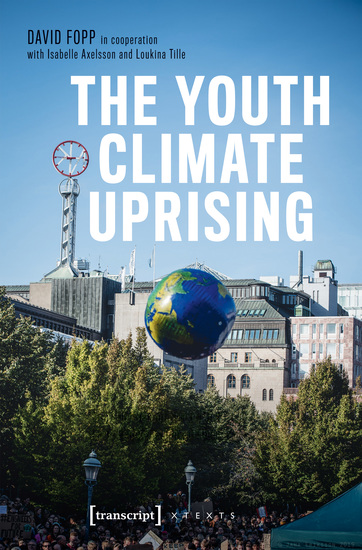
  • The Youth Climate Uprising - From the School Strike Movement to an Ecophilosophy of Democracy - cover

    The Youth Climate Uprising -...

    David Fopp, Isabelle Axelsson,...

    • 0
    • 0
    • 0
    Species are going extinct, forests are burning, and children are worried about the future and their peers worldwide. But that is not the whole story: One Friday in 2018, a few young people joined Greta Thunberg to protest, and the global climate strike movement was born. Scientist David Fopp spent 250 Fridays with the newly formed grassroots movements. Together with activists Isabelle Axelsson and Loukina Tille, he offers an insider perspective on how scientists and activists can fight for a just and sustainable global society. The volume also offers both an introduction to ecophilosophy and a unified science of democracy in times of interdependent crises. How can research in all disciplines - from (drama) education and economics to psychology - help with this struggle? And how can we all fight the climate crisis by transforming and deepening democracy?
    Show book
  • How to Steal a Presidential Election - cover

    How to Steal a Presidential...

    Lawrence Lessig, Matthew Seligman

    • 0
    • 0
    • 0
    From two distinguished experts on election law, an alarming look at how the American presidency could be stolen—by entirely legal means 
     
    Even in the fast and loose world of the Trump White House, the idea that a couple thousand disorganized protestors storming the U.S. Capitol might actually prevent a presidential succession was farfetched. Yet perfectly legal ways of overturning election results actually do exist, and they would allow a political party to install its own candidate in place of the true winner. 
     
    Lawrence Lessig and Matthew Seligman work through every option available for subverting a presumptively legitimate result—from vice-presidential intervention to election decertification and beyond. While many strategies would never pass constitutional muster, Lessig and Seligman explain how some might. They expose correctable weaknesses in the system, including one that could be corrected only by the Supreme Court. 
     
    Any strategy aimed at hacking a presidential election is a threat to democracy. This book is a clarion call to shore up the insecure system for electing the president before American democracy is forever compromised. 
     
    Lawrence Lessig is the Roy L. Furman Professor of Law and Leadership at Harvard Law School. Matthew Seligman is a fellow at the Constitutional Law Center at Stanford Law School and a partner at Stris & Maher LLP.
    Show book