Join us on a literary world trip!
Add this book to bookshelf
Grey
Write a new comment Default profile 50px
Grey
Subscribe to read the full book or read the first pages for free!
All characters reduced
Photography Censorship - cover

Photography Censorship

Mia Collins

Translator A AI

Publisher: Publifye

  • 0
  • 0
  • 0

Summary

Photography Censorship explores the multifaceted issue of image control and its impact on visual culture, freedom of expression, and historical accuracy. It examines why certain photographs are suppressed, altered, or restricted, highlighting the underlying motivations that range from overt political suppression to subtle ideological control. The book reveals how controlling images equates to controlling narratives and shaping public opinion.

 
The book delves into the methods of photographic censorship, including destruction, manipulation, and restricted access, while also exploring the evolution of censorship alongside technological advancements and political shifts. Case studies, ranging from Soviet-era image manipulation to contemporary digital manipulation and algorithmic filtering, illustrate how image control undermines democratic principles.

 
The book uniquely combines historical analysis with contemporary examples, focusing on both state-sponsored and non-state actors engaged in photography censorship. The book begins by introducing the core concepts of photography and censorship, then progresses through historical precedents, contemporary methods, and the impact on historical narratives and individual rights. It concludes with strategies for combating censorship and promoting transparency. By understanding these mechanisms, individuals can become more critical consumers of visual information.
Available since: 02/26/2025.
Print length: 82 pages.

Other books that might interest you

  • Nazi Germany’s Conquest of Western Europe: The Negotiations and Campaigns that Let Hitler Conquer the Continent Before and During World War II - cover

    Nazi Germany’s Conquest of...

    Editors Charles River

    • 0
    • 0
    • 0
    Europe’s attempts to appease Hitler, most notably at Munich in 1938, failed, as Nazi Germany swallowed up Austria and Czechoslovakia by 1939. Italy was on the march as well, invading Albania in April of 1939. The straw that broke the camel's back, however, was Germany's invasion of Poland on September 1 of that year. Two days later, France and Great Britain declared war on Germany, and World War II had begun in earnest. 
    Of course, as most people now know, the invasion of Poland was merely the preface to the Nazi blitzkrieg of most of Western Europe, which would include Denmark, Belgium, and France by the summer of 1940. The resistance put up by these countries is often portrayed as weak, and the narrative is that the British stood alone in 1940 against the Nazi onslaught, defending the British Isles during the Battle of Britain and preventing a potential German invasion. 
    In particular, the campaign in Poland is remembered as one in which an antiquated Polish army was quickly pummeled by the world’s most modern army. Polish lancers charging in a valiant yet idiotic attack against German tanks is the only image from the 1939 Nazi-Soviet invasion of Poland remaining in the popular imagination today. Originating as a piece of Nazi propaganda, paradoxically adopted by the Poles as a patriotic myth, the fictional charge obscures the actual events of September 1939. Outnumbered, outgunned, and under-equipped, the Polish army nevertheless inflicted heavy losses on the invading Wehrmacht. In fact, only the unexpected advance of Soviet forces from the east put a quick end to the struggle and saw the Polish republic partitioned again after just 20 years of independence. Nonetheless, the campaign that started World War II was a bloody sign of things to come as the conflict engulfed the globe.
    Show book
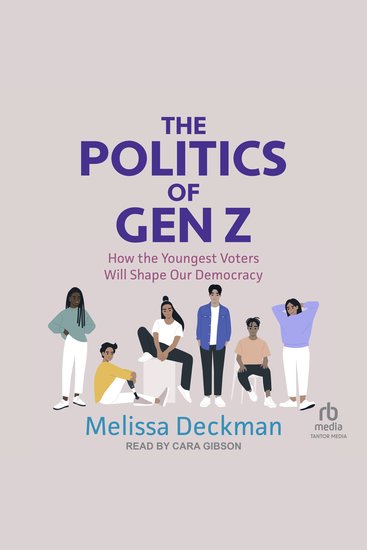
  • The Politics of Gen Z - How the Youngest Voters Will Shape Our Democracy - cover

    The Politics of Gen Z - How the...

    Melissa Deckman

    • 0
    • 0
    • 0
    Progressive activism today is increasingly spearheaded by the nation's youngest voters. Gen Z—those born between 1997 and 2012—has come of age in a decade of upheavals. They have witnessed the election of Donald Trump, the murder of George Floyd, and the Dobbs Supreme Court decision, and they have lived under the constant threats of mass shootings and climate change. In response, left-leaning Zoomers, particularly women and LGBTQ people, have banded together to take action. 


    This book tells the story of Gen Z's growing political participation—and why it is poised to drive U.S. politics leftward. Bringing together original data and compelling narrative—including nearly one hundred interviews with Gen Z activists and several national surveys—political scientist Melissa Deckman explores the world of youth-led progressive organizing, highlighting the crucial importance of gender and sexuality. She reveals why women and LGBTQ Zoomers are participating in politics at higher levels than their straight male peers, creating a historic "reverse gender gap." Deckman takes listeners inside Gen Z's fight for a more inclusive and just future, sharing stories of their efforts to defend reproductive rights, prevent gun violence, stem climate change, and win political office.
    Show book
  • Stan and Cecylia: A Plateful of Memories - cover

    Stan and Cecylia: A Plateful of...

    Sheila Hall

    • 0
    • 0
    • 0
    Stanislaus and Cecylia Witkowski were born and grew up in Poland in the early twenties, at a time of relative peace in that troubled country's history. They met, fell in love, and planned to spend the rest of their lives together. Fate stepped in when Poland was invaded by both Germany and Russia in September, 1939. Like so many, the young lovers were parted and the course of their lives changed forever. 
    True love sees hope in the bleakest of situations, recognises no boundaries and surmounts the insurmountable. Stan and Cecylia's story is played out against the background of the events of the war in Europe and, later, in Australia, as immigrants with no knowledge of the language nor the customs of their adopted country. Despite extreme difficulties and sometimes seemingly impossible odds, Stan and Cecylia remained firm in their resolve to stay together.
    Show book
  • Summary of Atomic Habits by James Clear - An Easy & Proven Way to Build Good Habits & Break Bad Ones - cover

    Summary of Atomic Habits by...

    Francis Thomas

    • 0
    • 0
    • 0
    A Complete Summary of Atomic Habits 
    Hired as the performance director of professional cycling for England in 2003, Dave Brailsford had his work cut out for him. For the previous century, British cyclists performed terribly, winning only one gold medal and never winning the Tour de France.Brailsford had a plan to turn around British cycling. He called his strategy ‚ the aggregation of marginal gains. This involves deconstructing every aspect of riding a bike, and then consistently improving each aspect by 1%. Over time, these small changes compound into incredible performance outcomes. Brailsford implemented hundreds of small improvements, both obvious (e.g. equipping better bike seats) and non-obvious (finding the best pillow and mattress so the cyclists had optimal sleep). The results were extreme. British cyclists won 66 Olympic/Paralympic gold medals, 5 Tour de France races, and set numerous world records in the decade after Brailsford began.The image to the right shows the results of both improving and regressing by 1% every day. Over the course of a week the changes are small, but over the course of a year the changes are massive.Over a short period of time, the effects of compounding are barely noticeable. But over longer periods of time, compounding will generate very powerful outcomes. 
    Here Is A Preview Of What You Will Get: In Atomic Habits , you will get a full understanding of the book. In Atomic Habits , you will get an analysis of the book. In Atomic Habits , you will get some fun multiple choice quizzes, along with answers to help you learn about the book. Get a copy, and learn everything about Atomic Habits .
    Show book
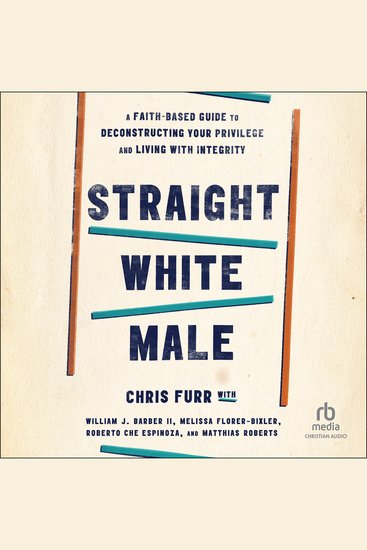
  • Straight White Male - A Faith-Based Guide to Deconstructing Your Privilege and Living with Integrity - cover

    Straight White Male - A...

    Chris Furr, William J Barber II,...

    • 0
    • 0
    • 0
    As the cultural conversation around race, gender, and sexuality has evolved, straight, white men are becoming increasingly aware of their privilege. But many may be left thinking, "OK, what am I supposed to do about it?" "We need a way forward beyond feelings of guilt, overwhelmingness, anger, and denial." "We are looking for transformative guidance that helps us be the good guys we want to be." 


    Straight, white, male pastor Chris Furr offers a guide to deconstructing that privilege in Straight White Male. With an emphasis on confession and redemption, Furr invites other privileged men to reconsider the ways they live, work, believe, and interact with others. Alongside Furr's perspective, essays from contributing writers who lack various types of privilege—straight, Black man William J. Barber II, straight, white woman Melissa Florer-Bixler, queer, nonbinary latinx Robyn Henderson-Espinoza, and gay, white man Matthias Roberts—offer insights on how particular types and combinations of privilege (and the lack thereof) shape the way we move through the world. Their combined voices offer much-needed perspective through this deconstruction and provide a vision for how straight, white men can do better for ourselves, our families, and society.
    Show book
  • Faithful Antiracism - Moving Past Talk to Systemic Change - cover

    Faithful Antiracism - Moving...

    Christina Edmondson, Chad Brennan

    • 0
    • 0
    • 0
    It's time to move past talk. 


    It's no longer news to most of us that our society has a deep-seated racism problem. Christians of all ethnic and economic backgrounds are tired of seeing the ugly legacy of racism play out before their eyes and feeling ill-equipped to respond. They watch as friends and family members leave the visible church over this issue, or fall prey to a gospel of White nationalism that is an affront to the cross of Christ. Racism presents itself as an undefeatable foe—a sustained scourge on the reputation of the church. 


    In Faithful Antiracism, Christina Barland Edmondson and Chad Brennan take confidence from the truth that Christ has overcome the world, including racism, and offer clear analysis and interventions to challenge and resist its pernicious power. Drawing on brand-new research from the landmark Race, Religion, and Justice Project led by Michael Emerson and others, this book represents the most comprehensive study on Christians and race since Emerson's own book Divided by Faith (2001). It invites listeners to put this data to immediate practical use, applying it to their own specific context. Compelled by our grievous social moment and by the timeless truth of Scripture, Faithful Antiracism will equip listeners to move past talk and enter the fight against racism in both practical and hopeful ways.
    Show book