Join us on a literary world trip!
Add this book to bookshelf
Grey
Write a new comment Default profile 50px
Grey
Subscribe to read the full book or read the first pages for free!
All characters reduced
Milk Fed - cover

Sorry, the publisher does not allow users to read this book from the country from which you are connecting.

Milk Fed

Melissa Broder

Publisher: Bloomsbury Publishing

  • 0
  • 1
  • 0

Summary

A scathingly funny, wildly erotic and fiercely imaginative story about food, sex and god from the Women's Prize longlisted author of The Pisces  
 
A STYLIST, INDEPENDENT, THE WEEK AND RED HIGHLIGHT FOR 2021  
 
'Sexy and fun and a little weird ... This riot of carnal pleasure will make you laugh as well as gasp' The Times 
 
'A revelation ... Melissa Broder has produced one of the strangest and sexiest novels of the new year ... Exhilarating' Entertainment Weekly 
 
'A luscious, heartbreaking story of self-discovery through the relentless pursuit of desire. I couldn't get enough of this devastating and extremely sexy book' Carmen Maria Machado, author of Her Body and Other Parties 
 
Rachel is twenty-four, a lapsed Jew who has made calorie restriction her religion. By day, she maintains an illusion of control by way of obsessive food rituals. At night, she pedals nowhere on the elliptical machine.  
 
Then Rachel meets Miriam, a young Orthodox Jewish woman intent upon feeding her. Rachel is suddenly and powerfully entranced by Miriam – by her sundaes and her body, her faith and her family – and as the two grow closer, Rachel embarks on a journey marked by mirrors, mysticism, mothers, milk, and honey. 
 
Pairing superlative emotional insight with unabashed vivid fantasy, Melissa Broder tells a tale of appetites: of physical hunger, of sexual desire, of spiritual longing. Milk Fed is a tender and riotously funny meditation on love, certitude, and the question of what we are all being fed, from one of our major writers on the psyche – both sacred and profane.
Available since: 03/04/2022.
Print length: 304 pages.

Other books that might interest you

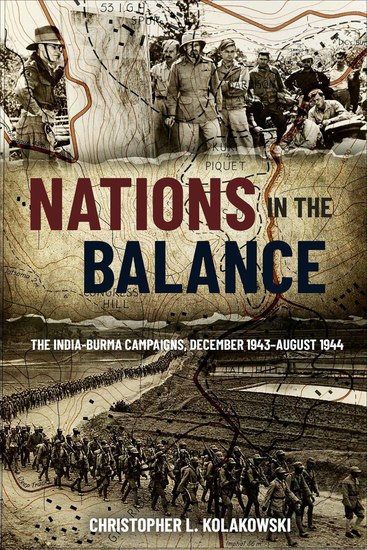
  • Nations in the Balance - The India-Burma Campaigns December 1943–August 1944 - cover

    Nations in the Balance - The...

    Christopher L. Kolakowski

    • 0
    • 0
    • 0
    An account of the decisive WWII battles that helped shape Asia’s future: “Reminds us of the high stakes at risk for both Allies and Axis powers in Burma.” —Military Review   From December 1943 to August 1944, Allied and Japanese forces fought the decisive battles of World War II in Southeast Asia. Fighting centered around North Burma, Imphal, Kohima, and the Arakan, involving troops from all over the world along a battlefront the combined size of Pennsylvania and Ohio. The campaigns brought nations into collision for the highest stakes: British and Indian troops fighting for Empire, the Indo-Japanese forces seeking a prestige victory with an invasion of India and the Americans and Chinese focused on helping China and reopening the Burma Road.   Events turned on the decisions of the principal commanders—Admiral Louis Mountbatten and Generals Joseph Stilwell, William Slim, Orde Wingate, and Mutaguchi Renya, among many others. The impact of the fighting was felt in London, Tokyo, Washington, and other places far away from the battlefront, with effects that presaged postwar political relationships. This was also the first U.S. involvement in Southeast Asia, and Stilwell’s operations in some ways foreshadowed battles in Vietnam two decades later.  Nations in the Balance recounts these battles, offering dramatic and compelling stories of people fighting in difficult conditions against high odds, with far-reaching results. It also shows how they proved important to the postwar future of the participant nations and Asia as a whole, with effects that still reverberate decades after the war.
    Show book
  • Confidently You - Discovering the Power Within - cover

    Confidently You - Discovering...

    Fiona Zenith

    • 0
    • 0
    • 0
    "Confidently You: Discovering the Power Within" by Fiona Zenith is your essential companion for cultivating unshakable self-belief. This empowering guide dismantles the myths around confidence, offering actionable strategies to conquer self-doubt, embrace vulnerability, and transform setbacks into stepping stones. Through relatable stories, research-backed insights, and practical exercises—from daily affirmations to mindful body language—you’ll learn to silence your inner critic and build resilience. 
    Whether navigating career shifts, personal transitions, or seeking to thrive in a fast-paced world, this audiobook equips you with tools to reframe challenges, foster authentic connections, and sustain confidence for life. Perfect for young professionals and anyone ready to rewrite their narrative, Confidently You invites you to unlock your potential and step boldly into a future defined by courage, growth, and unwavering self-assurance. 
    Your journey to becoming your most empowered self begins now.
    Show book
  • Securitising Decolonisation - The Silencing of Ewe and Togoland Unification under United Nations Trusteeship 1945-1960 - cover

    Securitising Decolonisation -...

    Julius Heise

    • 0
    • 0
    • 0
    With the right to petition the United Nations, the Ewe and Togoland unification movement enjoyed a privilege unmatched by other dependent peoples. Using language conveying insecurity, the movement seized the international spotlight, ensuring that the topic of unification dominated the UN Trusteeship System for over a decade. Yet, its vociferous securitisations fell silent due to colonial distortion, leaving unification unfulfilled, thus allowing the seeds of secessionist conflict to grow. At the intersection of postcolonial theory and security studies, Julius Heise presents a theory-driven history of Togoland's path to independence, offering a crucial lesson for international statebuilding efforts.
    Show book
  • Trash - A Poor White Journey - cover

    Trash - A Poor White Journey

    Cedar Monroe, Liz Theoharis

    • 0
    • 0
    • 0
    Every day across the US, 66 million poor white people pay the price for failing whiteness. In this sweeping debut, activist and chaplain Cedar Monroe writes indelibly about and for poor white people: about unlearning the American dream, untangling from white supremacy, and working for liberation alongside other poor folks. 


    Monroe introduces us to people who are poor and unhoused in a small town in Washington, who eke out a living on land that once provided timber for the nation. On the banks of the Chehalis River, we meet residents of the largest homeless encampment in the country, who face sweeps and evictions and are targeted by vigilantes before bringing their case to federal court. We watch a community grapple with desperation, government neglect, and its own racism. 


    Capitalism and colonialism have stolen land from Indigenous people, forced workers into dangerous jobs, and then left them to die when their labor was no longer needed. But what would happen if poor white folks rejected the empty promises of white supremacy and embraced solidarity with other poor people? What if they joined the resistance to the system that is, slowly or quickly, killing us all? Trash asks us to see anew the peril in which poor white people live and the choices we all must make.
    Show book
  • Passion Plays - How Religion Shaped Sports in North America - cover

    Passion Plays - How Religion...

    Randall Balmer

    • 0
    • 0
    • 0
    Randall Balmer was a late convert to sports talk radio, but he quickly became addicted, just like millions of other devoted American sports fans. As a historian of religion, the more he listened, Balmer couldn’t help but wonder how the fervor he heard related to religious practice. Houses of worship once railed against Sabbath-busting sports events, but today most willingly accommodate Super Bowl Sunday. On the other hand, basketball’s inventor, James Naismith, was an ardent follower of Muscular Christianity and believed the game would help develop religious character. But today those religious roots are largely forgotten. 
     
    Here one of our most insightful writers on American religion trains his focus on that other great passion—team sports—to reveal their surprising connections. From baseball to basketball and football to ice hockey, Balmer explores the origins and histories of big-time sports from the late nineteenth century to the present, with entertaining anecdotes and fresh insights into their ties to religious life. Referring to Notre Dame football, the Catholic Sun called its fandom “a kind of sacramental.” Legions of sports fans reading Passion Plays will recognize exactly what that means.
    Show book
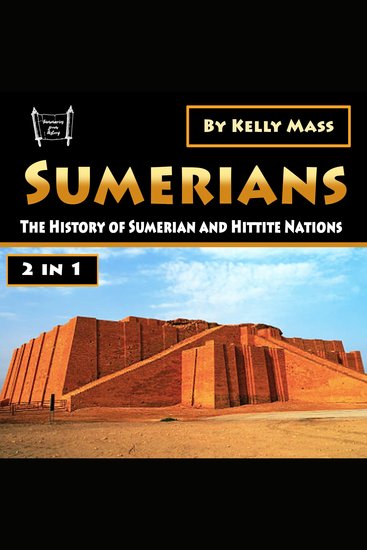
  • Sumerians - The History of Sumerian and Hittite Nations (2 in 1) - cover

    Sumerians - The History of...

    Kelly Mass

    • 0
    • 0
    • 0
    This book contains 2 topics, which are: 
    1 - Sumerians: The Sumerians were the people from Sumer, the first recognized society in the historic area of southern Mesopotamia (now southern Iraq), developed throughout the 6th and 5th centuries BC throughout the Chalcolithic and early Bronze Ages. In addition to age-old Egypt, the Caral-Supe culture, the Indus Valley civilization, the Minoan civilization, and age-old China, it is also one of the world's early civilizations. Sumerian farmers who lived along the Tigris and Euphrates valleys grew a great deal of grain and other items, which allowed them to establish metropolitan towns. Before 3000 BC, there was proto-writing. The earliest files date from between 3500 and 3000 BC and are from the cities of Uruk and Jemdet Nasr. 
    2 - Hittites: The Hittites were mentioned in the Bible. They were an Anatolian people that contributed to creating a kingdom in Kussara before 1750 BC, the Kanesh or Nesha kingdom between 1750 and 1650 BC, and finally an empire based upon Hattusa in north-central Anatolia around 1650 BC. Under uppiluliuma I, the empire reached its peak in the mid-14th century BC, when it ruled over much of Anatolia and areas of the northern Levant and Upper Mesopotamia. 
    Between the 15th and 13th centuries BC, the Hattusa Empire, also called the Hittite Empire, defended control of the Near East with the New Kingdom of Egypt, the Middle Assyrian Empire, and the Mitanni Empire. The Middle Assyrian Empire ultimately emerged as the dominant power, took much of the Hittite Empire, and ransacked the rest by Phrygian newbies to the area. The Hittites separated into numerous self-governing Syro-Hittite countries around c. 1180 BC, at the time of the Late Bronze Age collapse, some of which stayed till the 8th century BC before giving up to the Neo-Assyrian Empire.
    Show book