Join us on a literary world trip!
Add this book to bookshelf
Grey
Write a new comment Default profile 50px
Grey
Subscribe to read the full book or read the first pages for free!
All characters reduced
My Blue Book of Grammar for Class 2 - cover

My Blue Book of Grammar for Class 2

Meigha Rawat

Publisher: Orange Education Pvt Ltd

  • 0
  • 0
  • 0

Summary

A Grammar Series That Uses the Functional Approach

KEY FEATURES 
- Functional approach to grammar teaching, using exemplars to illustrate the usage before defining the structure and rules
- Vocabulary taught through language-in-use to build the learners’ vocabulary through use rather than memorisation of rules
- Contemporary topics to inculcate 21-century skills amongst learners
- Use of literature to help learners understand how grammar is used in text
- A comprehension section comprising texts from different genres so that learners may relate grammar to different types of works produced in English
- Phonics in Grades 1 and 2 to teach the very basis of language
- Uniquely stylised illustrations
- Activities such as puzzles, crosswords, word grids and games to aid the facilitator in using the concept of ‘flipped classroom’
- Periodic tests to help the learners self-assess the acquisition of concepts
- Digital component to cater to a technology-driven classroom

DESCRIPTION: 
My Blue Book of Grammar is a course that has been conceptualized and designed keeping in mind the increasingly dynamic role of the English language in today’s world. Especially in our country, where English serves as the lingua franca, a grammar course has to offer not only an exposition of the pedagogy but also the exhibition of the utility of that pedagogy. The aim of a grammar series should be to encourage the development of competency amongst learners, even though their proficiency levels may vary. While the level of exposure to English of all learners may be different, a grammar series should aid in the development of a certain level of confidence amongst the learners, with the end result being that they are able to converse without hesitation in English. 

WHAT WILL YOU LEARN
- Understand grammar concepts
- Learn how to use different vocabulary concepts taught through language-in-use 
- Learn 21-century skills 
- Develop deeper understanding of and appreciation for literature
- Have clearer pronunciation through a better understanding of phonics

WHO THIS BOOK IS FOR: 
School students of Grades 2

TABLE OF CONTENTS
GRAMMAR
1. Nouns: Common and Proper
2. Possessive Pronouns 
3. Articles 
4. Comma 
5. Present Tense 
6. Comparative Form of Adjectives 
7. Past Tense 
8. Contractions and the Apostrophe 
9. Adverbs Ending with –ly 
10. Conjunction – or 
11. Prepositions of Place 
12. Irregular Plurals 
VOCABULARY
13. Compound Words 
14. Suffixes 
15. Prefixes 
16. Antonyms 
17. Synonyms 
18. Homophones 
Test Paper 1 
WRITING
19. Completing a Dialogue 
20. Be an RJ 
21. Sentence Formation 
22. Activities in the Park 
23. Keeping Your Teeth Healthy 
24. Your Dream in Life 
25. Your Dream Home 
26. Making Sentences Using the Conjunction or 
PHONICS
27. Silent W 
28. Silent K 
29. S Blends – st, sn and sm 
30. Silent B 
31. Soft C Sound 
32. Soft G Sound 
33. The air Sound
34. Silent H 
35. The ie Sound 
Test Paper 2 
Orange Global Olympiad – English Sample Paper
Available since: 04/01/2023.
Other books that might interest you

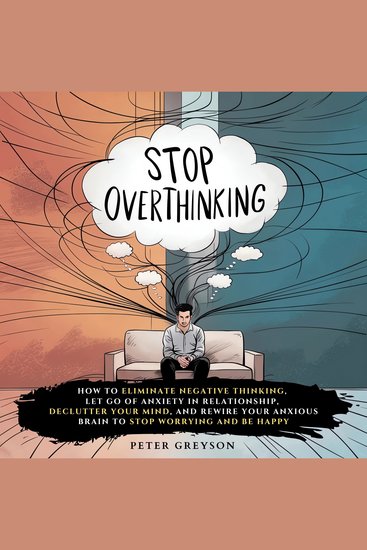
  • Stop Overthinking - How to Eliminate Negative Thinking Let Go of Anxiety in Relationship Declutter Your Mind and Rewire Your Anxious Brain to Stop Worrying and Be Happy - cover

    Stop Overthinking - How to...

    Peter Greyson

    • 0
    • 0
    • 0
    Are you ready to break free from the chains of overthinking and unleash your inner happiness? Dive into "Stop Overthinking” and picture a life where your mind is a serene sanctuary, far from a chaotic battleground of worries. Imagine waking up each day with a sense of calm, and clarity that propels you forward with unstoppable positivity! In this electrifying audiobook, you'll discover the keys to unlock your mind's potential and banish those pesky overthinking habits for good. Say goodbye to sleepless nights and get ready to experience a transformation like never before: eliminate negative thinking, let go of ankiety and declutter your mind. After listening, you'll emerge as a force to be reckoned with—empowered, inspired, and ready to embrace life's challenges with gusto! Say hello to a future filled with Joy and endless possibilities. Are you ready to embark on the journey to freedom from overthinking? Press play and let the transformation begin! Your future self will thank you.
    Show book
  • Pure Wit - The Revolutionary Life of Margaret Cavendish - cover

    Pure Wit - The Revolutionary...

    Francesca Peacock

    • 0
    • 0
    • 0
    A biography of the remarkable, and in her time scandalous, seventeenth-century writer Margaret Cavendish, Duchess of Newcastle. 
     
    'My ambition is not only to be Empress, but Authoress of a whole world' - Margaret Cavendish 
     
    Margaret Cavendish, then Lucas, was born in 1623 to an aristocratic family. In 1644, as England descended into civil war, she joined the court of the formidable Queen Henrietta Maria at Oxford. With the rest of the court she went into self-imposed exile in France. Her family's wealth and lands were forfeited by Parliament. It was in France that she met her much older partner, William Cavendish, Marquess of Newcastle-upon-Tyne, a marriage that would remain at the heart of both her life and career. 
     
    Cavendish was a passionate writer. She wrote extensively on gender, science, philosophy, and published under her own name at a time when women simply did not do so. Her greatest work was The Blazing World, published in 1666, a utopian proto-novel that is thought to be one of the earliest works of science fiction. Yet hers is a legacy that divides opinion. And history has largely forgotten her, an undeserved fate for a brilliant, courageous proto-feminist. 
     
    In Pure Wit, Francesca Peacock shines a spotlight on the fascinating, pioneering, yet often complex and controversial life of Margaret Cavendish.
    Show book
  • Shrink the City - The 15-Minute Urban Experiment and the Cities of the Future - cover

    Shrink the City - The 15-Minute...

    Natalie Whittle

    • 0
    • 0
    • 0
    Cities define the lives of all those who call them home: where we go, how we get there, how we spend our time. But what if we rethink the ways we plan, live in, and move around our cities? What if we didn't need a car to reach the grocery store? What if we could get back the time we would have spent commuting and put it to other uses? 


    In this fascinating, carefully researched and reported book, longtime Financial Times journalist Natalie Whittle investigates the 15-minute city idea—its pros, cons, and its potential to revolutionize modern living. 


    From Paris, Melbourne, and Rotterdam to Charlotte, North Carolina, and Tempe, Arizona, cities worldwide are being guided by the 15-minute city's ideals—with varying results. By looking at these examples, Whittle considers: 


    ● what really happens when a city expands bike lanes and pedestrian areas—and disincentivizes long commutes 


    ● which approaches to building affordable housing are actually effective 


    ● how neighborhoods of varying wealth are affected by 15-minute city policies 


    This timely book serves as a call to reflect on our cities and neighborhoods—and it outfits us with insights on how to make them more sustainable, safe, and welcoming.
    Show book
  • Revolutionary Heroes: Untold Stories of the Patriots - Dive into Revolutionary Heroes' tales! Experience captivating audio bringing untold patriot stories to life - cover

    Revolutionary Heroes: Untold...

    Thaddeus Mercer

    • 0
    • 0
    • 0
    Revolutionary Heroes: Untold Stories of the Patriots 
    ⭐⭐ Simplified Narratives and Detailed Explanations Included ⭐⭐ 
    Are you eager to advance in your understanding of history and explore the remarkable courage that shaped our nation? 
    Searching for an all-encompassing resource that reveals the bravery and determination of our fearless patriots? 
    Your quest ends here! 
    This guide is your ultimate companion for immersing yourself in the chronicles of heroic deeds, applying historic lessons, and engaging in introspective exercises. With this, you're prepared to appreciate the legacy of courage. 
    Updated to reflect a deeper exploration of historic valor. 
    Key features of this enhanced guide: 
    - Profound insights into the stories of unsung Revolutionary Heroes 
    - Detailed explanations of their brave contributions to freedom 
    - Effective strategies for understanding and appreciating revolutionary history 
    Our guide stands apart with its thorough coverage, which is crucial for grasping the essence of these historical figures. Stories are not merely touched upon; they are explored with depth and accuracy. 
    Please note, this guide is an independent resource dedicated to enhancing your understanding of historic courage. 
    Structured with clarity and written in accessible language, our guide ensures smooth transitions from tale to tale. Say farewell to confusing historical jargon and embrace clear, precise, and engaging content. 
    So, why wait? Click the BUY NOW button, secure your guide, and begin your journey to uncovering the hidden courage and valor in our history!
    Show book
  • Empathy - Understanding and Relating to Others' Feelings - cover

    Empathy - Understanding and...

    Esther Jameson

    • 0
    • 0
    • 0
    Empathy is the ability to understand and share the feelings of another person. It is often considered a fundamental aspect of human connection, influencing how we relate to those around us. Whether it's offering a comforting word, understanding someone’s pain, or celebrating another's joy, empathy allows us to build meaningful relationships. It is more than just recognizing another person’s emotions; it involves feeling with them and, when appropriate, offering support. In a world where individuals often experience feelings of isolation or disconnection, empathy is a bridge that can bring people closer. 
    Empathy is not simply an emotional reaction; it is a skill that can be nurtured and developed. It plays a key role in many aspects of life, from personal relationships to professional environments. In fact, research has shown that individuals with a higher level of empathy are often better at problem-solving and conflict resolution. By understanding others' emotions, they are more likely to approach situations with sensitivity and tact, which leads to better outcomes in both personal and professional settings. 
    The science behind empathy is fascinating. Studies in neuroscience have revealed that when we experience empathy, certain areas of our brain light up, particularly the regions involved in emotional processing. This means that empathy is not just a learned behavior, but something deeply ingrained in our biological makeup. It involves both the emotional brain, which processes feelings, and the cognitive brain, which helps us interpret and understand those feelings. This dual process allows us to connect with others in a way that goes beyond intellectual understanding, allowing us to resonate with their experiences on a deeper, more personal level.
    Show book
  • Hume’s Dialogues Concerning Natural Religion - cover

    Hume’s Dialogues Concerning...

    David Hume

    • 0
    • 0
    • 0
    David Hume’s Dialogues Concerning Natural Religion had not yet been published when he died in 1776. Even though the manuscript was mostly written during the 1750s, it did not appear until 1779. The subject itself was too delicate and controversial, and Hume’s dialectical examination of religious knowledge was especially provocative. What should we teach young people about religion?
     
    The characters Demea, Cleanthes, and Philo passionately present and defend three sharply different answers to that question. Demea opens the dialogue with a position derived from Rene; Descartes and Father Malebranche—God’s nature is a mystery, but God’s existence can be proved logically. Cleanthes attacks that view, both because it leads to mysticism and because it attempts the impossible task of trying to establish existence on the basis pure reason, without appeal to sense experience.
     
    As an alternative, he offers a proof of both God’s existence and God’s nature based on the same kind of scientific reasoning established by Copernicus, Galileo, and Newton. Taking a skeptical approach, Philo presents a series of arguments that question any attempt to use reason as a basis for religious faith. He suggests that human beings might be better off without religion.
     
    The dialogue ends without agreement among the characters, justifying Hume’s choice of dialogue as the literary style for this topic.
    Show book