Join us on a literary world trip!
Add this book to bookshelf
Grey
Write a new comment Default profile 50px
Grey
Subscribe to read the full book or read the first pages for free!
All characters reduced
Modular Power Systems - cover

Modular Power Systems

Mei Gates

Translator A AI

Publisher: Publifye

  • 0
  • 0
  • 0

Summary

"Modular Power Systems" tackles the pressing challenge of implementing efficient electrical systems in limited spaces, offering innovative solutions for modern urban environments. This comprehensive guide explores how to maintain safety standards and incorporate renewable energy within spatial constraints, making it particularly valuable for professionals working with installations under 1000 square feet.

 
The book's approach combines technical expertise with practical applications, presenting complex concepts through accessible diagrams, charts, and real-world examples. The text is strategically organized into three main sections, beginning with fundamental principles of compact electrical design and component selection. It then progresses to detailed discussions of renewable energy integration, focusing specifically on small-scale solar panels and battery storage systems. The final section delves into smart circuit management and automation systems, demonstrating how modern technology can optimize power distribution in confined spaces.

 
What sets this book apart is its unique framework for evaluating space-power efficiency ratios and its original methodologies for integrating renewable components in restricted areas. Drawing from extensive technical data and case studies from urban development projects, it provides evidence-based solutions that challenge traditional approaches to electrical infrastructure. The content bridges multiple disciplines, including architecture and urban planning, while maintaining strict adherence to current IEC standards and NEC requirements, making it an invaluable resource for electrical engineers and building designers working with spatial limitations.
Available since: 01/12/2025.
Print length: 141 pages.

Other books that might interest you

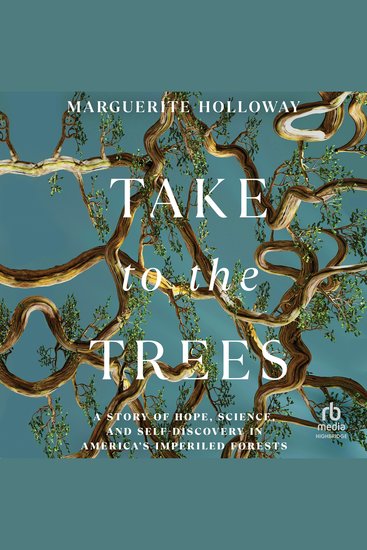
  • Take to the Trees - A Story of Hope Science and Self-Discovery in America's Imperiled Forests - cover

    Take to the Trees - A Story of...

    Marguerite Holloway

    • 0
    • 0
    • 0
    Journalist Marguerite Holloway arrives at the Women's Tree Climbing Workshop as a climbing novice, but with a passion for trees and a deep concern about their future. Run by twin sister tree doctors Bear LeVangie and Melissa LeVangie Ingersoll, the workshop helps people develop impressive technical skills and ascend into the canopy. As Holloway tackles unfamiliar equipment and dizzying heights, she learns about the science of trees and tells the stories of charismatic species, including hemlock, aspen, Atlantic white cedar, oak, and beech. She spotlights experts who are chronicling the great dying that is underway in forests around the world as trees face simultaneous and accelerating threats from drought, heat, floods, disease, and other disruptions. 


    As she climbs, Holloway also comes to understand the profound significance of trees in her relationship with her late mother and brother. The book's rousing final chapter offers something new: a grander environmental and arboreal optimism, in which the story of trees and their resilience meshes with that of people working to steward the forests of the future, and of community found among fellow tree climbers. A lyrical work of memoir and reportage, Take to the Trees sounds the alarm about rapid arboreal decline while also offering hope about how we might care for our forests and ourselves.
    Show book
  • William Stanek's The Living Great Smoky Mountains Biography - Ancient Peaks Living Forests and the People of the Mountains - cover

    William Stanek's The Living...

    The Editors of Our American...

    • 0
    • 0
    • 0
    The Smokies are ancient mountains covered by forests that are never still.
    
    Ridges erode. Streams cut hollows. Trees fall and return. Fire, insects, weather, migration, and human use continually reshape a landscape often romanticized as timeless.
    
    William Stanek's The Living Great Smoky Mountains Biography follows ancient geology, extraordinary forest life, Cherokee continuity, mountain communities, logging, land acquisition, displacement, national-park creation, ecological restoration, wildlife return, and the continuing pressures placed upon America's most familiar Appalachian park.
    
    This is not a story of empty wilderness finally saved.
    
    It is a biography of mountains long inhabited, worked, loved, altered, protected, and remembered-and of forests whose apparent permanence is built from constant renewal.
    Show book
  • Geopolitics Energy Transition Critical Materials 2023 - cover

    Geopolitics Energy Transition...

    International Renewable Energy...

    • 0
    • 0
    • 0
    Geopolitics of the energy transition: Critical materials provides comprehensive insights into the significance of critical materials, examining their associated geopolitical implications and offering recommendations for a sustainable and efficient global energy transition.
    Show book
  • When the City Stopped - Stories from New York's Essential Workers - cover

    When the City Stopped - Stories...

    Robert W. Snyder

    • 0
    • 0
    • 0
    In When the City Stopped, Robert Snyder tells the story of COVID-19 in the words of ordinary New Yorkers, illuminating the fear and uncertainty of life in the early weeks and months, as well as the solidarity that sustained the city. New Yorkers were "alone together," separated by the protective measures of social distancing and the fundamental inequalities of life and work in New York City. Through their personal accounts, we see that while many worked from home, others knowingly exposed themselves to the dangers of the pandemic as they drove buses, ran subways, answered 911 calls, tended to the sick, and made and delivered meals. 


    Snyder builds bridges of knowledge and empathy between those who bore dangerous burdens and those who lived in relative safety. The story is told through the words of health care workers, grocery clerks, transit workers, and community activists who recount their experiences in poems, first-person narratives, and interviews. When the City Stopped preserves for future generations what it was like to be in New York when it was at the center of the pandemic.
    Show book
  • Aliens Are Already Among Us - cover

    Aliens Are Already Among Us

    Martin K Ettington

    • 0
    • 0
    • 0
    The focus of this book is on Aliens having visited or living on this Earth. There is lots of evidence that not only are Aliens on Earth during the present, but have been here for thousands if not millions of years.There are lots of stories and some good evidence that this is all true. Even today there are videos of alien craft, and stories in the news about our government still studying and reporting on Aliens visiting us. •	What is this evidence of Aliens living on the Earth in the past and currently?•	And where do we separate the facts from the fiction? •	What technologies might these Aliens have?•	And how do these beings interact with our civilization?Lots of information is provided here to help better understand who the aliens are, how many types we know of, and how it might be possible for them to stay hidden on the Earth for thousands of years.Hope your find all this information interesting and it provides you with some food for thought.
    Show book
  • The Apothecary's Wife - The Hidden History of Medicine and How it Became a Commodity - cover

    The Apothecary's Wife - The...

    Karen Bloom Gevirtz

    • 0
    • 0
    • 0
    The running joke in Europe for centuries was that anyone in a hurry to die should call the doctor. As far back as ancient Greece, physicians were notorious for administering painful and often fatal treatments—and charging for the privilege. For the most effective treatment, the ill and injured went to the women in their lives. This system lasted hundreds of years. It was gone in less than a century. 


    Contrary to the familiar story, medication did not improve during the Scientific Revolution. Yet somehow, between 1650 and 1740, the domestic female and the physician switched places in the cultural consciousness: she became the ineffective, potentially dangerous quack, he the knowledgeable, trustworthy expert. The professionals normalized the idea of paying them for what people already got at home without charge, laying the foundation for Big Pharma and today's global for-profit medication system. A revelatory history of medicine, The Apothecary's Wife challenges the myths of the triumph of science and instead uncovers the fascinating truth. Drawing on a vast body of archival material, Karen Bloom Gevirtz depicts the extraordinary cast of characters who brought about this transformation. She also explores domestic medicine's values in responses to modern health crises, such as the eradication of smallpox, and what benefits we can learn from these events.
    Show book