Join us on a literary world trip!
Add this book to bookshelf
Grey
Write a new comment Default profile 50px
Grey
Subscribe to read the full book or read the first pages for free!
All characters reduced
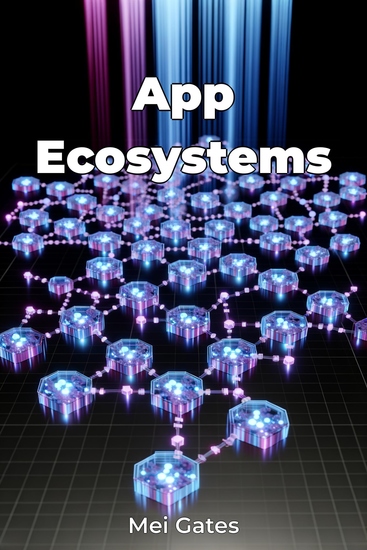
App Ecosystems - cover

App Ecosystems

Mei Gates

Publisher: Publifye

  • 0
  • 0
  • 0

Summary

"App Ecosystems" offers a comprehensive exploration of how mobile application marketplaces have revolutionized the digital economy since the 2008 launch of the Apple App Store. The book illuminates the transformation of app marketplaces from simple software distribution platforms into sophisticated economic systems that influence billions of users' daily technological interactions.

 
Through a carefully structured analysis, the book examines three fundamental aspects: - the technical evolution of app marketplaces- their impact on software development practices- the complex power dynamics between platforms, developers, and consumers.

 
Notable insights include how revenue-sharing models and platform governance have created new forms of digital dependency, and how these ecosystems have fundamentally altered traditional software development methodologies. The author draws on marketplace performance data, developer surveys, and direct interviews to build a compelling narrative about the far-reaching implications of these digital marketplaces.

 
The book progresses logically from technical architecture analysis to economic models and their broader societal impact, making it particularly valuable for technology professionals and business strategists. What sets this work apart is its multifaceted approach, combining technical analysis with economic insights while remaining accessible to readers with basic technical knowledge.

 
The author addresses current market conditions while exploring emerging trends in augmented reality and AI integration, providing practical guidance for professionals navigating the complex landscape of app marketplace ecosystems.
Available since: 01/10/2025.
Print length: 132 pages.


Other books that might interest you

  • Pure Solfeggio Tones - A Music-Free Compilation of 9 Solfeggio Frequencies for Mental Physical & Spiritual alignment Natural Resonant Vibrations for Chakra Balance Transformation & Sound Healing - cover

    Pure Solfeggio Tones - A...

    Jonas Reed

    • 0
    • 0
    • 0
    Discover the timeless power of sound with Pure Solfeggio: The 9 Healing Frequencies, Uninterrupted—a clean, minimalist audio collection featuring the complete set of Solfeggio tones presented without background music or ambient noise. Each track delivers a single, precisely tuned frequency designed to resonate with the body’s energy centers, support emotional balance, and enhance inner harmony. 
    Used for centuries in spiritual and healing traditions, the Solfeggio frequencies are believed to align the mind and body through vibrational resonance. From 396 Hz for releasing fear and guilt to 963 Hz for activating higher consciousness, this collection offers each tone in its purest form—free from musical distractions—so you can fully absorb the energetic and meditative benefits. 
    Included Frequencies and Their Intended Benefits:396 Hz – Releases fear, guilt, and negative emotions417 Hz – Supports change, clears negativity, and removes emotional blockages528 Hz – Known as the "Love Frequency"; promotes healing, transformation, and DNA repair639 Hz – Enhances connection, relationships, and emotional communication741 Hz – Encourages self-expression, intuition, and detoxification852 Hz – Awakens inner strength, spiritual awareness, and clarity963 Hz – Connects to higher consciousness and universal wisdom174 Hz – Provides physical pain relief and a sense of security285 Hz – Accelerates tissue healing and supports energetic restructuring 
    Whether you're meditating, balancing chakras, engaging in sound therapy, or simply seeking mental clarity, this no-frills sound experience is designed to help you realign, recharge, and restore. 
    No music. No mantras. All Alignment.
    Show book
  • The History of Life - A Very Short Introduction 2nd Edition - cover

    The History of Life - A Very...

    Michael J. Benton

    • 0
    • 0
    • 0
    There are few stories more remarkable than the evolution of life on earth. Where did humans come from? Where did life come from? New fields of study, such as molecular biology and astrobiology, are shedding remarkable new light on the origin of life and the origin of sex.In this Very Short Introduction Michael J. Benton covers all the main fossil groups, including dinosaurs, and the upheavals such as mass extinctions that have beset our planet and life on Earth. Benton highlights the key episodes in the evolution of life from its origin over some four billion years, to the ten million or more species today. The book ends with a consideration of humans themselves, with our ability to modify the Earth in ways that no other species has ever done, and the consequences of that power.
    Show book
  • Sustainability of Coatings - cover

    Sustainability of Coatings

    Anonymous

    • 0
    • 0
    • 0
    The Mission
    This book explores how coatings contribute to global sustainability goals, going beyond performance optimisation to include life cycle assessment, emission categorisation, and the principles of circular economy. By linking chemical formulation, process engineering, and environmental responsibility, the book aims to redefine the role of coatings as active contributors to climate protection rather than passive materials of consumption.
    The Audience
    As a guide serves "Sustainability of Coatings" for formulation chemists, process engineers, R&D specialists, and decision-makers responsible for environmental strategies. Whether from academia or industry, readers will find both conceptual frameworks and practical methodologies for quantifying, comparing, and improving the ecological performance of coating systems – from raw material selection to end-of-life considerations.
    The Value
    Offering a holistic view of the coatings life cycle, the book bridges scientific knowledge and industrial practice. It empowers readers to apply life cycle analysis, understand emission scopes, and design coatings with lower carbon footprints while maintaining functional and aesthetic quality. Through detailed discussions on various coating types – solvent-based, water-borne, powder, and radiation-curable – it delivers actionable insights into how sustainability can align with efficiency and innovation.
    Teasertext:
    Sustainability is becoming a defining principle in coating technology. Sustainability of Coatings provides a clear and comprehensive overview of how ecological and carbon footprints shape the future of surface protection and design. From life cycle assessment and emission scopes to practical strategies for sustainable formulation and process optimization, this book connects environmental science with industrial application. A must-read for chemists, engineers, and decision-makers seeking to combine performance, efficiency, and climate responsibility in modern coating systems.
    Show book
  • Borders - A Very Short Introduction (2nd Edition) - cover

    Borders - A Very Short...

    Joshua Hagen, Alexander C. Diener

    • 0
    • 0
    • 0
    First published in 2012, Borders: A Very Short Introduction began with the premise that "we live in a very bordered world." The intervening decade has witnessed a flurry of events and developments that continue to highlight the centrality of borders in contemporary domestic and international affairs, as well as the interstices between the two, including sudden surges in migrant and refugees flows; renewed emphasis on traditional border security and wall construction; growing tensions concerning maritime sovereignty; rapid advances in cybersecurity, surveillance, and biometrics; expanded detention and deportation infrastructures; proliferation of transborder organizations; revived populist and nationalist sentiments; and protectionist and integrationist trade practices, to name some prominent examples from recent headlines. 


    This revised edition accounts for recent developments including Brexit, the 2015 migration crisis across Europe, efforts to build a border wall between the United States and Mexico, growing isolationist and nativist sentiments, demands for indigenous homelands, transnational protest movements, Russian cross-border incursions, and insurgencies and rebellions across much of North Africa and Southwest Asia.
    Show book
  • 7 Seconds to Die - A Military Analysis of the Second Nagorno-Karabakh War and the Future of Warfighting - cover

    7 Seconds to Die - A Military...

    John F. Antal

    • 0
    • 0
    • 0
    A military study of the 2020 war between Armenia and Azerbaijan—the first war in history won primarily by unmanned systems. 
     
    Fought over the course of forty-four days, the Second Nagorno-Karabakh war resulted in a decisive military victory for Azerbaijan. Armenia lost even though they controlled the high ground in a mountainous region that favored traditional defense. In 7 Seconds to Die, military consultant and historian John Antal examines the decisive factors of the war and their implications for the future of armed conflict. 
     
    The fact that Azerbaijan won the war is not extraordinary, considering the correlation of forces arrayed against Armenia. What is exceptional is that this was the first modern war primarily decided by unmanned weapons. The Turkish-made BAYRAKTAR TB2 Unmanned Air Combat Vehicle (UCAV) and the Israeli-made HAROP Loitering Munition (LM) dominated the fighting and provided Azerbaijan with a war-winning advantage.
    Show book
  • Why Ecosystems Matter - Preserving the Key to Our Survival - cover

    Why Ecosystems Matter -...

    Christopher Wills

    • 0
    • 0
    • 0
    Every one of Earth's teeming ecosystems is an evolutionary cauldron 


    Christopher Wills's claim has its roots in an insight from Charles Darwin: the interactions between species in an ecosystem are a powerful driver of evolution. In this book Wills describes how, by using the latest genetic techniques, we are probing ecosystems and discovering that even the most apparently barren of them are rich in variety, especially of microbes. Exploring the many ways in which ecosystems have coped with past change, and how rapidly an ecosystem can develop complexity, Wills illuminates a pathway of hope for the natural world that we have so damaged and depleted. Our new genetic knowledge can help these evolutionary cauldrons to continue brewing richness and diversity, the better to heal our living world and to enable our own survival.
    Show book