Join us on a literary world trip!
Add this book to bookshelf
Grey
Write a new comment Default profile 50px
Grey
Subscribe to read the full book or read the first pages for free!
All characters reduced
Tippoo Sultaun: A tale of the Mysore war - cover

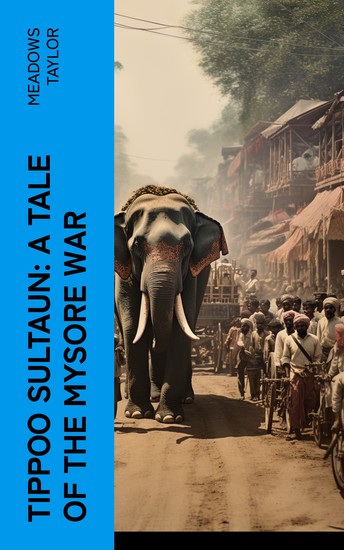
Tippoo Sultaun: A tale of the Mysore war

Meadows Taylor

Publisher: e-artnow

  • 0
  • 0
  • 0

Summary

"Tippoo Sultaun: A tale of the Mysore war" by Meadows Taylor. Published by e-artnow. e-artnow publishes a wide range of titles that encompasses every genre. From well-known classics & literary fiction and non-fiction to forgotten−or yet undiscovered gems−of world literature, we issue the books that need to be read. Each e-artnow edition has been meticulously edited and formatted to boost readability for all e-readers and devices. Our goal is to produce eBooks that are user-friendly and accessible to everyone in a high-quality digital format.
Available since: 11/30/2023.
Print length: 656 pages.

Other books that might interest you

  • The Impact of Technology on Society - Opportunities and Challenges - cover

    The Impact of Technology on...

    Craig Dames

    • 0
    • 0
    • 0
    Technology has been a driving force behind human progress, shaping societies and transforming the way people live, work, and communicate. From the earliest tools created by prehistoric humans to the advanced artificial intelligence of today, technological advancements have continuously redefined the boundaries of possibility. Understanding this evolution provides insight into how innovations have shaped civilization and what the future may hold. 
    The historical development of technology dates back to the invention of simple tools made from stone, wood, and metal. Early human civilizations relied on these tools for survival, gradually advancing to more sophisticated techniques in agriculture, construction, and warfare. The discovery of fire, the wheel, and the development of writing systems marked significant milestones that laid the foundation for future progress. The Industrial Revolution of the 18th and 19th centuries ushered in a period of rapid technological growth, introducing mechanized production, steam power, and transportation systems that reshaped economies and societies. 
    Key innovations have played a crucial role in shaping modern civilization. The invention of electricity revolutionized industries and led to the creation of household appliances, lighting, and communication systems. The 20th century saw remarkable advancements, including the telephone, radio, television, and, eventually, computers. These inventions not only improved the quality of life but also connected people across vast distances, fostering global communication and collaboration. The internet, developed in the late 20th century, became one of the most transformative innovations, changing the way individuals access information, conduct business, and interact socially.
    Show book

  • Blackmail - Using Threats of Revealing Damaging Information - cover

    Blackmail - Using Threats of...

    Cito Harder

    • 0
    • 0
    • 0
    Blackmail is a crime rooted in power, fear, and manipulation. At its core, it relies on the psychological leverage one person holds over another, using threats of exposing damaging information to force compliance. Understanding the psychology of blackmail requires examining both the mindset of the blackmailer and the emotional turmoil experienced by the victim. Unlike outright theft or violence, blackmail is a more insidious form of coercion, exploiting secrets, shame, and social consequences to exert control. 
    The blackmailer operates from a position of perceived dominance. They recognize that their victim has something to lose—be it their reputation, career, relationships, or financial stability. The effectiveness of blackmail depends on the victim’s fear of exposure and their willingness to go to great lengths to avoid it. Many blackmailers justify their actions by believing they are simply taking advantage of an opportunity rather than committing an outright crime. They may rationalize their behavior as a means to an end, whether for financial gain, revenge, or power. Some blackmailers thrive on control, deriving psychological satisfaction from watching their victims squirm under pressure. 
    On the other side, the victim experiences a profound psychological burden. Fear and anxiety consume their thoughts as they weigh the consequences of giving in to the blackmailer’s demands versus resisting them. The secrecy surrounding blackmail can make victims feel trapped and isolated, preventing them from seeking help. Guilt and shame often play a role, especially if the information being used against them is tied to personal failings or socially unacceptable behavior. Even when victims know they are being manipulated, the sheer terror of exposure can push them into compliance, making blackmail an effective tool of coercion.
    Show book
  • Human Animals - cover

    Human Animals

    Frank Hamel

    • 0
    • 0
    • 0
    Frank Hamel's Human Animals (published in 1915) is an infamous and classic treatise on the mythology and the evidence of hybrid humans. This was one of the first popular works on cryptozoology, and a primer for those interested in the many stories and accounts of lycanthropy and other strange evolutionary paradoxes. Covering the Were-wolf Trials of 1521, to bird-women, human serpents and witch familiars, Hamel's research into the mythological, hysterical, historical and the subjective with a scholar's pen. Many religious ceremonies and occult practices are studied, and he helps us to understand how these fantastical creatures have become a part of our culture, from books of fiction, to very serious study. Human Animals is a book that contains records and accounts of traditions dealing with the belief that certain men and women can transform themselves into animals. The causes of transformation are various: contact with a wer-animal, touching what he has touched, wearing an animal skin, rubbing the body with ointment, slipping on a girdle, buckling on a strap, and many other expedients, magical and otherwise, may bring about the metamorphosis.
    Show book
  • Foul Ball - cover

    Foul Ball

    Jim Bouton

    • 0
    • 0
    • 0
    With his trademark wit and distinctive voice, legendary Ball Four author Jim Bouton recounts his battle against local elites' efforts to replace Wahconah Park, one of the oldest parks in the United States, against the wishes and votes of local citizens. But Foul Ball is more than just a lively romp about saving an old ballpark near Bouton's home in Massachusetts. In a detailed diary—his first since Ball Four—Bouton takes us along on his wild ride into the teeth of corporate malfeasance, anti-democratic processes, the tyranny of a one-newspaper town, and the real reason why the good old boys wanted to build a new stadium. For the first time in two decades, enjoy Foul Ball as never before with freshly edited content and a new foreword from Jim Bouton's wife, Paula.c
    Show book
  • The Problem of Democracy - America the Middle East and the Rise and Fall of an Idea - cover

    The Problem of Democracy -...

    Shadi Hamid

    • 0
    • 0
    • 0
    What happens when democracy produces "bad" outcomes? Is democracy good because of its outcomes or despite them? This "democratic dilemma" is one of the most persistent, vexing problems for America abroad, particularly in the Middle East—we want democracy in theory but not necessarily in practice. 


    When Islamist parties rise to power through free elections, the United States has too often been ambivalent or opposed, preferring instead pliable dictators. With this legacy of democratic disrespect in mind, and drawing on new interviews with top American officials, Shadi Hamid explores universal questions of morality, power, and hypocrisy. Why has the United States failed so completely to live up to its own stated ideals in the Arab world? And is it possible for it to change? 


    In The Problem of Democracy, Hamid offers an ambitious reimagining of this ongoing debate and argues for "democratic minimalism" as a path to resolving democratic dilemmas in the Middle East and beyond. In the seemingly eternal tension between democracy and liberalism, recognized by the ancient Greeks and the American founders alike, it may be time to prioritize one over the other, rather than acting as if the two are intertwined when increasingly they are not.
    Show book
  • The Aztecs - The Origin and Growth of the Aztec Empire Montezuma and the Arrival of Cortez - cover

    The Aztecs - The Origin and...

    History Retold

    • 0
    • 0
    • 0
    Do you want to learn more about the history and culture of the Aztecs?  
    Have you ever wanted to know more about the events that shaped this ancient civilization? 
    If so, then this is the book for you! 
    In this comprehensive book, we explore the history of the Aztec people, their beliefs and customs, their advances in science and technology, and the events that led to their downfall. 
    We will take an in-depth look at the Aztec society and its impact on the world. From the construction of their iconic cities to the exploration of their religious beliefs and customs, this book offers an insightful look into the people and events that shaped the Aztec civilization. 
    You’ll learn about their incredible advancements in architecture, astronomy, and mathematics, their art, their trade and commerce, and the day-to-day life of the Aztecs. 
    Don't miss out! Get your copy today and learn the history of one of the world's most powerful empires!
    Show book