Join us on a literary world trip!
Add this book to bookshelf
Grey
Write a new comment Default profile 50px
Grey
Subscribe to read the full book or read the first pages for free!
All characters reduced
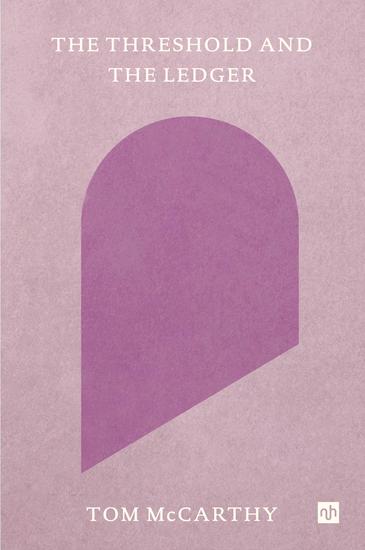
The Threshold and the Ledger - cover

Sorry, the publisher does not allow users to read this book from the country from which you are connecting.

The Threshold and the Ledger

McCarthy Tom

Publisher: Notting Hill Editions

  • 0
  • 0
  • 0

Summary

Since her untimely death in 1973, Ingeborg Bachmann has come to be regarded as one of the twentieth century's most important writers. Unpacking a single Bachmann poem, novelist Tom McCarthy latches onto two of its central terms – the eponymous threshold and ledger – and takes off on a line of flight: through the work of Franz Kafka, David Lynch, Anne Carson, Sappho and Shakespeare.Can writing be understood as an experience of the threshold, a limit- or boundary-state? A condition of ecstasy or ec-stasis, standing outside of oneself? With identity ruptured and surpassed, how – and by whom – might such experience be recorded? Appearing on the eve of Bachmann's centenary, McCarthy's book argues for the centrality of her vision to the very act of literature itself.
Available since: 09/09/2025.
Print length: 80 pages.

Other books that might interest you

  • Rare Recording of Richard Wurmbrand A - Volume 2 - cover

    Rare Recording of Richard...

    Richard Wurmbrand

    • 0
    • 0
    • 0
    Richard Wurmbrand (March 24, 1909 - February 17, 2001) was a Romanian Christian minister of Jewish descent. He was a youth during a time of anti-Semitic activity in Romania, but it was later, after becoming a believer in Jesus Christ as Messiah, and daring to publicly say that Communism and Christianity were not compatible, that he experienced imprisonment and torture for his beliefs. After serving five years of a second prison sentence, he was ransomed for $10,000. After spending time in Norway and England, he and his wife Sabina, who had also been imprisoned, emigrated to America and dedicated the rest of their lives to publicizing and helping Christians who are persecuted for their beliefs. He wrote more than eighteen books, translated into more than 60 languages, the most widely known being "Tortured for Christ." He founded the international organization, Voice Of The Martyrs, which aids Christians around the world who are persecuted for their faith.
    Show book
  • Ratels on the Lomba - The Story of Charlie Squadron - cover

    Ratels on the Lomba - The Story...

    Leopold Scholtz

    • 0
    • 0
    • 0
    “We destroyed a whole enemy brigade (47 Brigade) on the Lomba. History will prove it to be one of the most glorious and successful actions that South African forces ever took part in.” – General Jannie Geldenhuys, as quoted in Cuito Cuanavale 
     
    On 3 October 1987 Charlie Squadron – the iron fist of 61 Mechanised Battalion Group – led the way in a decisive battle on the Lomba River in southern Angola, as part of the South African Defence Force’s Operation Moduler.  
    Although SADF tactical doctrine dictated that the tanks of the Angolan 47 Brigade be countered with tanks, the young conscripts of Charlie Squadron were forced to face their enemy in vastly inferior Ratels, significantly handicapped by the vehicles’ thin armour and low-velocity guns. Not only were they facing a force far superior in terms of weaponry, but they were also hugely outnumbered and had to deal with terrain so dense that their sight was severely impaired and their movement restricted. 
    Through interviews with veterans of the battle and diary entries from the time, Leopold Scholtz recreates the drama of this David vs Goliath battle, taking the reader straight to the heart of the action. A deeply human story, Ratels on the Lomba tells of how individuals react in the face of death, and reveals how the war never left these men, not even when they returned home.
    Show book
  • The Poverty of Philosophy - cover

    The Poverty of Philosophy

    Karl Marx

    • 0
    • 0
    • 0
    Marx started work on this book in January 1847, as can be judged from Engel's letter to Marx on January 15, 1847. By the beginning of April 1847, Marx's work was completed in the main and had gone to the press. On June 15, 1847, he wrote a short foreword. 
     
    Published in Paris and Brussels in 1847, the book was not republished in full during Marx's lifetime. Excerpts from section five of Chapter Two appeared in different years, mostly between 1872 - 1875 in papers such as La Emancipacion, Der Volksstaat, Social-Demokrat, and others. In 1880 Marx attempted to publish the Poverty of Philosophy in the French socialist newspaper L'Égalité, the organ of the French Workers' Party, but only the foreword and section one of Chapter One were published. 
     
    This translation is from the original 1847 French edition. It has been updated to also include the changes/corrections Marx made in the copy of the book he presented to N. Utina in 1876, as well as the corrections made by Frederick Engels in the second French edition and the German editions of 1885 and 1892. The first English edition of this work was published in 1900 by Twentieth Century Press. 
    Show book
  • Ecce Homo - cover

    Ecce Homo

    Friedrich Nietzsche

    • 0
    • 0
    • 0
    Ecce Homo is a philosophical autobiography written by Friedrich Nietzsche towards the end of his life. In this work, Nietzsche reflects on his life, his philosophical views, and his legacy. The title, which means "behold the man" in Latin, is taken from Pontius Pilate's words when he presents Jesus to the crowd before his crucifixion. Nietzsche uses this phrase to present himself as a kind of messiah of a new philosophy, proclaiming the birth of a new era of thought. Ecce Homo is a complex and challenging work that has been interpreted in many different ways. Some readers see it as a celebration of Nietzsche's life and ideas, while others view it as a cautionary tale about the dangers of radical individualism. Regardless of how it is interpreted, however, Ecce Homo remains an important and influential work in the history of philosophy. Read in English, unabridged.
    Show book
  • Story Structure: Step-by-Step | Essential Story Building Story Development and Suspense Writing Tricks Any Writer Can Learn - cover

    Story Structure: Step-by-Step |...

    Sandy Marsh

    • 0
    • 0
    • 0
    Shape Your Story Like a Pro 
    If you have a phenomenal story to tell but find you can’t quite make it flow or form in a natural, yet moving way, Story Structure will transform your approach to writing and make your novel a compelling and addictive read. 
    Crammed full of tricks and tips to help both beginner and advanced authors complete their books in an enticing way. 
    Get Your Acts Together! 
    Each chapter is dedicated to one aspect of story structures, and begins with a 9-Step Process to dividing up your tale; which includes: 
    STEP ONE: The First Act – Introducing characters & what is at stake 
    STEP TWO: The First Major Plot Point – How to leave readers wanting more 
    STEP FIVE: Second Half of the Second Act – The need to support the protagonist 
    STEP SEVEN: Third Act – Protagonist is forced to face the enemy before being readyMarsh uses examples to drive home how developing a strong story structure is important to help maintain focus, enrich plot ideas and provide a bird’s-eye view of whether your novel is working. 
    Tips from Experienced Authors 
    The final chapter gives a look behind-the-scenes at the thinking of real authors and their recommendations regarding whether to adopt traditional structures for your genre or research new ones, how and when to modify a structure template, and the ways to hide structure in your writing. Story Structure is an indispensable guide for serious authors wanting write professionally. 
    Order Now!
    Show book
  • Going Big - FDR’s Legacy Biden’s New Deal and the Struggle to Save Democracy - cover

    Going Big - FDR’s Legacy Biden’s...

    Robert Kuttner, Joseph E. Stiglitz

    • 0
    • 0
    • 0
    Joe Biden has found his way back to Franklin Roosevelt's New Deal. After four decades of diminishing prospects for ordinary people, the public likes what Biden is offering. Yet American democracy is in dire peril as Republicans, increasingly the national minority, try to destroy democracy in order to cling to power. It is the best of times and the worst of times. In Going Big, bestselling author and political journalist Robert Kuttner assesses the promise and peril of this critical juncture. 


    Biden, like FDR in his time, faces multiple challenges. Roosevelt had to make terrible compromises with racist legislators to win enactment of his program. Biden, to achieve the necessary governing coalition, needs to achieve durable multiracial coalitions. Roosevelt had to conquer fascism in Europe; Biden must defeat it at home. And after four decades of neoliberal policy disasters reflecting Wall Street's political influence, Biden needs to go beyond what even FDR achieved, to restore a democratic economy of broad possibility. 


    From a writer with an unparalleled understanding of the history and politics that have made this moment possible, this book is the essential guide to what is at stake for Joe Biden, for America, and for our democracy.
    Show book