Join us on a literary world trip!
Add this book to bookshelf
Grey
Write a new comment Default profile 50px
Grey
Subscribe to read the full book or read the first pages for free!
All characters reduced
Winning Every Argument - cover

Winning Every Argument

Maxwell Chen

Translator A AI

Publisher: Publifye

  • 0
  • 0
  • 0

Summary

"Winning Every Argument" offers a guide to mastering debate, logical reasoning, and persuasive communication. It emphasizes understanding logic and argumentation while developing practical persuasive techniques. The book highlights the importance of structuring thoughts logically and understanding your audience to present ideas effectively. It also touches on how cognitive biases can lead to flawed reasoning.

 
The book begins by exploring the foundations of logic, tracing its historical roots from ancient Greek philosophy to modern applications. It examines logical fallacies and cognitive biases, then focuses on persuasive communication techniques. It offers strategies for constructive debate and conflict resolution, such as active listening and empathy.

 
The approach combines rigorous logical analysis with practical communication techniques. The book’s unique value lies in its combination of logic and persuasive tactics, teaching readers to construct sound arguments and connect with their audience.

 
Through real-world examples and case studies, "Winning Every Argument" empowers readers to persuade, negotiate, and resolve conflicts constructively, ultimately leading to greater success in both personal and professional life.
Available since: 02/13/2025.
Print length: 115 pages.

Other books that might interest you

  • Top 10 Mysteries - cover

    Top 10 Mysteries

    Raphael Terra

    • 0
    • 0
    • 0
    This audiobook has been recorded using Text to speech (TTS). 
     
    Beyond history, beyond memory – the ancient world conceals many mysteries. From ancient Greece, to the remote Pacific Ocean – from holy relics, to Neolithic monuments – much of what was known, what was found, and what was built, is now shrouded in legend and myth. 
     
    We will unravel the secrets of ancient stone circles and monoliths, discover the truth behind the enigmatic Easter Island, the mystery of the death of Alexander the Great, explore the wonder of the Shroud of Turin and the Knights Templar and delve deep into the extraterrestrial files and ancient aliens. 
     
    Together we shall journey far across both time and space to lift this shroud – together we shall discover the top ten mysteries of the ancient world.
    Show book
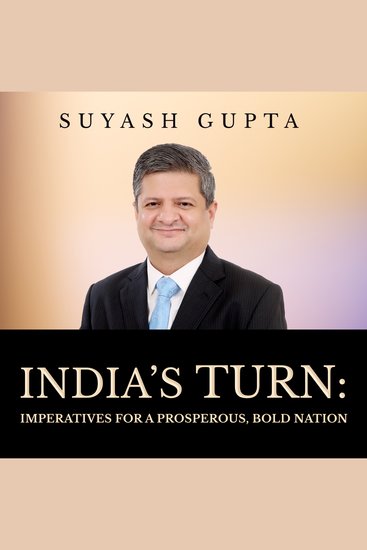
  • India's Turn - cover

    India's Turn

    Suyash Gupta

    • 0
    • 0
    • 0
    The decade has clearly seen India regain its mojo with the nation, well on its way to a $5 trillion economy - almost an obligatory pursuit, for the world’s most populous country – a nation of 1.4 billion aspirations. 
    In "India’s Turn: Imperatives for A Prosperous, Bold Nation”, author Suyash Gupta offers a gripping narrative of India's journey - to claim its rightful place in the global world order. 
    Gupta talks about 31 key contexts as pillars, towards India’s emergence as a global leader. He discusses key impact areas like education, public health, energy security and more. He highlights the necessity of pushing structural reforms across several sectors – with a consistent focus to ensure inclusivity, in each policy decision.  
    From governance to infrastructure, the role of leadership, gender equality, youth potential, push for sustainability, smart cities, social and commercial entrepreneurship, and the promise of research and development, the book covers all. 
    Gupta talks about the role of not just the government, but the citizenry as well, in ‘Nation Building’.  
    This must-read book isn't just about identifying challenges; it’s a call to action. Gupta crisply discusses the musts and underlines the need for a shared, progressive vision and that of a collective effort for a brighter, bolder future of a nation in transformation, for - it indeed is, “India’s Turn”. 
    Show book
  • Treating Stress with Metacognitive Therapy - A Handbook for Therapists - cover

    Treating Stress with...

    Linda Burlan Sørensen

    • 0
    • 0
    • 0
    STRESS HAS BECOME A FACT OF LIFE for far too many people today. Until now, the treatment of stress has mostly focused on behavioral changes, combined with talking about and noticing every thought, feeling, and sensation. But according to the metacognitive approach, this excessive focus on the self is what actually creates the problem. Worrying and ruminating are not simply a symptom of stress, but the causes of stress, preventing stress sufferers from fostering real change. Real change can only occur when the metacognitive management systems underlying behaviour are addressed by focusing not on what, but on how stress sufferers respond to their thinking. The thought is not important, but how they react to it, makes the difference. 
    This book comprises concrete examples of how a course of metacognitive therapy can be planned. The reader is invited into the therapy room to learn: how to apply the exercises of this method; what to remember during the therapy process; and which questions are important to ask the client. Metacognitive therapy is a part of the third wave of cognitive behavioural therapies and has shown promising results for clients with depression and anxiety disorders such as generalized anxiety, social anxiety, PTSD, and OCD. This approach can also be helpful for stress sufferers. First and foremost, the client should learn that their thoughts do not create the problem, but, on the contrary, their response to them does. By applying metacognitive principles, the therapist or practitioner can help the client improve their cognitive management system at the metacognitive level, so that they can choose new and more effective strategies. The client has to reduce their worrying and ruminating before taking action on their actual problem.
    Show book
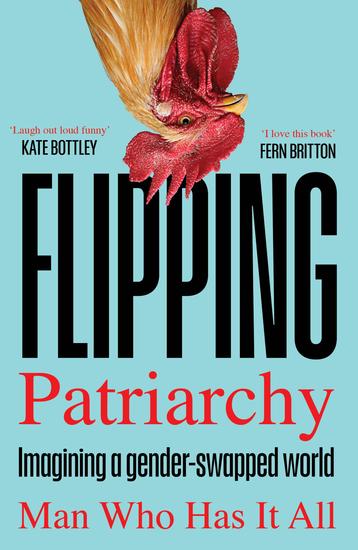
  • Flipping Patriarchy - Imagining a Gender-swapped World - cover

    Flipping Patriarchy - Imagining...

    Man Who Has It All

    • 0
    • 0
    • 0
    'I love this book' Fern Britton
    'Laugh out loud funny' Kate Bottley
    An explosive satire of gender stereotypes that flips patriarchy on its head to highlight sexist double standards.
    Exploring subjects like work and comedy, history and sport, the beauty industry and domesticity, anonymous author Man Who Has It All imagines a world in which men are bombarded with the same stereotypical bullshit as women. What if men's T-shirts were emblazoned with slogans encouraging them to be smiley, positive and kind? What if we laughed at jokes about fathers-in-law, male drivers and middle-class men of a certain age? What if men's history was a niche topic? Behind the jokes about crazy cat gentlemen, testerical men and the twenty-four-hour moustache, lies a deeper, darker message about language, power and control.
    Smart and provocative, Man Who Has It All shines a powerful light on the prejudice ingrained in our society. Told through fictionalised scenarios and wider cultural analysis, this is a feminist handbook that will arm you against the patriarchy.
    'Funny and insightful, but also fiercely radical' Victoria Smith
    'Takes on patriarchy with wit, verve and a mighty dose of good old British sarcasm' Viv Groskop, author of How to Own the Room
    'We need to hide copies in every locker room, Wetherspoons and B&Q' Eleanor Morton, comedian and actor
    'Man Who Has It All does a remarkable job of channelling anger into humour . . . a galvanising read' Rachel Hewitt, author of In Her Nature
    Show book
  • April 1865: The Tumultuous History of the Confederacy’s Last Month - cover

    April 1865: The Tumultuous...

    Editors Charles River

    • 0
    • 0
    • 0
    By the close of 1864, Abraham Lincoln had been reelected, the Union army had taken Nashville from General Hood, and Sherman had concluded his total war, “slash-and-burn” march of destruction to Savannah, Georgia, offering it as a Christmas present to Lincoln. Nevertheless, with everything seemingly falling to pieces, the South still held out hope of some sort of miracle, and Davis even attempted to send a peace delegation to meet with Lincoln in the early months of 1865. On January 28, 1865 as Union General Ulysses S. Grant was continuing to lay siege to Lee’s army at Petersburg, Virginia, Davis sent three commissioners headed by Vice-President Stephens to initiate informal peace talks with Lincoln. By February 3, however, the talks, known as the Hampton Roads Conference, came to a stalemate as Lincoln would accept nothing less than total union, while Davis would only accept Southern independence.  
    	Even at that point, the South was clearly on its last legs. General George H. Thomas destroyed John Bell Hood’s Confederate army at the battles of Nashville and Franklin, leaving only two large Confederate armies still in the field. Lee's army was weakened by desertion, lack of supplies and casualties, and Joseph E. Johnston’s army could barely resist against Sherman’s army as it was advancing north toward Virginia.  
    	To most observers, the South was clearly reaching its end, but Davis had no intention of quitting the war. Even while he was fleeing, he attempted to order Confederate generals in the field to keep fighting. On April 9, 1865, Lee formally surrendered his weary army to Grant at Appomattox. Appomattox is frequently cited as the end of the Civil War, but there still remained several Confederate armies across the country, mostly under the command of General Joseph E. Johnston.
    Show book
  • Utopia - cover

    Utopia

    Thomas More

    • 0
    • 0
    • 0
    Utopia (Libellus vere aureus, nec minus salutaris quam festivus, de optimo rei publicae statu deque nova insula Utopia, "A little, true book, both beneficial and enjoyable, about how things should be in the new island Utopia") is a work of fiction and socio-political satire by Thomas More (1478–1535), written in Latin and published in 1516. The book is a frame narrative primarily depicting a fictional island society and its religious, social, and political customs. Many aspects of More's description of Utopia are reminiscent of life in monasteries.
    Famous works of the author Thomas More: Published during More's life A Merry Jest, Utopia, Latin Poems, Letter to Brixius, Responsio ad Lutherum, A Dialogue Concerning Heresies, Supplication of Souls, Letter Against Frith, The Confutation of Tyndale's Answer, Apology, Debellation of Salem and Bizance, The Answer to a Poisoned Book.
    Show book