Join us on a literary world trip!
Add this book to bookshelf
Grey
Write a new comment Default profile 50px
Grey
Subscribe to read the full book or read the first pages for free!
All characters reduced
Ancient and Modern Initiation - cover

Ancient and Modern Initiation

Max Heindel

Publisher: Delhi Open Book

  • 0
  • 0
  • 0

Summary

Ever since mankind, the prodigal spirit sons of our Father in Heaven, wandered into the wilderness of the world and fed upon the husks of its pleasures, which starve the body, there has been within
Available since: 05/28/2024.
Print length: 99 pages.
Other books that might interest you

  • The Picture of Dorian Gray - cover

    The Picture of Dorian Gray

    Oscar Wilde

    • 0
    • 0
    • 0
    A beautiful young man makes a mysterious bargain that allows his portrait to bear the marks of a life shaped by pleasure and temptation.
    
    Oscar Wilde's The Picture of Dorian Gray follows Dorian Gray, a young man whose extraordinary beauty becomes the focus of fascination and whose desire to remain youthful leads to a mysterious transformation.
    
    As Dorian pursues pleasure and embraces increasingly dangerous influences, his portrait becomes a haunting reflection of the consequences of his choices.
    
    Combining Gothic fiction, philosophical reflection, social satire, and psychological drama, Wilde explores beauty, morality, influence, desire, vanity, and the relationship between outward appearance and inner character.
    
    Enter Wilde's unforgettable world of beauty and temptation and discover a Gothic classic that continues to provoke thought and fascination.
    Show book
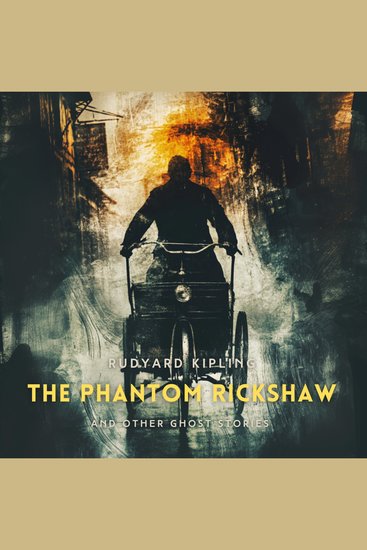
  • The Phantom Rickshaw And Other Ghost Stories - cover

    The Phantom Rickshaw And Other...

    Rudyard Kipling

    • 0
    • 0
    • 0
    Rudyard Kipling’s The Phantom Rickshaw and Other Ghost Stories conjures colonial India’s spectral shadows to expose human vice and imperial hubris. In the titular tale, John Holderness, a British officer, is tormented by the vengeful ghost of Bessie Slane—a woman he abandoned—manifesting as an unstoppable phantom rickshaw, symbolizing guilt and moral rot. Stories like The Strange Ride of Morrowbie Noul trap characters in surreal horrors, while My Own True Ghost Story blends dark humor with existential dread. The Man Who Would Be King critiques imperial ambition through two adventurers’ doomed quest for power. Kipling’s evocative prose merges Gothic terror with sharp social critique, using the supernatural to mirror colonial fragility and the inescapable echoes of sin. This anthology hauntingly reveals how personal and imperial pasts linger as spectral judges of human folly.
    Show book
  • Hadrian the seventh a romance - cover

    Hadrian the seventh a romance

    Frederick William Rolfe

    • 0
    • 0
    • 0
    Hadrian the Seventh: A Romance (sometimes called Hadrian VII) is a 1904 novel by the English novelist Frederick Rolfe, who wrote under the pseudonym "Baron Corvo". Rolfes best-known work, this novel of extreme wish-fulfilment developed out of an article he wrote on the Papal Conclave to elect the successor to Pope Leo XIII. The prologue introduces us to George Arthur Rose (a transparent double for Rolfe himself): a failed candidate for the priesthood denied his vocation by the machinations and bungling of the Roman Catholic ecclesiastical machinery, and now living alone with his yellow cat.
    Show book
  • A Daughter of Albion - cover

    A Daughter of Albion

    Anton Chekhov

    • 0
    • 0
    • 0
    Albion's Daughter is a story by Anton Pavlovich Chekhov. Written in 1883, first published in 1883 in the magazine "Oskolki" No. 33 for August 13, signed by A. Chekhonte. 'A Daughter of Albion' is a short story hitting out at the free-spirited and broad-minded British of the nineteenth century. The word 'Albion' indicates someone belonging to Great Britain or England. In this story penned by Anton Chekhov, one of the greatest short story writers of the nineteenth century, a British governess is ridiculed by her cynical employer, who is infatuated with her. Her married employer is in a sexual relationship with her despite having a wife and children. He loves spending time with this free-spirited and haughty governess who looks down upon the Russian's backwardness. Because of her, he has taken to fishing all day without caring for his job, family, or friends. Chekhov uses subtle and brazen sexual innuendos to bring out the feelings Gryabov, the landowner, has for Fyce, the British governess.
    Show book
  • A Garland of Earth - From their pens to your ears genius in every story - cover

    A Garland of Earth - From their...

    Dorothy Edwards

    • 0
    • 0
    • 0
    Amelia Ann Blanford Edwards was born on 7th June 1831 in Islington, London.  She was educated at home by her mother and showed early promise as a writer, publishing her first poem at the age of 7 and her first story at 12.  Thereafter several popular periodicals published her poetry, stories and articles. 
    In addition she also illustrated some of her own writings and painted scenes from books she had read.  This talent was not supported by her parents, who saw an artist’s life as scandalous.  Undeterred Amelia took up composing and performing music until a bout of typhus caused throat damage.  Other interests soon followed until, early in the 1850s, Amelia focused exclusively on writing.  Her early novels were well received, and with ‘Barbara's History’ in 1864, a work revolving around bigamy, her reputation was established.  
    Amelia’s pen was also the purveyor of ghost stories for magazines and are still anthologized as classic tales to this day. 
    In January 1851, Amelia became engaged, apparently to please her parents, but she quickly broke it off.  In reality her emotional attachments were almost exclusively with women.  From the early 1860s she lived with Ellen Drew Braysher, a widow 27 years her senior, until both women died in early 1892.  During this relationship other women also entered and left her life.  Her frequent travelling companion, Lucy Renshaw, accompanied her to Egypt in the winter of 1873 and there she found a life-changing interest in Egyptology.  Aware of increasing threats from tourism and modern development she became an advocate for their research and preservation.  
    To advance the work Amelia largely abandoned much of her writing in favour of Egyptology and even took on strenuous lecture tours to raise funds. 
    After catching influenza, Amelia Edwards, ‘the Godmother of Egyptology’ died on 15th April 1892 at Weston-super-Mare.  She was 60.
    Show book
  • Great Expectations - cover

    Great Expectations

    Charles Dickens

    • 0
    • 0
    • 0
    Considered a literary classic, "Great Expectation" follows the life of orphan Pip, who rises from humble beginnings to become a gentleman with 'great expectations' from a mysterious benefactor who he believes is Miss Havisham.  The story explores Pip's developing relationship with the beautiful yet cold Estella, whom he loves but who seems unable to return his affection for some reason. 
    Pip is deeply influenced by his experiences, particularly in his encounters with an escaped convict, Magwitch, and the eccentric Miss Havisham, leading to a journey of moral development as he confronts issues of social class, unrequited love, and false expectation.
    Show book