Join us on a literary world trip!
Add this book to bookshelf
Grey
Write a new comment Default profile 50px
Grey
Subscribe to read the full book or read the first pages for free!
All characters reduced
Hill's True Message - cover

Hill's True Message

Max Editorial

Publisher: Publishdrive

  • 0
  • 0
  • 0

Summary

Napoleon Hill (1883-1970) was an American author, speaker and consultant who became famous for his work "Think and Grow Rich", published in 1937. Hill believed that success was achievable for anyone who was willing to work hard and follow its principles.In his work, Hill presents 13 laws of success, which are:Desire: the first law is desire, which must be ardent and unshakable.Faith: the second law is faith, which must be unshakable in the ability to achieve your goal.Planning: the third law is planning, which must be meticulous and detailed.Action: the fourth law is action, which must be constant and persistent.Cooperation: the fifth law is cooperation, which must be sought with everyone who can help achieve your goal.Self-control: the sixth law is self-control, which must be exercised to avoid distractions and obstacles.Persistence: the seventh law is persistence, which must be maintained even in the face of failure.Spirit of decision: the eighth law is the spirit of decision, which must be firm and inflexible.Open mindset: The ninth law is open mindset, which must be cultivated to learn from others.Willpower: the tenth law is willpower , which must be developed to overcome challenges.Self-discipline: the eleventh law is self-discipline, which must be exercised to maintain focus on objectives.Ability to think big: The twelfth law is the ability to think big, which must be cultivated to achieve big goals.Ability to think positively: the thirteenth law is the ability to think positively, which must be developed to overcome obstacles.
Available since: 03/19/2025.
Print length: 134 pages.
Other books that might interest you

  • A Rare Recording of Poet Robert Frost Reading "The Gift Outright" at President Kennedy's Inauguration - cover

    A Rare Recording of Poet Robert...

    Robert Frost

    • 0
    • 0
    • 0
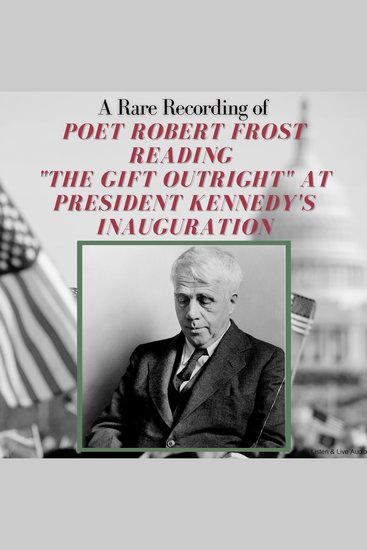
    In 1961, poet Robert Frost was invited to read at the inauguration of President John F. Kennedy. It would be the first by a poet for an inaugural ceremony. President-elect Kennedy asked Frost to recite the poem "The Gift Outright" unless the poet planned to write a poem especially for the occasion. Frost did, in fact, write a new poem for the day entitled "Dedication." However, when the time came to read, the wind and sun's glare made this impossible, though Frost made a valiant attempt. Instead, he reverted to "The Gift Outright," which he read by heart: 
     
    "The land was ours before we were the land’s. She was our land more than a hundred years, Before we were her people. She was ours In Massachusetts, in Virginia, But we were England’s, still colonials, Possessing what we still were unpossessed by, Possessed by what we now no more possessed. Something we were withholding made us weak, Until we found out that it was ourselves, We were withholding from our land of living, And forthwith found salvation in surrender. Such as we were we gave ourselves outright, (The deed of gift was many deeds of war), To the land vaguely realizing westward, But still unstoried, artless, unenhanced, Such as she was, such as she will become."
    Show book
  • William McKinley: The Life and Legacy of the Third President to Be Assassinated - cover

    William McKinley: The Life and...

    Charles River Editors

    • 0
    • 0
    • 0
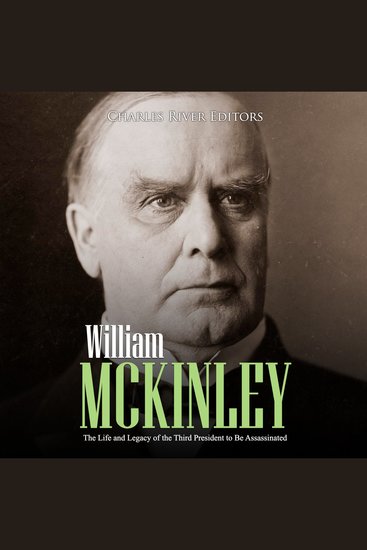
    Although he is often overlooked in American history today, few presidents marked a turning point for the country quite like William McKinley. As the last president to have served in the Civil War, he represented the end of an era, while at the same time his pro-business policies set in motion the Progressive Era, a period almost universally associated with Theodore Roosevelt. 
    Of course, the reason that period is aligned with Roosevelt is because McKinley had the unfortunate distinction of being one of only four presidents to be assassinated. In September 1901, the city of Buffalo was full of celebration. The Pan-American Exposition was ongoing, and it brought notable figures to northern New York, including President McKinley, who had been reelected less than a year earlier. But also in Buffalo was Leon Czolgosz, a young man who had turned to anarchy years earlier after losing his job, Embracing his philosophy wholeheartedly, Czolgosz believed it was his mission to take down a powerful leader he considered oppressive, and McKinley’s attendance gave him the chance. 
    President James Garfield had been assassinated just 20 years earlier, but McKinley didn’t worry about presidential security or his own safety, and that was the case in Buffalo. McKinley’s insistence on greeting the public and shaking hands allowed Czolgosz to walk up to him on September 6, 1901 at a public reception in the Temple of Music on the expo grounds and shoot him point blank, with one bullet grazing the president and another lodging in his abdomen. In the aftermath of the shooting, as Czolgosz was beaten and seized by the crowd, he uttered, "I done my duty." For his part, McKinley said, “He didn't know, poor fellow, what he was doing. He couldn't have known."
    Show book
  • Mr Vic’s X-Rated Television: “Miss Fisher Mysteries!” “Lesbian Loving For Miss Fisher and Dot!” Book two - cover

    Mr Vic’s X-Rated Television:...

    VIC VITALE

    • 0
    • 0
    • 0
    “A Lesbian Cums-A-Calling!” 
    “Under a Doctor’s Care and Body!”“ 
    “Alone Time For Phryne and Dot!” 
    "Hi! I'm Kitty Forman! I know I shouldn't be here, but I just have to see you." 
    Mac pauses before letting the woman who raped her inside her home. She is having mixed feelings, but truth be told, she's very glad to see this Kitty Forman. "I don't know? You forced yourself on me. Why should I want to see you?" 
     
    Show book
  • Awakening the Body - The Path of Somatic Surrender - cover

    Awakening the Body - The Path of...

    Will Johnson

    • 0
    • 0
    • 0
    To stretch like a cat or wriggle like a baby in the sheer delight of the body—it's the natural way of all living beings. Yet most of us have spent our lives numbed to the sensual realms of tactile awareness. When the world threatens us, teaches Will Johnson, we learn to tighten our bodies and lose ourselves in thoughts, experiencing our lives at arm's length. But the good news is that what was learned can be unlearned. Awakening the Body is much more than a body-awareness meditation program. It's a complete course to return to the life fully felt. Merging Ida Rolf's somatic discoveries, Buddhist body-awareness training, Sufism's ecstatic paths of movement and the heart, and many unique methods developed with his fellow students, Will Johnson shows you how to:Attune naturally to the many subtle dimensions of physical sensationRevive dampened memories and stifled emotions held within your bodyRestore your full somatic energetic flow for greater health and vitalityMove effortlessly into the unified field of pure sensation–the realm of the liberated body and selfHave you felt vaguely disconnected or dissatisfied with your life? That perhaps an exotic vacation, new career, or spiritual discipline might be the cure? For many, the answer can't be found "out there"—what we need is to reconnect to the full, shimmering aliveness our bodies were meant to experience. With Awakening the Body, you now have the clear and tested guidance to return to your true home, the realm of vibrant and fully embodied presence.
    Show book
  • Forbidden - A 3000-Year History of Jews and the Pig - cover

    Forbidden - A 3000-Year History...

    Jordan D. Rosenblum

    • 0
    • 0
    • 0
    Jews do not eat pig. This (not always true) observation has been made by both Jews and non-Jews for more than three thousand years and is rooted in biblical law. Though the Torah prohibits eating pig meat, it is not singled out more than other food prohibitions. Horses, rabbits, squirrels, and even vultures, while also not kosher, do not inspire the same level of revulsion for Jews as the pig. The pig has become a symbol for people to signal their Jewishness, non-Jewishness, or rebellion from Judaism. 


    Starting with the Hebrew Bible, Jordan D. Rosenblum historicizes the emergence of the pig as a key symbol of Jewish identity, from the Roman persecution of ancient rabbis, to the Spanish Inquisition, to Shakespeare's writings, to modern memoirs of those leaving Orthodox Judaism. The pig appears in debates about Jewish emancipation in eighteenth-century England and in vaccine conspiracies; in World War II rallying cries, when many American Jewish soldiers were "eating ham for Uncle Sam;" and in recent deliberations about the kosher status of Impossible Pork. 


    All told, there is a rich and varied story about the associations of Jews and pigs over time, both emerging from within Judaism and imposed on Jews by others. Expansive yet accessible, Forbidden offers a captivating look into Jewish history and identity through the lens of the pig.
    Show book
  • Voices of Dissent - An Essay (Unabridged) - cover

    Voices of Dissent - An Essay...

    Romila Thapar

    • 0
    • 0
    • 0
    Written by one of India's best-known public intellectuals, this book is essential reading for anyone interested in India's fascinating history as well as the direction in which the nation is headed.
    
    People have argued since time immemorial. Disagreement is a part of life, of human experience. But we now live in times when any form of protest in India is marked as anti-Indian and met with arguments that the very concept of dissent was imported into India from the West. As Romila Thapar explores in her timely historical essay, however, dissent has a long history in the subcontinent, even if its forms have evolved through the centuries.
     
    In Voices of Dissent: An Essay, Thapar looks at the articulation of nonviolent dissent and relates it to various pivotal moments throughout India's history. Beginning with Vedic times, she takes us from the second to the first millennium BCE, to the emergence of groups that were jointly called the Shramanas-the Jainas, Buddhists, and Ajivikas. Going forward in time, she also explores the views of the Bhakti sants and others of the fifteenth and sixteenth centuries and brings us to a major moment of dissent that helped to establish a free and democratic India: Mahatma Gandhi's satyagraha. Then Thapar places in context the recent peaceful protests against India's new, controversial citizenship law, maintaining that dissent in our time must be opposed to injustice and supportive of democratic rights so that society may change for the better.
    Show book