Join us on a literary world trip!
Add this book to bookshelf
Grey
Write a new comment Default profile 50px
Grey
Subscribe to read the full book or read the first pages for free!
All characters reduced
A Fortnight of Folly - cover

A Fortnight of Folly

Maurice Thompson, Hugh Conway

Publisher: DigiCat

  • 0
  • 0
  • 0

Summary

A Fortnight of Folly invites readers on a richly diverse journey through the imaginative landscapes of Maurice Thompson and Hugh Conway, marked by whimsical storytelling and a deft blend of humor with subtle commentary on societal norms. Each story is a testament to the authors' skillful navigation through a variety of styles, from satirical vignettes to character-driven narratives. The collection's core theme revolves around folly—both personal and societal—examining human idiosyncrasies with a playful yet critical eye. Within its pages, the anthology introduces an array of narratives that range from the comically absurd to poignant and reflective, demonstrating the wide-ranging literary prowess of its contributors. Maurice Thompson and Hugh Conway, each a luminary in their own right, weave together their distinct perspectives into a cohesive exploration of folly, both timeless and situated in the late 19th-century context. Their works, influenced by the literary movements of realism and early modernism, offer fresh insights into the changing dynamics of contemporary society. Thompson's grounding in naturalism complements Conway's flair for mystery and psychological depth, making this collaboration a unique cross-section of literary innovation reflective of their times. This volume is an indispensable addition for those eager to explore a multiplicity of genres and artistic expressions within a single, thought-provoking anthology. For scholars and casual readers alike, A Fortnight of Folly provides a rich tapestry of insights and inquiries into human nature, societal conventions, and the art of storytelling itself. Engage with this collection not only for its entertaining narratives but for the dialogue it fosters between eras, styles, and authorial voices, rendering it a timeless treasure trove of literary exploration.
Available since: 09/04/2022.
Print length: 184 pages.
Other books that might interest you

  • Horrid Henry: School Daze - cover

    Horrid Henry: School Daze

    Lucinda Whiteley

    • 0
    • 0
    • 0
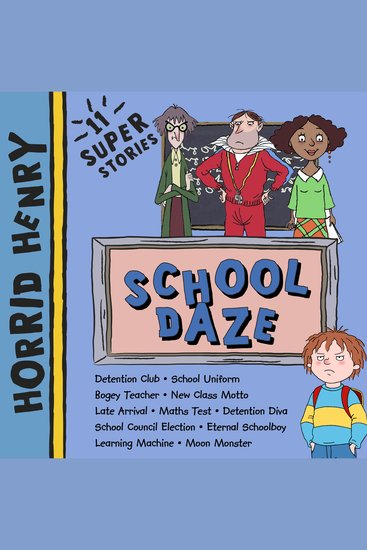
    Anyone else find themselves dazed by school? If you do you are not alone, Henry’s in permanent School Daze, and he’s put together this specially crazy collection of 11 Horrid Henry super stories performed by the show's full cast. Detention, bogey teachers and miserable maths, you’ll find it all here in all its Horrid glory! So let’s turn up the Horrid and enjoy these classic stories with "School Uniform", "Bogey Teacher", "New Class Motto", "Late Arrival", "Detention Club", "Maths Test", "School Council Election", "Eternal Schoolboy", "Detention Diva", "Learning Machine" and "Moon Monster". Horridly Brilliant or Brilliantly Horrid? You decide!!
    Show book
  • The Short Stories of Jack London - Turn of the century social activist and heralded American author - cover

    The Short Stories of Jack London...

    Jack London

    • 0
    • 0
    • 0
    John Griffith Chaney was born on January 12th, 1876 in San Francisco.   
     
    His father, William Chaney, was living with Flora Wellman when she became pregnant.  Chaney insisted she have an abortion.  Flora's response was to turn a gun on herself.  Although her wounds were not severe the trauma made her temporarily deranged. 
     
    In late 1876 his mother married John London and the young child was brought to live with them as they moved around the Bay area, eventually settling in Oakland where now, calling himself Jack, he completed grade school. 
     
    Jack worked hard at several jobs, sometimes 12-18 hours a day, but his dream was university.  He studied hard and borrowed the money to enrol in the summer of 1896 at the University of California in Berkeley. 
     
    In 1897, at 21, Jack searched out newspaper accounts of his mother's suicide attempt and for the name of his biological father. He wrote to Chaney, then living in Chicago, who claimed he could not be Jack’s father because he was impotent and casually asserted that London's mother had relations with other men.  Jack, devastated by the response, quit Berkeley and went to the Klondike. Other accounts suggest that his dire finances presented Jack with the excuse he needed to leave. 
     
    In the Klondike Jack began to gather material for his writing but also accumulated many health problems, including scurvy, which together with hip and leg problems he would carry for the rest of his life. 
     
    During the late 1890's Jack was regularly publishing short stories and by the turn of the century full blown novels. 
     
    By 1904 Jack had married, fathered two children and was now in the process of divorcing.  A stint as a reporter on the Russo-Japanese war of 1904 was equal amounts trouble and experience. But that experience was always put to good use in a continuing and remarkable output of work. 
     
    In 1905 he married Charmian Kittredge who at last was a soul and companion who brought him some semblance of peace despite his advancing alcoholism and his incurable wanderlust. 
     
    Twelve years later Jack had amassed both wealth and a literary reputation through such classics as ‘The Call of the Wild’, ‘White Fang’ and many others. He had a reputation as a social activist and was a tireless friend of the workers.   
     
    Jack London died suffering from dysentery, late-stage alcoholism and uremia, aged only 40, on November 22nd 1916 at his property in Glen Elen in California. 
    01 - Jack London - A Short Story Collection - An Introduction 
    02 - To Build a Fire by Jack London 
    03 - A Wicked Woman by Jack London 
    04 - The Unparallelled Invasion by Jack London 
    05 - A Thousand Deaths by Jack London
    Show book
  • Benediction - From their pens to your ears genius in every story - cover

    Benediction - From their pens to...

    F. Scott Fitzgerald

    • 0
    • 0
    • 0
    Francis Scott Key Fitzgerald was born on 24th September 1896 in Saint Paul, Minnesota into an upper-middle class family. Whilst his mother was pregnant with him, his two young sisters tragically died.  Fitzgerald once said this was when his destiny as a writer was ordained. 
    His intelligence and talent was recognised from an early age, with his first story, about a detective being published in the school magazine when he was just 13.   
    In 1913 he enrolled at Princeton but his devotion to his own literary pursuits resulted in him leaving and, rather bizarrely, joining the Army.  In 1918, stationed at Fort Sheridan near Montgomery, Alabama he met and became infatuated and then inseparable from Zelda Sayre.  Initially though she refused to marry him but with the success of ‘This Side of Paradise’, the fame and the flow of money enabled them both to begin a gilded life.  For them this was The Jazz Age.  For Fitzgerald he was already an alcoholic. 
    He continued to write with great mastery and the titles of his novels and many of his 164 short stories are household names.  The Great Gatsby, often cited as The Great American Novel was published to mixed reviews.  As America moved from the Great Depression to the slaughter of the Second World War his works and himself were seen as far too entwined with the decadent twenties. The world had moved on and he hadn’t.   
    Further tragedy was never far from his life. Zelda after years of erratic and now intolerable behaviour was committed to an institution in 1936.  His own sales began to decline and he became a hack for hire in Hollywood, dependent on increasing amounts of booze and the weekly pay check.  His drunken state had often resulted in arrest or hospitalisation, further imperiling his talents.   Despite his contribution to many MGM films he received only one credit. 
    The end came all too soon for one of America’s greatest ever writers.  On 21st December 1940, at only 44 years of age in Hollywood, F Scott Fitzgerald succumbed to a heart attack.
    Show book
  • The Daughter of Lilith - From their pens to your ears genius in every story - cover

    The Daughter of Lilith - From...

    Anatole France

    • 0
    • 0
    • 0
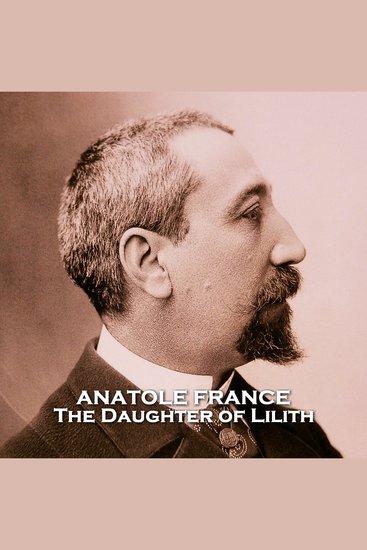
    François-Anatole Thibault was born on the 16th April 1844 in Paris, France, the son of a bookseller and bibliophile. 
    He studied at the Collège Stanislas, a private Catholic school, and after graduating joined his father in the bookstore, which specialised in works on the French Revolution.  Several years later he secured a position as cataloguer at Bacheline-Deflorenne and at Lemerre before being appointed librarian for the French Senate in 1876. 
    His literary career had begun as a journalist and as a poet before publishing his novel ‘Le Crime de Sylvestre Bonnard’ in 1881.  Praised for its elegant prose, it won him a prestigious prize from the Académie Française, which later elected him to its storied ranks. 
    His works were profound and thoughtful and often couched in surreal and outlandish expressions; whether penguins baptized by a near-blind Abbott transformed themselves into humans or of a guardian angel who becomes an atheist, his stories turned established thought into startling literature. 
    His short stories run in the same vein.  The premise may seem plausible but his distinctive style turns them into an individual viewpoint which invokes both discussion and admiration. 
    In his private life his relationships with women were often turbulent.  A Socialist, he was a fervent supporter of the Russian Revolution and the early years of the French Communist party. 
    He was awarded the Nobel Prize in 1921 but the following year his entire canon of works was placed on the prohibited list of the Catholic Church, which he thought of as a credit to his name. 
    Anatole France died on the 12th October 1924 in Tours.  He was 80.
    Show book
  • The Masque of the Red Death - cover

    The Masque of the Red Death

    Edgar Allan Poe

    • 0
    • 0
    • 0
    Title: The Masque of the Red Death 
    Author: Edgar Allan Poe 
    Narrator: Jonathan Dunne 
    Original Publication: 1842 
    Public Domain: Yes 
    Series Placement: Number 24 in the Timeless Terrors series 
    Description: 
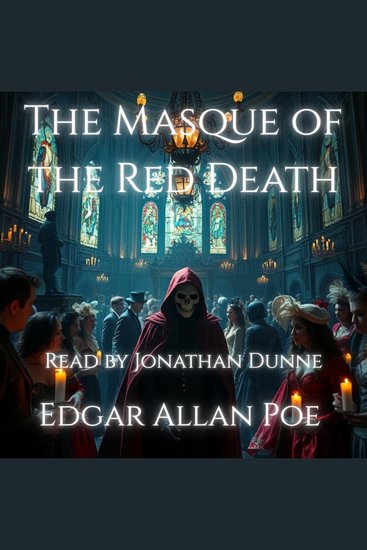
    The Masque of the Red Death by Edgar Allan Poe is a chilling, gothic tale of inevitability, mortality, and the inescapable reach of death. Set within the opulent yet isolated halls of Prince Prospero’s abbey, the story follows a decadent masquerade intended to shut out the horrors of a deadly plague. Poe’s vivid imagery and symbolic architecture of the castle build a suffocating atmosphere of dread, culminating in an unforgettable confrontation with the ultimate horror. 
    Narrated by Amazon bestselling horror author Jonathan Dunne, this performance captures the story’s tense rhythm, eerie symbolism, and grim inevitability, blending gothic atmosphere with psychological terror. While the text is in the public domain, this narration is an original work and copyright © 2025 Jonathan Dunne. 
    This audiobook is part of Timeless Terrors, a series dedicated to resurrecting classic horror — works from masters of the macabre, retold in haunting new performances for a modern audience. 
    Listeners should be prepared to confront the haunting specter of death itself, the oppressive splendor of the masked court, and the stark reminder that no walls, wealth, or revelry can hold back the end.
    Show book
  • The Science of Getting Rich - cover

    The Science of Getting Rich

    Wallace D. Wattles

    • 0
    • 0
    • 0
    The Science of Getting Rich is the classic guide to creating wealth through the Law of Attraction. First published in 1910, a hundred years later it inspired Rhonda Byrne's bestselling book and movie, The Secret. According to Wallace D. Wattles, "There is a science of getting rich, and it is an exact science, like algebra or arithmetic. There are certain laws which govern the process of acquiring riches; once these laws are learned and obeyed by any man, he will get rich with mathematical certainty."
    Show book