Join us on a literary world trip!
Add this book to bookshelf
Grey
Write a new comment Default profile 50px
Grey
Subscribe to read the full book or read the first pages for free!
All characters reduced
Overlooked - cover

Overlooked

Maurice Baring

Publisher: DigiCat

  • 0
  • 0
  • 0

Summary

In "Overlooked," Maurice Baring presents a rich tapestry of interwoven narratives that delve into the intricacies of human relationships and the subtleties of identity. Set against the backdrop of early 20th-century Europe, Baring's prose is characterized by its lyrical beauty and sharp psychological insight. The novel is steeped in the themes of expatriate life, social alienation, and the often-unseen passions that drive individuals towards existential contemplation. Baring employs a nuanced literary style that blends elements of realism and impressionism, effectively capturing the fleeting moments that define existence while reflecting on broader societal changes of his time. Maurice Baring, a prominent author, poet, and playwright, drew inspiration from his varied experiences as an expatriate and a member of the aristocracy. His extensive travels across Europe and interactions with a diverse array of cultural figures undoubtedly enriched his perspective, allowing him to craft multifaceted characters who resonate with authenticity. Baring's own struggles with identity and belonging are palpable in "Overlooked," imbuing the narrative with a profound sense of introspection and empathy. I highly recommend "Overlooked" to readers who appreciate deep character studies and the exploration of complex emotional landscapes. Baring's poignant prose invites readers to reflect on their own lives and relationships, making it an essential read for those interested in the intersections of personal and societal narratives.
Available since: 06/13/2022.
Print length: 85 pages.
Other books that might interest you

  • Echoes of Eternity: Stories That Never Fade - Timeless Tales of Memory Love Loss and Human Legacy - cover

    Echoes of Eternity: Stories That...

    Dr. Muddassir Saleem

    • 0
    • 0
    • 0
    Echoes of Eternity: Stories That Never Fade is a deeply emotional collection of timeless narratives exploring memory, human connection, love, loss, and the invisible threads that bind generations together. 
    Each story in this audiobook reveals a different dimension of human experience—where moments become memories, and memories become echoes that never fade. Through powerful storytelling and immersive narration, listeners are taken on a journey beyond time, into the heart of what it truly means to be human. 
    Perfect for listeners who enjoy reflective fiction, emotional storytelling, and philosophical narratives that linger long after the final word.
    Show book
  • Stranger Than Fiction - From their pens to your ears genius in every story - cover

    Stranger Than Fiction - From...

    Lafcadio Hearn

    • 0
    • 0
    • 0
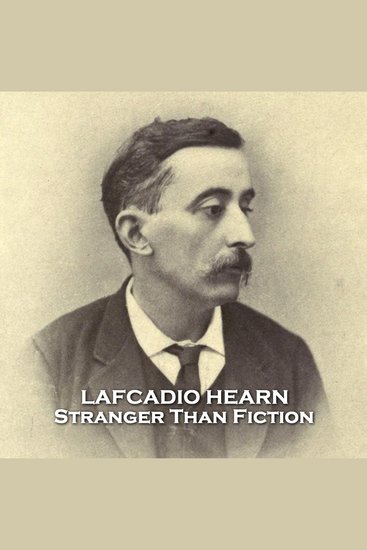
    Lafcadio Hearn was born on the 27th June 1850 on the Ionian isle of Levkás in Greece to a British Army officer and a Greek Mother. 
    His father, fearing for his career prospects at being married to a Greek Orthodox wife, sent them to Dublin whilst he continued to advance his career with further postings.  Life there was difficult for mother and son.  His father returned, wounded and traumatised, when Lafcadio was three.  He annulled the marriage and she remarried but had to give up care of Lafcadio to her sister-in law.   
    After brief periods for Catholic education in England and France he emigrated to Ohio in the United States when he was 19, taking on a series of casual jobs before embarking on a career as a journalist, publishing poems and essays in Cincinnati.  It was whilst here that he began a side-line in translating, starting with Gautier and Flaubert.  He married in 1874 to a 20 year old African-American woman in violation of Ohio's anti-miscegenation law.  The marriage soon failed. 
    In 1877 he relocated to New Orleans to write on a variety of themes before picking up a two year assignment from Harper’s to write in the West Indies, where he also wrote his first novel. 
    In 1890 Harper’s sent him to Japan.  Here he left journalism and took the remarkable decision to become a schoolteacher in the north of Japan.   Enraptured by the culture he was driven to explain it in various Western publications to those who had little, if any, knowledge of its culture.  Within the year he had fallen in love with, and married, a high-born Japanese lady, together they would have four children.   
    In 1895 he became a Japanese national and took the name Koizumi Yakumo, Koizumi being his wife’s family name. 
    The following few years, whilst a professor of Literature at the Imperial University of Japan, were his most creative and admired period.   
    Lafcadio Hearn died of heart failure on the 26th of September 1904, in Tokyo, Japan shortly before leaving to deliver a series of lectures at Cornell University in New York State.  He was 54.
    Show book
  • Inspiration An - From their pens to your ears genius in every story - cover

    Inspiration An - From their pens...

    George Gissing

    • 0
    • 0
    • 0
    George Robert Gissing was born on November 22nd, 1857 in Wakefield, Yorkshire.  
    He was educated at Back Lane School in Wakefield. Gissing loved school. He was enthusiastic with a thirst for learning and always diligent.  By the age of ten he was reading Dickens, a lifelong hero. 
    In 1872 Gissing won a scholarship to Owens College. Whilst there Gissing worked hard but remained solitary. Unfortunately, he had run short of funds and stole from his fellow students. He was arrested, prosecuted, found guilty, expelled and sentenced to a month's hard labour in 1876. 
    On release he decided to start over.  In September 1876 he travelled to the United States. Here he wrote short stories for the Chicago Tribune and other newspapers. On his return home he was ready for novels. 
    Gissing self-published his first novel but it failed to sell.  His second was acquired but never published. His writing career was static.  Something had to change.  And it did. 
    By 1884 The Unclassed was published.  Now everything he wrote was published. Both Isabel Claren-don and Demos appeared in 1886. He mined the lives of the working class as diligently as any capitalist. 
    In 1889 Gissing used the proceeds from the sale of The Nether World to go to Italy. This trip formed the basis for his 1890 work The Emancipated. 
    Gissing's works began to command higher payments. New Grub Street (1891) brought a fee of £250.  
    Short stories followed and in 1895, three novellas were published; Eve's Ransom, The Paying Guest and Sleeping Fires. Gissing was careful to keep up with the changing attitudes of his audience.  
    Unfortunately, he was also diagnosed as suffering from emphysema. The last years of his life were spent as a semi-invalid in France but he continued to write. 1899; The Crown of Life. Our Friend the Charlatan appeared in 1901, followed two years later by The Private Papers of Henry Ryecroft. 
    George Robert Gissing died aged 46 on December 28th, 1903 after catching a chill on a winter walk.
    Show book
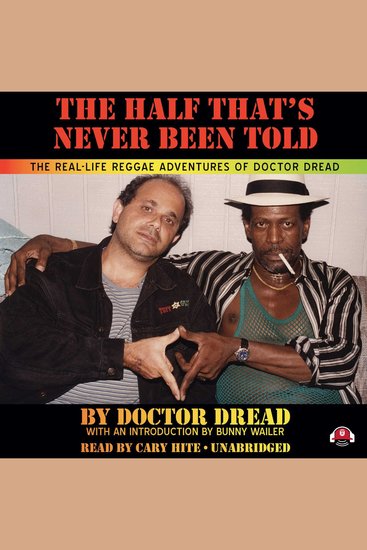
  • The Half That’s Never Been Told - The Real-Life Reggae Adventures of Doctor Dread - cover

    The Half That’s Never Been Told...

    Doctor Dread, Bunny Wailer

    • 0
    • 0
    • 0
    A passionate memoir and fearless behind-the-scenes look at the personal lives of the biggest reggae stars in the world 
    Doctor Dread has committed his life to producing reggae music and releasing it on his label, RAS Records. He has become one of the world’s foremost reggae producers and has worked with almost all the genre’s icons: Bunny Wailer, Black Uhuru, Ziggy and Damian Marley, Gregory Isaacs, and others. This book, full of behind-the-scenes stories, has shocking chapters that reveal aspects of reggae never before explored.
    Show book
  • Blood of The Samurai - The Legendary Battles - cover

    Blood of The Samurai - The...

    Jon White

    • 0
    • 0
    • 0
    The samurai way of life is guided by three core values - loyalty, honor, and respect. These principles are more than just words; they are the basis of a strict code of conduct that governs every aspect of a samurai's life. Loyalty is the foundation of the samurai's relationship with their lord. It is not just blind obedience but an unwavering sense of duty and honor that compels them to protect their lord at all costs. This bond is unbreakable and lasts beyond death. Honor is earned through acts of bravery and selflessness on the battlefield and maintained through strict adherence to the Bushido code. A samurai's reputation is built on their honor, and they will go to great lengths to protect it, even if it means sacrificing their own life.Respect is the currency of the samurai world, earned through martial prowess and deeds of valor. A respected samurai is a force to be reckoned with, their reputation preceding them wherever they go. Respect must be earned through actions demonstrating the samurai's worthiness of admiration and awe.For a Samurai, these values are not just aspirations but a way of life that defines who they are and what they stand for. With these guiding principles, a samurai is a skilled swordsman with a moral compass. Through the practice of these principles, the samurai become legends, their names remembered and revered for generations to come.
    Show book
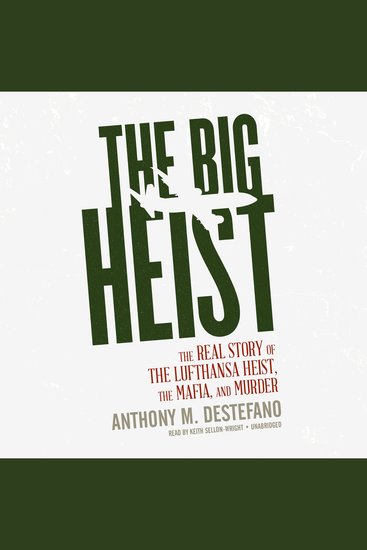
  • The Big Heist - The Real Story of the Lufthansa Heist the Mafia and Murder - cover

    The Big Heist - The Real Story...

    Anthony M. DeStefano

    • 0
    • 0
    • 0
    The crime that inspired the movie Goodfellas. The story that couldn’t be told—until now. 
    One of the biggest scores in Mafia history, the Lufthansa Airlines heist of 1978 has become the stuff of Mafia legend—and a decades-long investigation that continues to this day. Pulitzer Prize–winning reporter Anthony DeStefano sheds new light on this legendary unsolved case using recent evidence from the 2015 trial of eighty-year-old Mafia don Vincent Asaro, who for the first time speaks out on his role in the fateful Lufthansa heist. This blistering you-are-there account takes you behind the headlines and inside the ranks of America’s infamous crime families—with never-before-told stories, late-breaking news, and bombshell revelations:New details on the heist’s planning: who was involved, how they pulled it off, and what really happened to the almost $6 million in cash and jewels they stole from JFK AirportWhy suspected heist participant Vincent Asaro was found not guilty of all charges—racketeering, theft, and murder—even after being observed by the FBI for more than three decadesThe shocking discovery of human bones in a Queens home belonging to a relative of Jimmy Burke, the homicidal Lucchese crime family associate who assembled the Lufthansa heist team—and masterminded the caper, then the biggest cash robbery in American historyThe eye-opening testimony of gangsters-turned-informants Salvatore Vitale and Gaspar Valenti—and what it reveals about the Mafia code of silence known as OmertaThe greed, betrayal, murder, and other frightening insights into the Bonanno and Lucchese crime familiesDisturbing claims about how some members of the NYPD leaked information to mobster Jimmy Burke and may have helped hide evidence of a mob murder victim’s demise 
    An invaluable addition to any crime library, this is the most complete, thorough, and up-to-date account of the Lufthansa heist currently available. Pulitzer Prize winner Anthony DeStefano draws from his years of experience reporting on the mob for New York Newsday—as well as his firsthand coverage of the Asaro indictment and attendance at the trial—to expose the all-too-human heart of organized crime in America. The Big Heist is thrilling, shocking, and impossible to put down.
    Show book