Join us on a literary world trip!
Add this book to bookshelf
Grey
Write a new comment Default profile 50px
Grey
Subscribe to read the full book or read the first pages for free!
All characters reduced
Colonialism and the Jews - cover

Colonialism and the Jews

Maud S. Mandel, Ethan B. Katz, Lisa Moses Leff

Publisher: Indiana University Press

  • 0
  • 0
  • 0

Summary

The lively essays collected here explore colonial history, culture, and thought as it intersects with Jewish studies. Connecting the Jewish experience with colonialism to mobility and exchange, diaspora, internationalism, racial discrimination, and Zionism, the volume presents the work of Jewish historians who recognize the challenge that colonialism brings to their work and sheds light on the diverse topics that reflect the myriad ways that Jews engaged with empire in modern times. Taken together, these essays reveal the interpretive power of the "Imperial Turn" and present a rethinking of the history of Jews in colonial societies in light of postcolonial critiques and destabilized categories of analysis. A provocative discussion forum about Zionism as colonialism is also included.
Available since: 01/30/2017.
Print length: 363 pages.


Other books that might interest you

  • Stay Here - Uncovering God's Plan to Restore Your Mental Health - cover

    Stay Here - Uncovering God's...

    Jacob Coyne

    • 0
    • 0
    • 0
    Please stay. The world is so much better with you in it. 
     
    Every forty seconds, someone takes his or her life. Anxiety, depression, and suicide are at all-time highs--and they're stealing our sons, daughters, friends, and spouses. 
     
    With tender passion and bold hope, Jacob Coyne, founder of Stay Here, infuses life into the dark corners of mental health. Giving hurting souls a reason to live, he shows not only how Jesus brings life to the full, but also how anyone--regardless of their past or pain--can find healing, including how to 
     
    · attack our anxiety and calm our storms; 
    · defeat depression and live with a sound mind; 
    · overcome intrusive suicidal thoughts and enjoy life; and 
    · transform pain, trauma, suicidal thoughts, and addictions into purpose. 
     
    It's okay to not be okay--but you don't have to stay that way. It's time to shine the hope of Christ into the darkness and witness His love transform broken souls into living, breathing signs to live.
    Show book
  • The European Union - Unity and Challenges - cover

    The European Union - Unity and...

    Nova Ashford

    • 0
    • 0
    • 0
    The formation of the European Union (EU) is the result of decades of political, economic, and social evolution, shaped by the aftermath of two World Wars and the desire for long-lasting peace and prosperity in Europe. The idea of a united Europe emerged from the devastation of the Second World War, with leaders recognizing that unity among European nations could prevent future conflicts and create a foundation for collective economic growth. 
    The origins of European integration can be traced back to the 1950s, following the end of World War II. The primary motivation was the need to secure peace and ensure stability in a continent scarred by war. The first major step in the process was the creation of the European Coal and Steel Community (ECSC) in 1951. The ECSC, established by the six founding members—Belgium, France, Italy, Luxembourg, the Netherlands, and West Germany—was a pioneering effort in economic cooperation. By pooling coal and steel production, the ECSC aimed to make war between these countries materially impossible, as it would require the cooperation of nations whose economies were intertwined. 
    The next pivotal moment came in 1957, with the signing of the Treaty of Rome, which established the European Economic Community (EEC). The Treaty of Rome sought to deepen economic cooperation and foster a common market, removing trade barriers, creating a customs union, and enabling the free movement of goods, services, capital, and people. This was a significant step towards realizing the vision of a unified Europe.
    Show book
  • Biggest Tank Battles of World War II The: The History of the Most Decisive Tank Encounters between the Allies and Axis - cover

    Biggest Tank Battles of World...

    Editors Charles River

    • 0
    • 0
    • 0
    The tank was first developed by the British and French during World War I as a means to break the deadlock on the Western Front. More so than any previous war, the balance of power lay with the defense, as machine guns, trenches, bunkers, barbed wire, and rapid-firing rifles all made frontal assaults on established positions prohibitively costly. In the closing months of the war, the tank partially evened up that balance, even as the war’s commanders initially proved unsure of how to use them. While it cannot be said that the tank won the war, it contributed to its end and if the fighting had continued another year, the mass production that had started in Allied countries may have proved decisive. 
    	World War II was the culmination of a quarter century of tank development, and it would also be the first major test of tanks in mobile warfare during which they had to face other tanks. However, many of the tanks were constructed with the static warfare of the Western Front in mind and were thus slow and had short operational ranges. Others were too light to face opposing tanks or the new generation of anti-tank weapons that hadn’t existed in World War I. The unsuitability of these tank models for this new kind of warfare was quickly recognized, and the belligerent powers scrambled to create better designs. As each new, improved model came off the assembly lines, the opposing powers rushed to create a tank that could beat it. In that regard, World War II was also a war between rival engineers. 
    	The beginning of World War II found the major powers developing tanks to some extent, but lingering ideas from World War I affected the development of tanks during the Interwar period.
    Show book
  • 40 Interview Icebergs and How to Sail Around Them - cover

    40 Interview Icebergs and How to...

    Michael Heath

    • 0
    • 0
    • 0
    40 Interview Icebergs will help you to be more successful in interviews and get the job that you really want. So many people go for interviews and sail along merrily before steering straight into the iceberg that sinks their application there and then. Some icebergs are obvious; some less so. But isn't it nice to know what they are? You'll find 8 'Iceberg Zones' in this book: All are deadly. That's why Michael Heath has approached recruitment and HR professionals around the world and simply asked them the question, “What are the most common errors that someone might make that would stop you from hiring them?” This book lists the 40 most common reasons - the icebergs that all too often send a job application to the ocean floor. But to know that an iceberg is on the horizon is not enough. How do you get round it? That's why each section has several tips which will help you steer a course to the safety of your port or destination: The job you really want.
    Show book
  • Mixed Problem Solving Methodology - The skill that changes your life - cover

    Mixed Problem Solving...

    Rocco Mela

    • 0
    • 0
    • 0
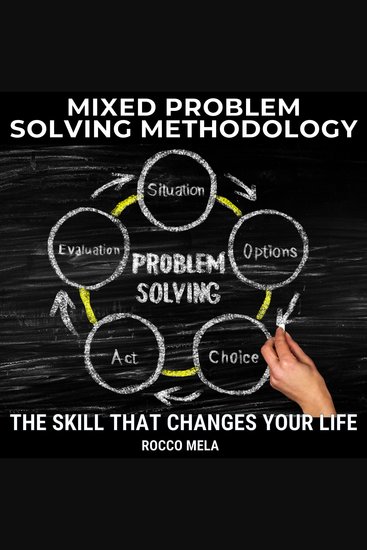
    This book is a resume of all the problem solving techniques known by me so far: ITIL, Lean Six Sigma, CompTIA, Agile, Scrum, Applied Problem Solving, SWOT etc etc. 
    I resumed the techniques in 10 core points: 
    1- Be Googley 
    2- Going to the Gemba 
    3- Set the Goal 
    4- Prevent the problem 
    5- Be Customer Focused 
    6- Define the Problem 
    7- Analyze the Problem 
    8- Test the Solution 
    9- Document the Process 
    10- Be Kaizen 
    The result is a mixed problem solving methodology ready to be used in every working environment. 
    Enjoy and use this guide starting from the next problem you have to solve. 
    To your success! 
    - Second Edition -
    Show book
  • A Witch's Book of Terribles - Legends Tales & Parables - cover

    A Witch's Book of Terribles -...

    Wycke Malliway

    • 0
    • 0
    • 0
    This enchanting book teaches practical witchcraft through wonderfully whimsical stories suitable for all ages.   For all witches, or for the witches in all of us, the tales in this collection will serve you well. Each enchanting story contained within A Witch’s Book of Terribles offers a lesson rooted in the art of witchcraft that a walker of any path will be sure to learn from. While witches have long been the impetus of fairy tales, it is now their turn to sit at the heart of the matter. Whether it is a fable of the timid Aunt Brynelda or a legend of the primal Nonna Noxa, there is much to be garnered from each witch’s tale, both great and terrible . . .  A Witch’s Book of Terribles is a collection of story-based lessons on witchcraft told through fairy tales, poems, and anecdotes to give witches advice and warnings about the magical path.
    Show book