Join us on a literary world trip!
Add this book to bookshelf
Grey
Write a new comment Default profile 50px
Grey
Subscribe to read the full book or read the first pages for free!
All characters reduced
Civilization in the United States - cover

Civilization in the United States

Matthew Arnold

Publisher: Edizioni Aurora Boreale

  • 0
  • 0
  • 0

Summary

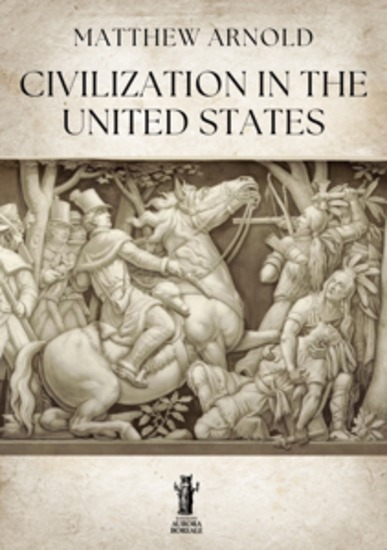
Matthew Arnold (1822-1888) was an English poet, writer and cultural critic. He has been characterised as a sage writer, a type of writer who chastises and instructs the reader on contemporary social issues. He was also an inspector of schools for thirty-five years, and supported the concept of state-regulated secondary education.In 1883 and 1884, Arnold toured the United States and Canada delivering lectures on education, democracy and Ralph Waldo Emerson. He was elected a Foreign Honorary Member of the American Academy of Arts and Sciences in 1883. In 1886, he retired from school inspection and made another trip to America.The Arnold’s essay Civilization in the United States, which we propose to our readers today, was published in 1888 in the Nineteenth Century magazine. It is the account of Arnold's tour of the United States of America in 1886.
Available since: 05/09/2025.

Other books that might interest you

  • Dumpster Doll - cover

    Dumpster Doll

    Michelle Mays, Michelle Moone

    • 0
    • 0
    • 0
    Michelle Mays was born into an abusive family in the Midwest. As she and her siblings cling to survival, the balance of family ties is weighed against alcoholism, drug abuse, abandonment, and despair. Hope dawns in the form of foster care, only to be deferred by multiple placements and a system not equipped to support the children it's meant to protect.Through powerful vignettes of a life disjointed, Mays's story is a journey of hope that is echoed in the experiences of thousands of children in the court and foster care systems today.Dumpster Doll is brave not because it is unique, but because it unflinchingly shines a light on family turmoil, flaws in judicial systems, and ultimately, the grit and tenacity that thousands of children exhibit each day just to make it through.
    Show book
  • Battle of White Mountain The: The History and Legacy of the First Major Battle of the Thirty Years’ War - cover

    Battle of White Mountain The:...

    Editors Charles River

    • 0
    • 0
    • 0
    It has been famously pointed out that the Holy Roman Empire was neither holy, nor Roman, but it was also not an empire in the sense people expect when hearing the term. In theory, the emperor was the highest prince in Christendom, and his dominion extended the length and breadth of Western Europe. The tensions between the Holy Roman Empire and Church over the power to invest bishops with authority led to decades of civil war in Germany on the way to establishing the relationship between Church and State, elevating the status of the papacy and weakening the Holy Roman Empire. 
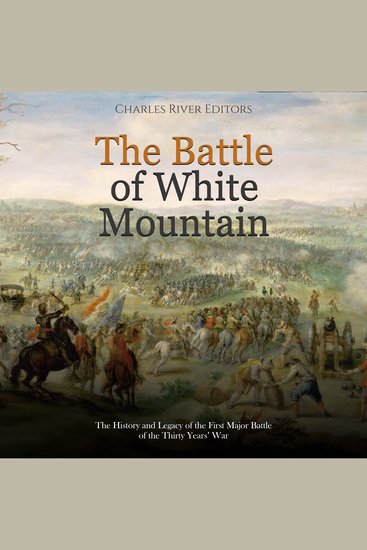
    	The Thirty Years' War was one of the most horrific conflicts in history, resulting in the deaths of nearly two-thirds of Germany's population, and the Battle of White Mountain in 1620 was the first major battle of that war. The battle was fought mainly due to Holy Roman Emperor Ferdinand II’s dealings with the Bohemians and their new king, Frederick of the Palatinate, who Ferdinand regarded as illegitimate. It was also partly a struggle between the centralizing attempts of the Habsburg dynasty conflicting with the traditional regional autonomy that existed within the legislative institutions called the Estates. What gave it an emotional element was the enmity between Bohemian Protestantism and Ferdinand II’s zealous Catholicism, and that would help draw in several European powers. At the Battle of White Mountain, the armies of the Bohemian Confederation and the Habsburgs met each other near Prague, and the combatants included officers and soldiers from nearly every nation in Europe, including the Netherlands, Germany, Italy, Poland, Bohemia, Moravia, Bavaria, Italy, Spain, Hungary, Transylvania, England, Scotland, and Ireland. The decisive result would permanently affect the course of the conflict over the coming decades, and with it the fate of modern Europe. 
    Show book
  • A Nation Again - The inside story of Scotland's journey to the European Championship - cover

    A Nation Again - The inside...

    Andy Bargh

    • 0
    • 0
    • 0
    A Nation Again is the chaotic tale of the Scotland men's team's return to a major tournament after more than 20 years in the wilderness. 
    Ten had come and gone for Scotland since they reached France '98, but the birth of UEFA's Nations League offered a new route to glory. In early 2018, after a long search for Gordon Strachan's replacement, Alex McLeish became manager for a second time. Despite successfully navigating the Nations League group stage, it wasn't plain sailing, and his tenure ended after a shocking defeat at the start of Euro 2020 qualifying. 
    With a play-off semi-final on the horizon, the Scottish FA turned to Steve Clarke, who took on the challenge of inspiring a team rooted in failure, creating a band-of-brothers mentality and figuring out how to organise this incredibly talented group of players. From a couple of the lowest lows, came the highest high. 
    With exclusive memories and audio from those who were part of the journey, such as John McGinn, Stephen O'Donnell, Lyndon Dykes, Ryan Christie and David Marshall, this is the story of how Scotland finally became a nation again.
    Show book
  • Catherine the Great - cover

    Catherine the Great

    Kelly Mass

    • 0
    • 0
    • 0
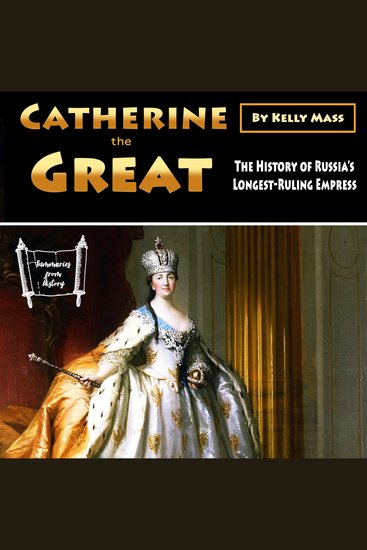
    Catherine II (born Sophie of Anhalt-Zerbst; May the 2nd 1729-- November the 17th 1796, typically called Catherine the Great, ruled as Empress of Russia from 1762 to 1796, making her the nation's longest-serving female ruler. Following the assassination of her spouse and 2nd cousin, Peter III, she rose to power. Russia grew bigger, its civilization was rejuvenated, and it was acknowledged as one of Europe's great powers during her reign.Catherine used her honorable favorites, most significantly Count Grigory Orlov and Grigory Potemkin, to help her gain power and manage the empire. She ruled at the time of a period when the Russian Empire was rapidly broadening through intrusion and diplomacy, with the help of very effective generals like Alexander Suvorov and Pyotr Rumyantsev, and also admirals like Samuel Greig and Fyodor Ushakov. In the south, the Crimean Khanate was beat in the Russo-Turkish War (1768-- 1774), and Russia colonized Novorossiya along the Black and Azov Seas, thanks to triumphs over the Bar confederation and the Ottoman Empire.Catherine the Great has been mentioned so many times in Russian history, it’s definitely a good chapter to study to understand the background of the country more.
    Show book
  • Lydia Litvyak: The Life and Legacy of the Soviet Woman Who Became World War II’s Most Successful Female Fighter Pilot - cover

    Lydia Litvyak: The Life and...

    Editors Charles River

    • 0
    • 0
    • 0
    Altogether, the Battle of Stalingrad was the deadliest battle in the history of warfare, and the Soviets’ decisive victory there is considered one of the biggest turning points in the entire war, and certainly in the European theater. Over the next two years, the German gains in Russia were steadily reversed, and the Red Army eventually began pushing west towards Berlin. Fittingly, the importance of Stalingrad was commemorated in several ways, from Churchill presenting Stalin with a “Sword of Stalingrad” to the Russians’ decision not to rebuild parts of the battle scarred city as a reminder of what happened there.  
    Partly out of dire circumstances and partly from a cultural worldview, it was the Soviet Union who first pressed female pilots into direct combat when Hitler invaded Russia. Ahead of Stalingrad, Stalin publicly declared that “women should be given the right to fly and fight for their country.” As a result, more than 800,000 women served in the Soviet military during the war years in hospitals, communication units, as road troops, anti-aircraft gunners, and snipers. 
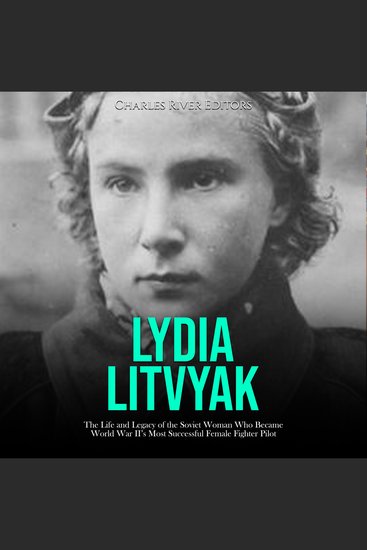
    Of the Soviet female fighter pilots who fought the Nazis in the skies, led raids against ground targets, and stopped supply transports, the iconic Lydia Vladimirovna Litvyak stands out as the most distinguished. The most productive and highly decorated of the Soviet Union’s female pilots, Litvyak was an expert aviator by the age of 14 and trained 45 pilots in the years leading up to the war, while still a teenager. She went on to serve in several of the elite air guard regiments, and she would be credited with numerous victories as the Soviets desperately tried to hold off the German onslaught around Stalingrad. The quirky and defiant Litvyak was described as a “silent modest beauty with a blonde shock of hair and blue eyes.” She “walked with a special gait, causing delight among others,” men in particular, and she tended to look neat at all times.
    Show book
  • Spanish Mastery Unveiled: A Journey from Beginner to Intermediate - Unlock Grammar Vocabulary Conversations Stories and 1001 Phrases – Your Comprehensive Guide to Learn Spanish with Ease! - cover

    Spanish Mastery Unveiled: A...

    Alejandro Ramírez

    • 0
    • 0
    • 0
    Welcome to our innovative audio course for learning Spanish! 
    If you're pressed for time and unable to attend a traditional Spanish school, yet passionate about mastering our language, then this course is tailor-made for you. Love and immerse yourself in Spanish anytime, anywhere. 
    Are you eager to grasp the basics of Spanish for everyday conversations? Look no further than this comprehensive course. Dive into practical dialogues relevant to real-life situations, such as doctor's visits or holidays. Say goodbye to the hassle and expense of traditional classes; Spanish Dialogues is your ticket to success. 
    Fast-track your Spanish learning journey. With our course, you'll swiftly acquire essential vocabulary and phrases for various life scenarios. Each lesson is thoughtfully crafted to ensure your proficiency in Spanish speaking. Practice, repetition, and review are key—committing new words and sentences to long-term memory ensures lasting fluency. 
    The course spans over 30 hours, equipping you with a solid foundation in Spanish. Upon completion, you'll exude confidence in conversing in different settings. Whether you're traveling to Spain or Latin America, your ability to engage with native speakers will be greatly enhanced.Don't hesitate—purchase this powerful Spanish course today and embark on a journey to mastering Spain-style Spanish vocabulary in the fastest, easiest, and most enjoyable way possible!
    Show book