
Join us on a literary world trip!
Add this book to bookshelf
Grey
Write a new comment Default profile 50px
Grey
Subscribe to read the full book or read the first pages for free!
All characters reduced
Red Hot Chili Peppers - Californication - cover

Red Hot Chili Peppers - Californication

Matt Karpe

Publisher: Sonicbond Publishing

  • 0
  • 0
  • 0

Summary

In 1998, the future of the Red Hot Chili Peppers seemed extremely uncertain. Once considered alternative rock’s hottest act on the back of their triumphant 1991 album, Blood Sugar Sex Magik, the LA quartet would spend the next few years languishing in the doldrums, with drug addiction and in-house tension threatening to undo those previous years of hard work. To say that Californication saved the Red Hot Chili Peppers is an understatement. For
 
In 1998, the future of the Red Hot Chili Peppers seemed extremely uncertain. Once considered alternative rock’s hottest act on the back of their triumphant 1991 album, Blood Sugar Sex Magik, the LA quartet would spend the next few years languishing in the doldrums, with drug addiction and in-house tension threatening to undo those previous years of hard work. To say that Californication saved the Red Hot Chili Peppers is an understatement. For Anthony Kiedis, Flea, Chad Smith, and the returning John Frusciante – long considered the band’s classic line-up –  the 1999 album cemented the Chili’s as the poster boys for alternative rock.
 
   Musically, Californication still featured a lethal dose of the band’s powerhouse funk, but the album was also more melodic, minimalistic, and structured. Combined with Kiedis’ often brutally honest and introspective lyrics, songs such as the delicate and sombre ‘Scar Tissue’, the epiphanic ‘Otherside’, and the scathing title track would usher in a new era of the band, where the promise they had previously shown was about to be fully realised.
 
   This book discusses album’s writing and recording processes in detail, the stories behind every song (including the B-sides and unreleased material), the ensuing world tour, and the legacy the record has left behind.


Matt Karpe is an author based in Cambridgeshire, UK. Californication is his twelfth book overall, with previous titles covering artists including Korn, Tool, Faith No More, the Smashing Pumpkins, and Prince.
 
, Flea, Chad Smith, and the returning John Frusciante – long considered the band’s classic line-up –  the 1999 album cemented the Chili’s as the poster boys for alternative rock.
 
   Musically, Californication still featured a lethal dose of the band’s powerhouse funk, but the album was also more melodic, minimalistic, and structured. Combined with Kiedis’ often brutally honest and introspective lyrics, songs such as the delicate and sombre ‘Scar Tissue’, the epiphanic ‘Otherside’, and the scathing title track would usher in a new era of the band, where the promise they had previously shown was about to be fully realised.
 
   This book discusses album’s writing and recording processes in detail, the stories behind every song (including the B-sides and unreleased material), the ensuing world tour, and the legacy the record has left behind.


Matt Karpe is an author based in Cambridgeshire, UK. Californication is his twelfth book overall, with previous titles covering artists including Korn, Tool, Faith No More, the Smashing Pumpkins, and Prince.
Available since: 05/27/2025.
Print length: 88 pages.

Other books that might interest you

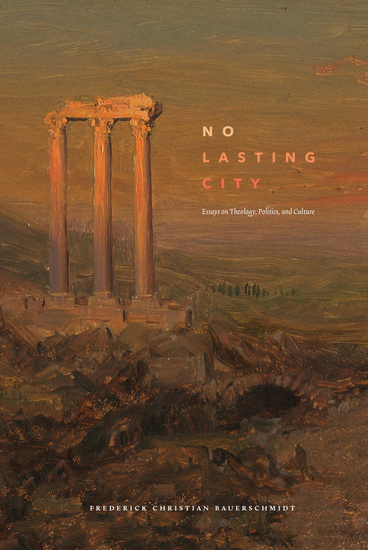
  • No Lasting City - Essays on Theology Politics and Culture - cover

    No Lasting City - Essays on...

    Fritz Bauerschmidt

    • 0
    • 0
    • 0
    In No Lasting City, Frederick Christian Bauerschmidt collects essays written over a twenty-five-year period that explore the relationship between theology, politics, and culture. Drawing on the Christian theological tradition and engaging thinkers from Augustine and Julian of Norwich to Max Weber and Michel de Certeau, Bauerschmidt sketches a picture of faithful engagement with politics and culture that has robustly Christological contours. The stories of Flannery O’Connor, the paintings of the Flemish Primitives, the curricula of medieval universities, and modern accounts of mystical experience all serve as points by which the path of God’s pilgrim city is charted, as a way both of understanding our past and present and of orienting us toward our hoped-for homeland.
    Show book
  • Kamakura Shogunate - Samurai Power and the Mongol Invasions - cover

    Kamakura Shogunate - Samurai...

    Rolf Hedger

    • 0
    • 0
    • 0
    The rise of the Kamakura Shogunate marks a pivotal moment in Japanese history, transitioning from the aristocratic Heian period to the feudal system dominated by the samurai. This era began with the victory of Minamoto no Yoritomo, who, after the Genpei War (1180-1185), established a new form of governance centered in Kamakura, a small coastal town far from the imperial capital of Kyoto. 
    The Genpei War was a civil conflict between the Taira and Minamoto clans, which ultimately ended with the defeat of the Taira in the Battle of Dan-no-ura in 1185. Minamoto no Yoritomo, the leader of the Minamoto clan, emerged as the victor, but his triumph was not simply a personal or clan-based success. Yoritomo's victory laid the foundation for a shift in the political landscape of Japan. The Taira had represented the old courtly aristocracy that governed Japan through the imperial system, but the rise of the Minamoto signaled the beginning of samurai dominance and a move toward military rule. 
    In 1192, Yoritomo was granted the title of shogun by the emperor, an act that formalized his military authority. This title, meaning "generalissimo" or "commander of the army," was traditionally given to military leaders in times of war but had never been used as the primary governing title before. This marked the official beginning of the Kamakura Shogunate, a military dictatorship that would rule Japan for over a century. Though the emperor remained the nominal ruler, Yoritomo’s power was based in Kamakura, far from the imperial court, which shifted the balance of power from the capital to the military elite.
    Show book
  • The Modern Collector - How to Start and Grow a Unique Collection - cover

    The Modern Collector - How to...

    Alvin Corbyn

    • 0
    • 0
    • 0
    In a world where passion meets precision, The Modern Collector is your definitive guide to the art and science of collecting. Whether you're a seasoned collector or just starting your journey, this book will inspire and equip you with the knowledge to build, grow, and cherish your collection. 
    Explore the various facets of collecting, from choosing a focus to expanding your collection with care. Learn the techniques for organizing and displaying your treasures, navigating online marketplaces, and understanding the value—both financial and emotional—of your items. Each chapter delves into a different aspect of the collecting experience, offering practical advice, insights from notable collectors, and stories behind some of the world’s most iconic collections. 
    But collecting isn’t just about objects—it’s about the memories, the thrill of discovery, and the legacy you leave behind. In The Modern Collector, you’ll uncover how to forge a deeper connection with your collection and how to pass it on to future generations, ensuring your passion lives on. 
    Inside this book, you’ll discover:How to select and refine your collecting focus to build a meaningful collectionPractical tips on organizing, displaying, and preserving your treasuresInsights into the financial value of collectibles and how to evaluate your own itemsExpert advice on navigating online marketplaces and auctionsStories of notable collectors and the fascinating histories behind iconic collectionsThe emotional journey of collecting and the personal connections formed with cherished itemsGuidance on passing down your collection and creating a lasting legacy 
    Whether you’re drawn to rare books, vinyl records, vintage toys, or antiques, The Modern Collector is the ultimate companion for anyone who finds joy in the pursuit of something rare and remarkable.
    Show book
  • Why the Beach Boys Matter - cover

    Why the Beach Boys Matter

    Tom Smucker

    • 0
    • 0
    • 0
    Of all the white American pop music groups that hit the charts before the Beatles, only the Beach Boys continued to thrive throughout the British Invasion to survive into the 1970s and beyond. The Beach Boys helped define both sides of the era we broadly call the sixties, split between their early surf, car, and summer pop and their later hippie, counterculture, and ambitious rock. No other group can claim the Ronettes and the Four Seasons as early 1960s rivals; the Mamas and the Papas and Crosby, Stills and Nash as later 1960s rivals; and the Beatles and the Temptations as decade-spanning counterparts. 
     
    This is the first book to take an honest look at the themes running through the Beach Boys’ art and career as a whole and to examine where they sit inside our culture and politics—and why they still grab our attention.
    Show book
  • Fast Classical Music - cover

    Fast Classical Music

    Ludwig van Beethoven, Various...

    • 0
    • 0
    • 0
    Fast Classical Music: Energize Your Day 
     
    Are you ready to elevate your energy levels? Look no further! Introducing the ultimate classical music collection for your active lifestyle. Whether you’re running, working out, or just need a boost, these electrifying compositions will keep you moving: 
     
    Waltz in D flat major ‘Minute’, Op. 64 No. 1 – Feel the rhythm as Chopin’s waltz sweeps you off your feet. 
    “Flight of the Bumblebee” – A whirlwind of notes from Rimsky-Korsakov’s opera “Tale of Tsar Saltan.” 
    “Toccata and Fugue in D minor, BWV 565” – Bach’s organ masterpiece, a lightning-fast thrill ride. 
    “In the Hall of the Mountain King” – Grieg’s intense mountain chase, adrenaline pumping! 
    “Hungarian Rhapsody No. 2” – Liszt’s virtuosic showcase, pure musical fireworks. 
    “Tarantelle, Op. 43” – Chopin’s fiery dance, perfect for your active moments. 
    Haydn Piano Sonata in G major, Hob. XVI:6 (I) – Haydn’s playful spirit in every note. 
    “Overture to Orpheus in the Underworld” – Offenbach’s lively overture (with added rain?). 
     
    But wait, there’s more! Dive into Beethoven’s mind with a brief autobiography. Discover his thoughts on composing and performing music.
    Show book
  • Urban Economics - Understanding City Growth and Economic Development - cover

    Urban Economics - Understanding...

    Lyric Vale

    • 0
    • 0
    • 0
    Urban economics is the study of how economic forces shape the development, growth, and functioning of cities. In today’s rapidly urbanizing world, understanding the dynamics of urban areas is crucial for policymakers, businesses, and residents alike. Cities are the engines of economic activity, often driving national economies through industrialization, technological advancement, and labor market opportunities. The field of urban economics provides a framework for analyzing the complex interactions between land use, housing markets, transportation, and labor, all of which influence the growth and prosperity of cities. 
    One of the core ideas of urban economics is the concept of agglomeration, which refers to the concentration of people and businesses in a specific area to take advantage of economies of scale, reduced transportation costs, and access to a skilled workforce. This concentration leads to the formation of cities as hubs of economic activity, where services, manufacturing, and innovation thrive. However, agglomeration also brings challenges, such as congestion, pollution, and rising living costs. Urban economists seek to understand these trade-offs and develop policies that can foster economic growth while addressing the negative externalities associated with urbanization. 
    Another fundamental aspect of urban economics is the relationship between urban form and economic performance. Cities are not static entities; they evolve over time as they expand, change in function, and adapt to shifting economic realities. The spatial structure of a city—how land is used, where different activities are located, and the connectivity between various areas—can significantly impact its economic performance. Urban economics explores how factors like zoning laws, infrastructure, and transportation systems influence a city’s efficiency, livability, and overall success.
    Show book