Join us on a literary world trip!
Add this book to bookshelf
Grey
Write a new comment Default profile 50px
Grey
Subscribe to read the full book or read the first pages for free!
All characters reduced
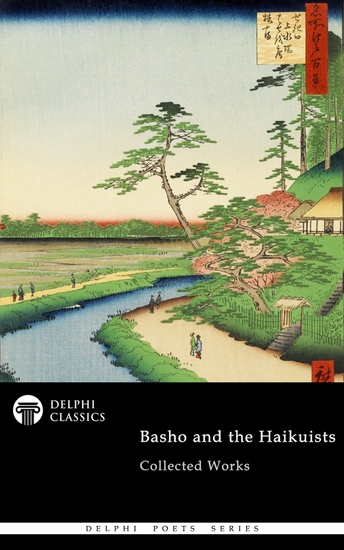
Delphi Collected Works of Basho and the Haikuists (Illustrated) - cover

Delphi Collected Works of Basho and the Haikuists (Illustrated)

Matsuo Basho

Translator Michael Haldane

Publisher: Delphi Publishing Ltd

  • 0
  • 0
  • 0

Summary

The most famous poet of the Edo period in Japan, Matsuo Basho was of samurai descent and a Zen Buddhist, who became a master of haiku. He helped create a new style of poetry, capturing the meaning of the world into simple poetry. His work is celebrated for contrasting two separate experiences, reflecting the environment and emotions of a single moment, taken directly from nature. Haiku is a short form of poetry, composed of three phrases and 17 syllables. It has been employed by Basho and his fellow haikuists throughout the last five hundred years to convey an extraordinary depth of expression and ornate beauty. The Delphi Poets Series offers readers the works of literature’s finest poets, with superior formatting. This volume presents a wide selection of haiku by the leading poets of the last five centuries, with new translations, illustrations and the usual Delphi bonus material. (Version 1)
 
* Beautifully illustrated with images relating to Basho’s life and works* Comprehensive introduction to the haiku form* Concise introduction to the life and poetry of Basho and other prominent haikuists* Original translations by Michael Haldane* Excellent formatting of the poems* Includes a wide selection of haikuists* Features two analytical works on the development of the haiku form
 
Please visit www.delphiclassics.com to see our wide range of poet titles
 
CONTENTS:
 
IntroductionIntroduction to Haiku by Michael Haldane
 
The HaikuProminent HaikuistsOther Haikuists
 
AnalysisPoetry of the Seventeenth Century by William George AstonJapanese Poetry by Basil Hall Chamberlain
 
Please visit www.delphiclassics.com to browse through our range of poetry titles or buy the entire Delphi Poets Series as a Super Set
Available since: 01/25/2022.

Other books that might interest you

  • The Impermanence of Lilies - cover

    The Impermanence of Lilies

    Daniel Yeo

    • 0
    • 0
    • 0
    The captain of the Titanic went down with his ship on 15 April, 1912. But thoughts have power, and those who endure in the stories of the living are said to continue to roam the world after their deaths. And so the captain wanders in search of the things he tried to find in life, and discovers his destiny intimately entwined with a painter who shares the same fate, not knowing that their paths had crossed a long time ago. 
     
    The Impermanence of Lilies is a melancholic tribute to the nature of life and a yearning for love, in a story that reaches across lifetimes, borders, and the space between two hearts. 
     
     
    "A poetic, poignant love letter to life. Daniel Yeo has important things to tell us about the painful beauty of impermanence, and he tells them with a tender lyricism." 
    -Melissa de Villiers, author of The Chameleon House 
     
    “A wistful travel narrative by the RMS Titanic Captain that dives into preternatural waters, flowing into surprising and surrealist tributaries of reflections on death, memory, identity, friendship, and unwaveringly, love.” 
    -Cyril Wong, poet and fictionist
    Show book
  • USEFULNESS of HIPPOPOTAMUS THE - A Humorous Chapbook for Trying Times - cover

    USEFULNESS of HIPPOPOTAMUS THE -...

    Vincent J. Tomeo

    • 0
    • 0
    • 0
    I am staring at a blank piece of paper, wondering what to write. Where do I begin? My mind begins to wander-pleasant thoughts of Disney's Fantasia dance in my head. The dancing hippopotamus comes to mind, and this made me laugh. The result: I penned a poem on the hippopotamus from which a chapbook was born: The Usefulness of Hippopotamus: A Humorous Chapbook for Trying Times. 
    One cannot imagine a world without humor. Without humor, the world will be dark, cold, and a sad place, tragically lacking joy, cheerfulness, and laughter. 
    Humor is medicine. During rough times, humor will help lighten and lessen physical and mental anxiety. 
    In challenging times, I chose humor. During the Pandemic, I had to deal with my bladder cancer. In my struggle not to get depressed or dwell in negativity, to find solace, contentment, and peace, I chose to seek out beauty and laugh. 
    In search of happiness, the humor worked its charm, resulting in a treasure chest of joy. So, I wrote my chapbook, The Usefulness of Hippopotamus: A Humorous Chapbook for Trying Times and discovered humor even among the hippopotami! 
    You can, too. 
    Peace & flowers. Love & light. 
    Vincent J. Tomeo, Author/Poet
    Show book
  • King Troll (The Fawn) - cover

    King Troll (The Fawn)

    Sonali Bhattacharyya

    • 0
    • 0
    • 0
    'I'll do anything for you. I can do anything for you.'
    Nikita and Riya are two South Asian sisters: insecure, stateless and desperate for somewhere to call 'home'.
    Nikita's work with young migrants requires her to keep her saviour complex in check as she negotiates the challenges and hypocrisy of the third sector. Meanwhile, Riya is offered the chance to create an advocate in the form of a homunculus (or fawn), and sees a chance to elevate herself above the cruelty meted out to others.
    Sonali Bhattacharyya's play King Troll (The Fawn) is a dark and dystopian exploration of migrant experiences in all their complexity – and the troll that lives within all of us, whispering 'me, not us', and definitely 'me first'. It was a finalist for the 2023 Women's Prize for Playwriting, and was first performed as a co-production between Kali Theatre and New Diorama Theatre, London, in 2024, directed by Milli Bhatia.
    Show book
  • On the Subject of Blackberries - cover

    On the Subject of Blackberries

    Stephanie M. Wytovich

    • 0
    • 0
    • 0
    Winner of the Bram Stoker Award for Superior Achievement in Poetry 
    Welcome to the garden. Here we poison our fruits, pierce ourselves with thorns, and transform under the light of the full moon. Mad and unhinged, we fall through rabbit holes, walk willingly into fairy rings, and dance in the song of witchcraft, two snakes around our ankles, the juice of berries on our tongues. 
    Inspired by Shirley Jackson’s We Have Always Lived in the Castle, these poems are meditations on female rage, postpartum depression, compulsion, and intrusive thoughts. They pull from periods of sleep deprivation, soul exhaustion, and nightmarish delusions, and each is left untitled, a nod to the stream-of-conscious mind of a new mother. 
    Using found poetry and under the influence of bibliomancy, Wytovich harnesses the occult power of her imagery and words and aligns it with a new, more vulnerable, darkness. These pieces are not only visions of the madwoman in the attic, but ghostly visitations that explore the raw mental torture women sometimes experience after giving birth. 
    This collection heals as much as it scars, and is an honest look at how trauma seeps into the soil of our bodies. Her poems are imagined horrors, fictional fears, and all the unspoken murmurs of a mind lost between reality and dream. What she leaves in her wake is nothing short of horror—the children lost, the garden dead, the women feral, ready to pounce.
    Show book
  • Poets on Poetry - The most artistic and creative form of writing we have a selection of poems from those artistic and creative minds about poetry itself - cover

    Poets on Poetry - The most...

    Matthew Arnold, Sarojini Naidu,...

    • 0
    • 0
    • 0
    Who has not tried to write a poem?  The poetic form of words seems to be rather easy.  In its basic form, which we learn as children, the rhyming couplet is, in a child’s written and spoken words, pure joy - success!  In the hands of a Shakespeare it is magnificent with a reach and understanding that the rest of us enjoy but are far from even attempting.    
     
    As we listen to various poetic forms, schools and movements we can only react with wonder at how these innocent words are assembled to create symphonies of ideas, wonder and revelation.  The emotions they seek to invoke can be anything from happiness to sadness, from love to revulsion. 
     
    Arnold, Stevens, Keats, Akhmatova, Browning, Herrick, Hood, Killigrew are but a few of the roll-call of wordsmiths who with mere words create ravenous beauty that reveals tender lines and sensitive verse on how and why they are who they are. 
     
    01 - Poets on Poetry - An Introduction 
    02 - When I Write Poems by Anna Akhmatova 
    03 - Of My Poems by Thomas MacDonagh 
    04 - An Apology For Her Poetry by Duchess of Newcastle, Margaret Cavendish 
    05 - Sonnet 76 - Why is My Verse So Barren of New Pride by William Shakespeare 
    06 - The Austerity of Poetry by Matthew Arnold 
    07 - Of Modern Poetry by Wallace Stevens 
    08 - Poetry by Claude McKay 
    09 - The Poetry of Keats by George Meredith 
    10 - Future Poetry by Alice Meynell 
    11 - Sonnet 17 - Who Will Believe My Verse in Time to Come by William Shakespeare 
    12 - Poetic Eggs by Ezra Pound 
    13 - Poem by William Carlos Williams 
    14 - On the Grasshopper and Cricket by John Keats 
    15 - Ode on the Poetical Character by William Collins 
    16 - Introduction and Conclusion of a Long Poem by Alan Seeger 
    17 - A True Account of the Birth and Conception of a Late Famous Poem by Charles Sackville, Earl Of Dorset 
    18 - The Poem That Took the Place of a Mountain by Wallace Stevens 
    19 - The Poet and the Poem by Elizabeth Stuart Phelps 
    20 - Of English Verse by Edmund Waller 
    21 - Love, The Soul of Poetry by Anne Killigrew 
    22 - Why, If All Poets Crown Their Love with Verse by Emily Hickey 
    23 - Verse Making Was the Least of My Virtues by Robert Browning 
    24 - The Poet's Love-Song by Sarojini Naidu 
    25 - A Letter to a Brother of the Pen in Tribulation by Aphra Behn 
    26 - Not Every Day Fit for Verse by Robert Herrick 
    27 - On the Poetic Muse by George Moses Horton 
    28 - Sonnet - Written in Keats by Thomas Hood 
    29 - Sonnet 86 -Was It the Proud Full Sail of His Great Verse by William Shakespeare 
    30 - Song in Imitation of Shakespeare by James Beattie 
    31 - The High-toned Old Christian Woman by Wallace Stevens 
    32 - Poetry is a Destructive Force by Wallace Stevens 
    33 - To My Most Dearly Loved Friend Henry Reynolds Esquire of Poets and Poesie by Michael Drayton 
    34 - His Poetry His Pillar by Robert Herrick 
    35 - To Live Merrily and to Trust to Good Verses by Robert Herrick 
    36 - Poem for the End by Ivor Gurney
    Show book
  • Do Jewish Lives Matter? - A Play - cover

    Do Jewish Lives Matter? - A Play

    Beverly Taylor

    • 0
    • 0
    • 0
    The play, “Do Jewish Lives Matter” arose out of the Crown Heights Riot in Brooklyn, a Pogrom where a Black boy was accidentally killed by a Hasidic driver with devastating results. James Baldwin, the famous Negro writer, as far back as 1948 wrote, “Georgia has the Negro as a target of hatred. Harlem has the Jew.” 
     In 1973 Rabbi Kahane wrote, “In no way should we refuse to see the danger to Jews that comes from Black hatred. It is of epidemic proportions.” And again in 1977, when addressing an audience, he said, “In Crown Heights, where poor Jews live side by side with Blacks and are regularly robbed, mugged, terrorized, a Black explosion against them is inevitable.”
    Show book