Join us on a literary world trip!
Add this book to bookshelf
Grey
Write a new comment Default profile 50px
Grey
Subscribe to read the full book or read the first pages for free!
All characters reduced
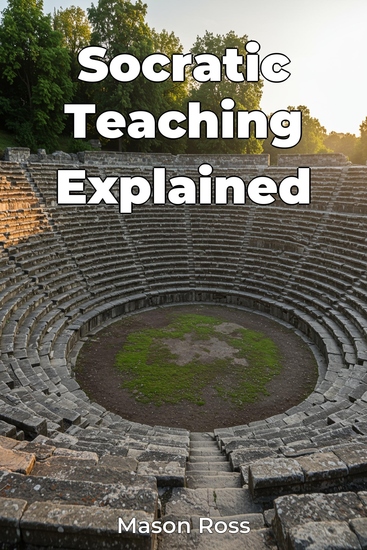
Socratic Teaching Explained - cover

Socratic Teaching Explained

Mason Ross

Translator A AI

Publisher: Publifye

  • 0
  • 0
  • 0

Summary

Socratic Teaching Explained explores the enduring power of the Socratic method, a technique that uses questioning to stimulate critical thinking and intellectual development. Originating with Socrates, this method, particularly prevalent in legal education, fosters deep comprehension by compelling students to confront assumptions and construct knowledge independently. Did you know that maieutics, the art of helping someone "give birth" to their own ideas, is a core principle? Or that elenchus, logical refutation, plays a key role in refining thought? The book examines the method's historical and philosophical roots, dissects its practical application in law school classrooms through case studies and transcripts, and analyzes its effectiveness using cognitive psychology. It progresses from theory to practice, offering educators strategies for implementation and exploring the broader implications for educational reform. What sets this book apart is its blend of theoretical depth with practical strategies, making it a valuable resource for educators seeking to cultivate critical thinking skills in any discipline.
Available since: 04/07/2025.
Print length: 105 pages.

Other books that might interest you

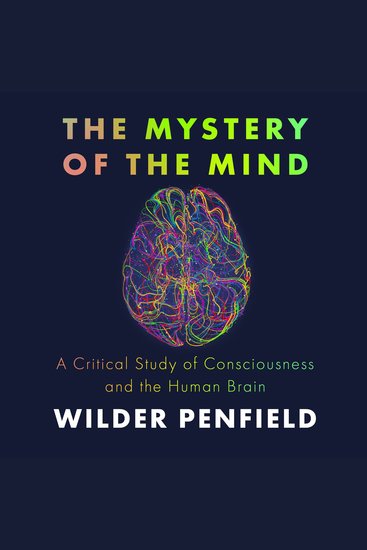
  • The Mystery of the Mind - A Critical Study of Consciousness and the Human Brain - cover

    The Mystery of the Mind - A...

    Wilder Penfield, Charles W....

    • 0
    • 0
    • 0
    A classic account of the relationship between the human brain and the human mind 
    Can the mind be explained by what we know about the brain? Is a person’s being determined by their body alone or by their mind and body as separate elements? In this incisive and engaging book, Wilder Penfield, whose work pioneered such research, shares insights into these and other questions, providing an in-depth look at the function of the brain and its relationship to the action of the mind. With a foreword by Charles W. Hendel, an introduction by William Feindel, and reflections by Sir Charles Symonds, The Mystery of the Mind is Penfield’s compelling personal account of his experiences as a neurosurgeon and scientist observing the inner workings of the brain in conscious patients.
    Show book
  • Justice for Sale - Graft Greed and a Crooked Federal Judge in 1930s Gotham - cover

    Justice for Sale - Graft Greed...

    Gary Stein

    • 0
    • 0
    • 0
    The never-before-told story of Martin T. Manton, a corrupt federal appeals court judge in New York who was convicted in 1939 and sent to prison. From his misconduct, to his co-conspirators, to the sensational prosecution and trial, this is the exhaustively researched account of a discovery that shocked the nation. 
    Martin T. Manton was a corrupt federal appeals court judge in New York who was convicted in 1939 and sent to prison. At the time, this was a hugely important story: Manton was considered the highest-ranking judge in the United States after the nine Justices of the Supreme Court and was nearly appointed to that august body in 1922. Yet his story has never been told in book-length form before, and never with the benefit of such exhaustive research. 
    More than just a biography, this book examines Manton’s misconduct in the context of the culture of corruption and organized crime that permeated New York City in the first part of the twentieth century. Dozens of others—prominent business executives, leading Wall Street lawyers, accountants, bankers, fixers, con men, another federal judge—participated in Manton’s crimes. The book profiles these unscrupulous and often colorful characters as well. 
    Manton and his corrupt schemes were finally brought down but not until Manhattan district attorney and future presidential candidate Thomas Dewey’s successful pursuit of Manton, a federal grand jury investigation, and a sensational prosecution and trial in federal court that shocked the nation.
    Show book
  • Strange People on the Hill - How Extremism Tore Apart a Small American Town - cover

    Strange People on the Hill - How...

    Michael Edison Hayden

    • 0
    • 0
    • 0
    A gripping story that reveals what happened to a small American town when an influential white nationalist group relocated its headquarters there, illustrating how radical changes in American politics impact our psyches and divide our communities. 
     
    “A timely and engagingly written account by an expert on extremism and hate groups.” ―Ruth Ben-Ghiat, author of Strongmen 
     
    When the white nationalist group VDARE used dark money to purchase a historic castle overlooking Berkeley Springs in West Virginia, America’s “cold civil war” spilled into this scenic tourist town. 
     
    From behind the imposing stone walls of their castle, VDARE’s Peter and Lydia Brimelow spread propaganda focused on the “great replacement” conspiracy theory, sowing discord in the once peaceful town below. In an attempt to restore civility, a group of neighbors banded together to oppose VDARE’s presence in Berkeley Springs. 
     
    Strange People on the Hill urgently demonstrates how extreme reactionary ideology and the national politics that embody it disrupt the lives of everyday Americans while highlighting the intimate relationship between violent, racist radicalism and what now passes for mainstream conservatism. 
     
    Through extensive on-the-ground reporting, renowned researcher and investigative reporter Michael Edison Hayden shows how the politicized culture wars manifest in deeply personal dramas and conflicts in a moving narrative about how the people of Berkeley Springs are bravely standing up against hate and division and forging a community built on inclusivity, respect, and neighborliness.
    Show book
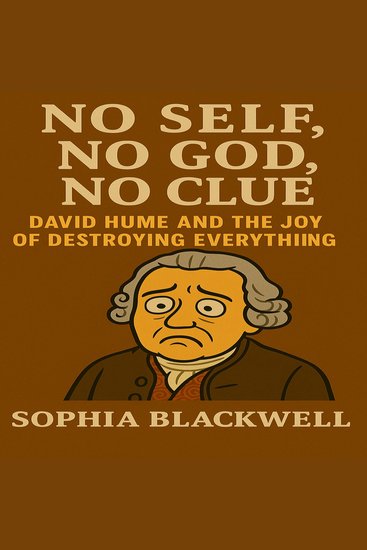
  • No Self No God No Clue - David Hume and the Joy of Destroying Everything - cover

    No Self No God No Clue - David...

    Sophia Blackwell

    • 0
    • 0
    • 0
    ohn Locke: Enlightenment philosopher, father of liberalism, inventor of “natural rights,” and accidental spiritual patron of land developers, libertarians, and your uncle who won’t shut up about property taxes. 
    In this gloriously sarcastic takedown of one of Western philosophy’s most over-quoted minds, Sophia Blackwell (Kant You Not, No Self, No God, No Clue) guides you through Locke’s greatest hits—including: 
    The blank slate theory, which basically says you’re born dumb and the world makes you worse 
    His ideas on identity, which collapse the second you forget your phone password 
    His version of consent, which mostly consists of “You didn’t leave, so I assume you’re fine with it.” 
    And of course, property rights—where mixing your labor with the earth somehow makes it yours, and stealing land becomes morally correct as long as you bring a shovel 
    Locke’s political philosophy inspired democracies, revolutions, and every 400-comment Reddit thread titled “Taxation is theft.” 
    This is not a respectful biography. 
    This is a roast. A eulogy. A survival guide for understanding how Locke gave us: 
    Liberalism 
    Landlords 
    Legal headaches 
    And a political system that thinks fencing off a patch of dirt = moral superiority 
    Perfect for: 
    Recovering philosophy students 
    Political skeptics 
    Enlightenment haters 
    Property law survivors 
    And anyone who wants to laugh while questioning whether government is just a giant metaphor for a really passive-aggressive roommate agreement 
    You don’t need to read Two Treatises of Government. 
    You just need to know Locke said, “I think I own that,” and people believed him.
    Show book
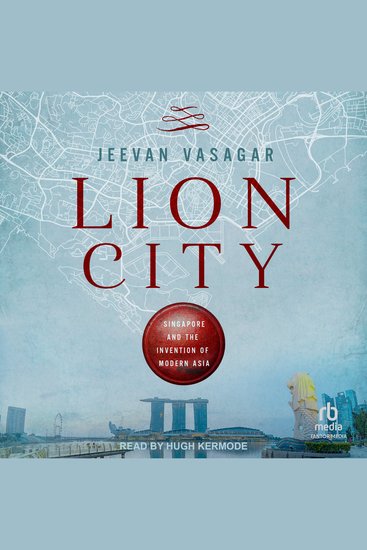
  • Lion City - Singapore and the Invention of Modern Asia - cover

    Lion City - Singapore and the...

    Jeevan Vasagar

    • 0
    • 0
    • 0
    In 1965, Singapore's GDP per capita was on a par with Jordan. Now it has outstripped Japan. After the Second World War and a sudden rupture with newly formed Malaysia, Singapore found itself independent–and facing a crisis. It took the bloody-minded determination and vision of Lee Kuan Yew, its founding premier, to take a small island of diverse ethnic groups with a fragile economy and hostile neighbors and meld it into Asia's first globalized city.Lion City examines the different faces of Singaporean life–from education and health to art, politics, and demographic challenges–and reveals how in just half a century, Lee forged a country with a buoyant economy and distinctive identity. It explores the darker side of how this was achieved too; through authoritarian control that led to it being dubbed "Disneyland with the death penalty."Jeevan Vasagar, former Singapore correspondent for the Financial Times, masterfully takes us through the intricate history, present, and future of this unique diamond-shaped island one degree north of the equator, where new and old have remained connected. Lion City is a personal, insightful, and definitive guide to the city, and how its extraordinary rise is shaping East Asia and the rest of the world.
    Show book
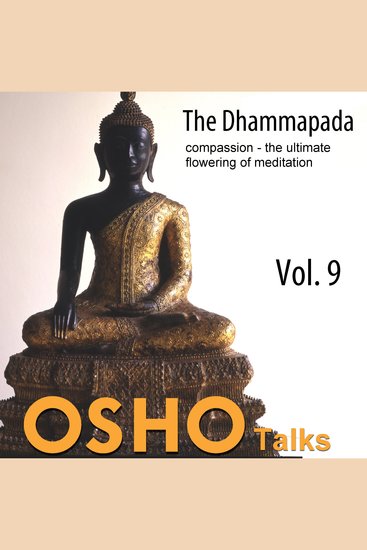
  • Dhammapada The - The Way of the Buddha Vol09 - Compassion - The Ultimate Flowering of Wisdom - cover

    Dhammapada The - The Way of the...

    Osho

    • 0
    • 0
    • 0
    The Dhammapada Vol. 09 continues Osho's celebrated series of talks on the Dhammapada, one of the most influential collections of the Buddha's teachings. In this volume, Osho explores one of the most beautiful dimensions of the spiritual journey: compassion—the natural flowering of meditation and awareness.
    Rather than offering a traditional commentary, Osho creates a bridge between the Buddha's timeless wisdom and the challenges of contemporary life. Alternating between illuminating the Buddha's original sutras and responding to questions from his audience, he reveals how ancient insights become practical guidance for modern seekers.
    Compassion, Osho explains, is not a moral ideal or something to be cultivated through discipline. It is the natural outcome of inner transformation. As meditation deepens, anger, greed, fear, jealousy, and attachment are not suppressed—they are understood and transcended. The same energies are transformed into compassion, freedom, wisdom, and love.
    Throughout these talks, Osho explores the nature of awareness, inner freedom, truth, responsibility, and the courage to live consciously. He presents the Buddha not as a figure to be worshipped, but as an invitation to discover truth through direct experience.
    Talks in This Volume
    
    - Be On Guard
    - Is There Life Before Death?
    - Buddhas Only Point the Way
    - Freedom Is Something Inner
    - The Risk Is Worth Taking
    - Truth Cannot Be Lost
    - Two Flowers Bloom
    - The Nature of Things
    - Consciousness Is the Only Revolution
    - Intelligent People Are Dangerous
    OSHO TALKS - from original recordings of live events with Osho and his audience of seekers and friends from around the world. Recorded at the Osho International Meditation Resort, Pune, India.
    Copyright © ℗ Osho International Foundation
    Show book