Join us on a literary world trip!
Add this book to bookshelf
Grey
Write a new comment Default profile 50px
Grey
Subscribe to read the full book or read the first pages for free!
All characters reduced
Rise of Standardized Tests - cover

Rise of Standardized Tests

Mason Ross

Translator A AI

Publisher: Publifye

  • 0
  • 0
  • 0

Summary

Rise of Standardized Tests offers a comprehensive examination of the influence of standardized tests on global education. It explores how these tests, intended as objective measures of student achievement, have evolved to shape curriculum design, educational accountability, and even student motivation. The book uniquely addresses the multifaceted effects of standardized testing, from its historical roots in early intelligence testing to its present-day role in educational policy. Intriguingly, the book reveals that the overuse of standardized tests can lead to unintended consequences, such as increased test anxiety among students, and the narrowing of curriculum. This academic text is structured to provide a clear understanding of the subject. Beginning with an overview of standardized testing's history and various types, the book progresses to analyze its impact on teaching practices and learning environments. The final section delves into how test data informs educational policies. Through empirical research, statistical data, and case studies, the book provides an accessible yet rigorous analysis, making it a valuable resource for educators, policymakers, and anyone interested in the complexities of educational assessment.
Available since: 02/26/2025.
Print length: 71 pages.

Other books that might interest you

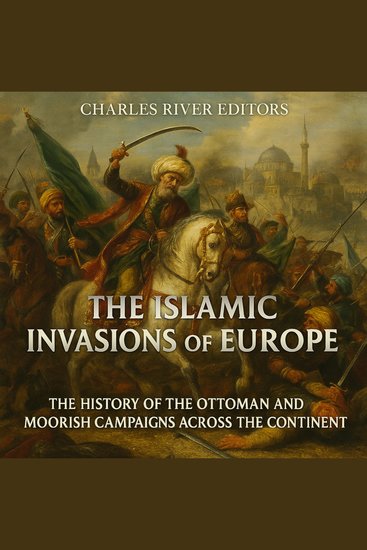
  • Islamic Invasions of Europe The: The History of the Ottoman and Moorish Campaigns across the Continent - cover

    Islamic Invasions of Europe The:...

    Charles River Editors

    • 0
    • 0
    • 0
    The history of the Spanish Peninsula is closely bound to that of the Moors. The term “Spain” was not in wide use until the region was united by the monarchs of Aragon and Castile, and the Moors called the lands they ruled in the Iberian Peninsula Al-Andalus, traditionally thought to be an Arabic transliteration of Vandal, the Germanic tribe which briefly ruled the region in the early fifth century. The English name Andalusia derives from the Spanish Andalucia, which is still used by Spain to name its southern region. 
    	Not surprisingly, three religions attempting to coexist during medieval times resulted in nearly incessant conflicts, marked by high taxation, disparate societies, rigid cultural controls, and systemic violence. Despite the odds, these three religions managed to live in a state of quasi-acceptance and peace in most of the major cities in the Iberian Peninsula like Cordoba and Tolaydough, with sporadic warfare occurring on the borders between Al-Andalus and the Christian kingdoms near the Pyrenees Mountains. Muslims, Christians, and Jews would attempt to reorganize their societies several times over the centuries through warfare, always with Jews on the lower rungs and Christians and Muslims fighting it out above them.  
    	The end of the Byzantine Empire had a profound effect not only on the Middle East but Europe as well. Constantinople had played a crucial part in the Crusades, and the fall of the Byzantines meant that the Ottomans now shared a border with Europe. The Islamic empire was viewed as a threat by the predominantly Christian continent to their west, and it took little time for different European nations to start clashing with the powerful Turks. In fact, the Ottomans would clash with Russians, Austrians, Venetians, Polish, and more before collapsing as a result of World War I, when they were part of the Central Powers. 
    Show book
  • Independent Nation: Should Wales Leave the UK? - cover

    Independent Nation: Should Wales...

    Will Hayward

    • 0
    • 0
    • 0
    "A brilliant, insightful primer … A must-read for anyone interested in the future of this country, whatever their view." – Matt Chorley
    "A thorough investigation." – Carwyn Jones, First Minister of Wales 2009–2018
    "An accessible and refreshing read, whichever side of the debate you are on." – Leanne Wood, leader of Plaid Cymru 2012–2018
    "This is a comprehensive, intelligent and much-needed guide to the issues from one of Wales's leading journalists." – Richard Sambrook, emeritus professor at Cardiff University, former director of BBC News
    "Highly recommended." – Martin Shipton, political editor-at-large, Western Mail
    "Lucid and compelling." – Professor Richard Wyn Jones, director of Cardiff University's Wales Governance Centre
    "An engaging and clear-eyed analysis of what is at stake when we talk about independence for Wales." – Mark Blyth, director of the William R. Rhodes Center for International Economics and Finance, Brown University
    ***
    Should Wales leave the UK? It's a conversation that has – unfairly – been all but disregarded by many, including some of the Welsh themselves, with all the focus on their Celtic cousins in Scotland. But independence movements are gaining momentum across Europe, and Wales will be a key voice in these debates. Support for Welsh autonomy is at an all-time high, with the latest polls suggesting as many as one in three are in favour. This is not just unprecedented; it is all but revolutionary.
    Scotland's 2014 referendum taught us that once the independence genie is out of the bottle, it does not go back in. Meanwhile, the Brexit campaign demonstrated that these arguments come with inflated claims, misinformation and scaremongering that can easily poison a complex debate.
    In Independent Nation, Will Hayward brings nuance back to the arena for this crucial national conversation. Brimming with interviews from experts and painting a detailed, colourful picture of the realities of life in Wales – from extreme poverty and disconnected infrastructure to expensive urban regeneration and cafés of Gavin and Stacey fame – this is an open-eyed look at the truths and falsehoods around the country's future. Impartial, informed and thoroughly entertaining, Independent Nation raises the standard of debate around an issue that will affect us all.
    Show book
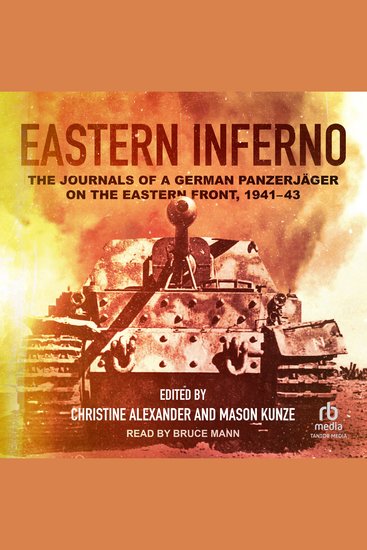
  • Eastern Inferno - The Journals of a German Panzerjäger on the Eastern Front 1941–43 - cover

    Eastern Inferno - The Journals...

    Christine Alexander, Mason Kunze

    • 0
    • 0
    • 0
    This book presents the remarkable personal journals of German soldier Hans Roth. Writing as events transpired, he recorded the mystery and tension as the Germans deployed on the Soviet frontier in June 1941. In these journals, battles are described in "you are there" detail, as Roth wrote privately, as if to keep himself sane, knowing that his honest accounts of the horrors in the East could never pass through Wehrmacht censors. When the Soviet counteroffensive of winter 1942 begins, his unit is stationed alongside the Italian 8th Army, and his observations of its collapse, as opposed to the reaction of the German troops sent to stiffen its front, are of special fascination. 


    Roth's three journals were discovered many years after his disappearance, tucked away in the home of his brother, with whom he was known to have had a deep bond. After his brother's death, his family discovered them and quickly sent them to Rosel, Roth's wife. In time, Rosel handed down the journals to Erika, Roth's only daughter, who had immigrated to America. Hans Roth was doubtlessly working on a fourth journal before he was reported missing in action in July 1944 during the battle known as the Destruction of Army Group Center. Although Roth's ultimate fate remains unknown, what he did leave behind is an incredible firsthand account of the horrific war the Germans waged in Russia.
    Show book
  • Crisis Convoy - The Story of HX231 A Turning Point in the Battle of the Atlantic - cover

    Crisis Convoy - The Story of...

    Sir Peter Gretton

    • 0
    • 0
    • 0
    In April 1943, Commander Peter Gretton was in charge of escorting a vital Allied trade convoy from New York to Great Britain across the North Atlantic. Over the course of the voyage, the sixty-one merchant ships of convoy HX231, along with the six ships of B7 Escort Group, were continuously shadowed and attacked by a German wolf pack of twenty U-boats. 


    With the aid of air support, the convoy and defending escort fought valiantly across hundreds of miles of ocean and, despite poor weather conditions, managed to sink and severely damage several enemy submarines. Tragically six merchant ships were torpedoed and with no rescue vessel any survivors were left stranded in the freezing waters of the Atlantic as the convoy continued on its journey. 


    Drawing on reports from both sides, Gretton details the sequence of events as convoy HX231 battled its way through a large wolf pack and offers an authoritative post-battle analysis of the strategies, decisions, and actions taken that would ultimately see the tide of war turn in favor of victory for the Allies. 


    Crisis Convoy takes the listener to the heart of the action and is a thrilling account of naval warfare during World War II.
    Show book
  • Dark Destinations - A Journey through Dark Tourism And Death Adventures - cover

    Dark Destinations - A Journey...

    Davis Truman

    • 0
    • 0
    • 0
    "Dark Destinations: A Journey through Dark Tourism and Death Adventures" explores the world's most intriguing and morbid travel experiences. In this thought-provoking book, readers embark on a chilling journey to destinations associated with death, tragedy, and the macabre. From haunted locations and infamous crime scenes to eerie catacombs and bone-chilling museums, this book delves into the darker side of tourism, offering a unique perspective on the allure of morbid curiosity and the stories surrounding these ominous places. As you turn the pages of "Dark Destinations," you'll discover the fascinating history, legends, and motivations behind these eerie spots, making it a fascinating read for anyone intrigued by the mysteries of the human psyche and the allure of the macabre.
    Show book
  • Jihad and Genocide - cover

    Jihad and Genocide

    Richard L. Rubenstein

    • 0
    • 0
    • 0
    A study of Islamic fundamentalism, its violent and deadly history, and the questions it raises today. This book examines the relationship between jihad and genocide, past and present. Richard L. Rubenstein takes a close look at the violent interpretations of jihad and how they have played out in the past hundred years, from the Armenian genocide through current threats to Israel. Rubenstein’s unflinching study of the potential for fundamentalist jihad to initiate targeted violence raises pressing questions in a time when questions of religious co-existence, particularly in the Middle East, are discussed urgently each day. Praise for Jihad and Genocide“Provocative, important reading for all interested in Arab-Israeli peace and religious coexistence worldwide. Highly recommended.” —Choice Reviews“Rubenstein’s analysis stands the test of time. Thus, attention must be paid to Rubenstein's new work, Jihad and Genocide, which offers a searing analysis of Islamic thought and bleak predictions of its impact. Even those of us who do not share his pessimism, his sense of the inevitability of the path to genocide and war, or his predilection for the political right, must confront the issues he raises.” —Foreword Reviews
    Show book