¡Acompáñanos a viajar por el mundo de los libros!
Añadir este libro a la estantería
Grey
Escribe un nuevo comentario Default profile 50px
Grey
Suscríbete para leer el libro completo o lee las primeras páginas gratis.
All characters reduced
Frankenstein (illustrated) - cover

Frankenstein (illustrated)

Mary Wollstonecraft Shelley

Editorial: Swish

  • 0
  • 0
  • 0

Sinopsis

Frankenstein; Or, The Modern Prometheus by Mary Wollstonecraft Shelley is a timeless masterpiece that pioneered the science fiction genre. Originally published in 1818, this Gothic novel delves into the themes of human ambition, ethical responsibility, and the unintended consequences of scientific exploration.
Follow Victor Frankenstein, a young scientist driven by an unyielding thirst for knowledge, as he pushes the boundaries of life and death, creating a being with tragic consequences. Set against a backdrop of icy Arctic landscapes and stormy Gothic settings, Frankenstein is both a cautionary tale and a deep exploration of human emotion and morality.
This edition preserves the original text of the 1818 publication, formatted for modern readers while staying true to Mary Shelley's extraordinary vision.
Disponible desde: 07/12/2024.

Otros libros que te pueden interesar

  • F Scott Fitzgerald - Six of the Best - Their legacy in 6 classic stories - cover

    F Scott Fitzgerald - Six of the...

    F. Scott Fitzgerald

    • 0
    • 0
    • 0
    Six has always been a number we group things around – Six of the best, six of one half a dozen of another, six feet under, six pack, six degrees of separation and a sixth sense are but a few of the ways we use this number. 
     
    Such is its popularity that we thought it is also a very good way of challenging and investigating an author’s work to give width, brevity, humour and depth across six of their very best. 
     
    In this series we gather together authors whose short stories both rivet the attention and inspire the imagination to visit their gems in a series of six, to roam across an author’s legacy in a few short hours and gain a greater understanding of their writing and, of course, to be lavishly entertained by their ideas, their narrative and their way with words. 
     
    These stories can be surprising and sometimes at a tangent to what we expected, but each is fully formed and a marvellous adventure into the world and words of a literary master.
    Ver libro
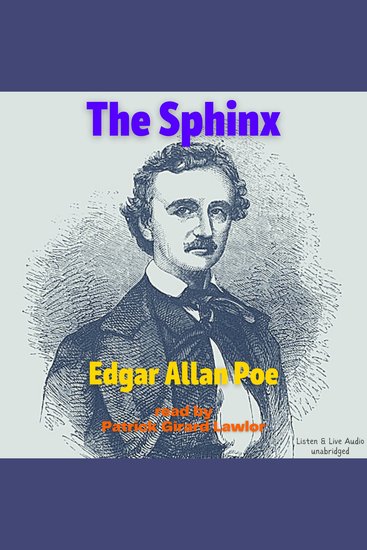
  • The Sphinx - cover

    The Sphinx

    Edgar Allan Poe

    • 0
    • 0
    • 0
    The Sphinx is a short story written by Edgar Allan Poe about a man who decides to visit a relative living near the Hudson River north of New York City for two weeks during a cholera epidemic that occurred during the summer of 1832. One day during this visit, the man is reading a book near the window revealing a scenic view of the Hudson River. His attention is focused upon the cholera epidemic nevertheless, and when he glances up from th pages of his novel, the man sees a ghastly sight in the distant hills--there an enormous creature larger than any oceangoing ship is climbing down!
    Ver libro
  • After the Theatre - cover

    After the Theatre

    Anton Chekhov

    • 0
    • 0
    • 0
    After Nadya, a 16 year old girl, returns home from seeing a play, she is happily consumed with its plot of unrequited love. To Nadya, unrequited love is the most interesting type of love, as love is boring if everyone is happy.
    Quickly, Nadya's thoughts turn to her two suitors, Gorny and Guzdev. Although they have both declared their love for her, she, more than anything, wants to believe that they do not love her. Trying to emulate the unrequited love from the play, she writes a letter to Gorny, like the heroine in the play, to create tension. But then she wonders if she should instead write to Guzdev, or perhaps both!
    Ver libro
  • All’s Well That Ends Well - cover

    All’s Well That Ends Well

    Tom Wheelwright, William...

    • 0
    • 0
    • 0
    The young and virtuous physician’s daughter Helena desperately loves Count Bertram, but he regards her as beneath his notice. 
    When Helena cures the king of France of a mortal illness, he rewards her with Bertram’s hand, but before their marriage can be consummated, the count flees. To win her husband back again, Helena forms a daring and resourceful plan. 
    A plot to unmask the strutting soldier Parolles makes up another strand in this sometimes disturbing comedy of deception and disguise. 
    ACT IScene 1. Bertram, the young Count of Rossillion, is leaving home to take his place at the court of the King of France, who is gravely ill. Bertram bids farewell to his mother the widowed Countess, her friend the old lord Lafew and the young and virtuous Helena, daugther of a famous doctor now deceased, who lives as a dependent in the old Countess’ household. Helena is passionately in love with Bertram, though without hope because he is so far above her in birth. Parolles, a blustering soldier who has attached himself to Bertram, is also going to the French court and Helena determines to follow. She has learned the mysteries of medicine from her father; if she can cure the King, she may win Bertram’s heart.Scene 2. The ailing King tells of war between the Florentines and Sienese; he will give permission to any young gentleman of France who wishes to go to Italy in search of glory. Bertram arrives and the King greets him warmly. Scene 3. The Countess gently forces Helena to admit her love for Bertram and reveal her plan to attempt the King’s cure. The old lady kindly offers her support. 
    ACT IIScene 1. Lafew announces the arrival at court of a young woman who claims to be able to heal the King. The King is deeply skeptical, but Helena persuades him to allow her to make the attempt. Should she succeed, the King is to grant her the husband of her choice.Scene 2. The Countess’ fool Lavatch is to be sent to the court. He claims that he has a response that will serve him in all social situations, but the Countess exposes his folly.Scene 3. Helena has restored the King to joyful health. He offers her the hand in marriage of any of the young lords at court, but when she chooses Bertram he recoils in horror. Angrily, the King commands Bertram to wed Helena instantly. The marriage takes place, but Bertram vows that he will never sleep with his bride and determines to steal away to the Italian wars at once.Scene 4. Helena receives a letter from Bertram telling her that he has been called away and ordering her to take leave of the King.Scene 5. Lafew warns Bertram that Parolles is a hollow sham. Helena enters and Bertram dismisses her curtly, instructing her to return to the Countess. 
    ACT IIIScene 1. The Duke of Florence prepares to welcome the young Frenchmen who come to fight on his behalf.Scene 2. Helena has received a letter from Bertram: until she can get the ring from his finger, which he has vowed never to remove, and produce a child that she has conceived by him, she will never be able to call him husband.Scene 3. The Duke of Florence, impressed by Bertram’s military promise, has given him an important command. Scene 4. The Countess has received a letter from Helena telling her that she has gone on a pilgrimage to atone for her sin in aspiring to Bertram’s love and freeing him from his responsibility for her. The Countess bitterly deplores her son’s arrogance and blindness.Scene 5. Helena has come to Florence where she meets a kindly widow and her beautiful daughter, Diana. The widow tells her that Bertram has fought heroically in the war but also that he has been attempting to seduce Diana. Scene 6. The French soldiers hatch a plot to convince Bertram of Parolles’ cowardliness; pretending to be enemy soldiers, they will capture him, then see if he is prepared to betray his friends.Scene 7. Helena, too, is setting a plot. Diana is to pretend to yield to Bertram’s suit on condition that he give her his ring. She
    Ver libro
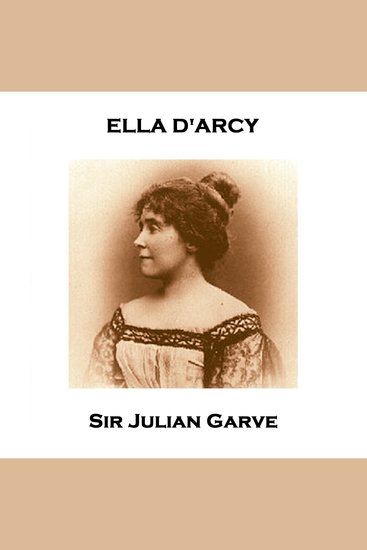
  • Sir Julian Garve - From their pens to your ears genius in every story - cover

    Sir Julian Garve - From their...

    Ella D'Arcy

    • 0
    • 0
    • 0
    Ella D'Arcy was born on 23rd August 1857 in London, one of nine children.  
    Her education spanned London, Germany, France and the Channel Islands. A student of fine art, her poor eyesight meant a switch to literature was needed and with this she had hopes to be an author. 
    She worked as a contributor and unofficial editor, alongside Henry Harland, to The Yellow Book, Aubrey Beardsley’s sensational quarterly magazine that combined art, stories, poetry, essays and much else besides.  D'Arcy wrote several stories for the magazine and her stories have an undeniable psychological and realist style through her engagement with various themes from marriage, the family, imitation through to deception.  
    Recognition of her talents grew after the publication of ‘Irremediable’, in the Yellow Book, where it received much praise from critics.   
    She also wrote and published in the Argosy, Blackwood's Magazine, and Temple Bar.  
    However, D’Arcy’s canon was small and, apart from her magazine stories, her book publishing was limited to ‘Monochromes’ (1895), ‘Modern Instances’ and ‘The Bishop’s Dilemma’ (1898). She also translated André Maurois's biography of Percy Bysshe Shelley entitled ‘Ariel’ (1924). 
    Her diligence with work aside she was notorious for her inability to maintain relationships with friends.  When she did appear to them it was often unannounced.  This earned her the sobriquet 'Goblin Ella.' 
    D'Arcy spent much of her life living alone, though she had a constant urge to travel, but usually she resided on the edge of poverty. Her writing was often motivated by this need. 
    Much of her later life was spent in Paris before returning to London in 1937, where she died, in hospital, on 5th September 1937.
    Ver libro
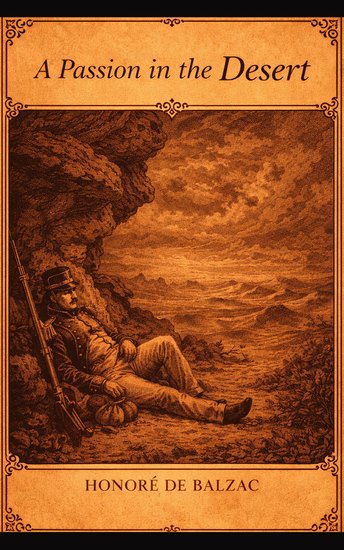
  • A Passion in the Desert - cover

    A Passion in the Desert

    Honoré de Balzac

    • 0
    • 0
    • 0
    In A Passion in the Desert, Honoré de Balzac crafts a haunting and unforgettable tale of isolation, survival, and the strange, fragile bond between man and nature. Set against the vast and merciless landscapes of the Egyptian desert during Napoleon's military campaign, this short yet powerful narrative explores the depths of human emotion under extreme circumstances.
    
    The story follows a French soldier who, separated from his regiment during the Egyptian expedition, finds himself alone in the endless desert—exhausted, starving, and facing certain death. With no civilization in sight and the scorching sun bearing down upon him, he stumbles upon a hidden oasis that becomes his temporary refuge. But his sanctuary is not unoccupied. Within a rocky grotto lies a creature as magnificent as it is deadly—a panther.
    
    What unfolds is a mesmerizing psychological drama. Rather than immediate violence, an unexpected relationship develops between the soldier and the wild animal. Through patience, instinct, and a strange mutual recognition, the two form a silent companionship born of necessity and solitude. The desert, stripped of human society and its conventions, becomes a stage where primal instincts, vulnerability, and tenderness coexist in delicate balance.
    
    Balzac masterfully examines themes of loneliness, fear, trust, and the thin line between civilization and savagery. The soldier's emotional attachment to the panther blurs the boundaries between affection and danger, reason and instinct. Is their connection genuine, or merely a projection of a desperate mind craving companionship? In this stark wilderness, stripped of rank, identity, and societal structure, the soldier confronts his own humanity in its rawest form.
    
    Through vivid imagery and lyrical prose, Balzac transforms the desert into both a physical and symbolic landscape—an expanse reflecting the emptiness, intensity, and unpredictability of the human heart. The story is not merely an adventure of survival, but a profound meditation on passion in its most elemental state: a force that can unite, sustain, and ultimately destroy.
    
    Though brief, A Passion in the Desert stands as one of Balzac's most striking and unconventional works. It is a tale of psychological depth and poetic power, inviting readers to contemplate the nature of attachment, the instincts that govern us, and the fragile illusions we build to survive isolation.
    
    For lovers of classic literature, philosophical fiction, and evocative storytelling, this remarkable narrative offers an intense and unforgettable journey into the heart of solitude—and the wild passions that arise when humanity stands alone.
    Ver libro