Join us on a literary world trip!
Add this book to bookshelf
Grey
Write a new comment Default profile 50px
Grey
Subscribe to read the full book or read the first pages for free!
All characters reduced
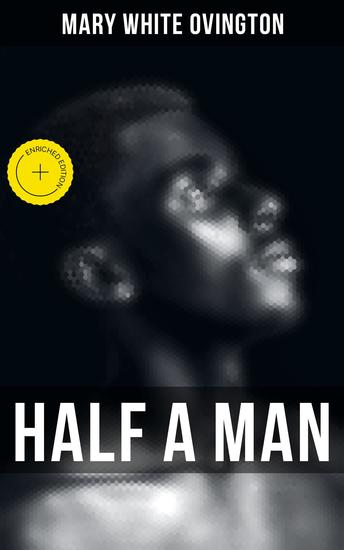
Half a Man - Enriched edition The Status of Black Man in New York - cover

Half a Man - Enriched edition The Status of Black Man in New York

Mary White Ovington

Publisher: Musaicum Books

  • 0
  • 0
  • 0

Summary

In 'Half a Man' by Mary White Ovington, the author delves into the complexities of identity and self-discovery against the backdrop of racial tension in early 20th century America. Ovington's literary style is characterized by poignant prose and deep introspection, drawing readers into the internal struggles of the protagonist. The novel is a standout example of protest literature, shedding light on the discrimination faced by African Americans and biracial individuals during this turbulent time period. Ovington's use of vivid imagery and symbolism adds layers of depth to the narrative, inviting readers to explore themes of race, equality, and personal acceptance. Through the protagonist's journey of self-acceptance, Ovington challenges societal norms and prompts readers to question their own beliefs and biases. Mary White Ovington, a prominent civil rights activist and co-founder of the NAACP, brings a unique perspective to 'Half a Man', infusing the novel with her passion for social justice and equality. Her personal experiences and dedication to the fight for civil rights likely inspired the narrative, adding authenticity and emotional weight to the story. I highly recommend 'Half a Man' to readers interested in thought-provoking literature that explores race relations, personal identity, and the power of resilience in the face of adversity.

In this enriched edition, we have carefully created added value for your reading experience:
- A succinct Introduction situates the work's timeless appeal and themes.
- The Synopsis outlines the central plot, highlighting key developments without spoiling critical twists.
- A detailed Historical Context immerses you in the era's events and influences that shaped the writing.
- A thorough Analysis dissects symbols, motifs, and character arcs to unearth underlying meanings.
- Reflection questions prompt you to engage personally with the work's messages, connecting them to modern life.
- Hand‐picked Memorable Quotes shine a spotlight on moments of literary brilliance.
- Interactive footnotes clarify unusual references, historical allusions, and archaic phrases for an effortless, more informed read.
Available since: 12/17/2020.
Print length: 118 pages.

Other books that might interest you

  • The Gut-Brain Connection - How An Healthy Diet Improve Memory And Cognition Through The Relationship Of The Immune System Nervous System And Hormones - cover

    The Gut-Brain Connection - How...

    Jim Colajuta

    • 0
    • 0
    • 0
    The immune system, neurological system, neurotransmitters, and hormones constantly communicate between the gut and the brain. Alterations in the gut, particularly the gut microbiome, can alter the brain, resulting in behavioral and cognitive changes. A healthy and diversified microbiome acquired by a high fiber diet or probiotic or prebiotic therapy has been linked to cognitive gains.Gut dysbiosis and a decrease in microbial diversity, which can be caused by a Western diet or antibiotic treatments, have been linked to cognitive decline and memory loss. The immune system, metabolites, gut hormones, and neurotransmitters are all plausible mechanisms by which these alterations in the gut operate to change cognition.
    Show book
  • From Whispers to Shouts - The Ways We Talk About Cancer - cover

    From Whispers to Shouts - The...

    Elaine Schattner

    • 0
    • 0
    • 0
    It’s hard today to remember how recently cancer was a silent killer, a dreaded disease about which people rarely spoke in public. In hospitals and doctors’ offices, conversations about malignancy were hushed and hope was limited. In this deeply researched book, Elaine Schattner reveals a sea change—from before 1900 to the present day—in how ordinary people talk about cancer. From Whispers to Shouts examines public perception of cancer through stories in newspapers and magazines, social media, and popular culture. It probes the evolving relationship between journalists and medical specialists and illuminates the role of women and charities that distributed medical information. Schattner traces the origins of patient advocacy and activism from the 1920s onward, highlighting how, while doctors have lost control of messages about cancer, survivors have gained visibility and voice. The book’s final section lays out provocative questions facing the cancer community today—including distrust of oncologists, concerns over financial burdens, and disparities in cancer treatments and care. Schattner considers how patients and their loved ones struggle to make decisions amid conflicting information and opinions. She explores the ramifications of so much openness, good and bad, and asks an important question: Has awareness backfired? Instead, Schattner contends, we need greater understanding of cancer’s treatability.
    Show book
  • Learn Chinese With Music - cover

    Learn Chinese With Music

    Innovative Language Learning, ...

    • 0
    • 0
    • 0
    Can learning Chinese be as simple as listening to music?


    And as easy as remembering song lyrics?


    Just think. You remember song lyrics because lyrics are catchy, repeated throughout the song, and go with the music, right? Now, if you stuck in Chinese, you'd easily learn Chinese words and phrases the same way!


    So, yes, learning Chinese is as easy as listening to music' with the Learn Chinese With Music Audiobook.


    Just press play, and you'll hear Chinese words and phrases repeated to the beat of upbeat and cheerful music. And' follow along!


    You'll learn 180+ most common Chinese words and phrases' while relaxing at home, or while driving to work.


    Learn Chinese With Music is the easiest way to start learning Chinese.. without getting overwhelmed by complicated explanations. Perfect for new learners with little to no language learning experience.


    What will you learn?
     
    180+ Words & Phrases Including...
     
    - Basic Greetings
     
    - Numbers
     
    - Common Questions and Answers
     
    - Parts of the Body & Talking About Your Wellbeing
     
    - Common Hobbies
     
    - And much more


    Learn Chinese With Music includes...
     
    - 15 Songs/Lessons Inside (Each is about 7 minutes long)
     
    - Fast-Paced Review Section at the End of Each Lesson
     
    - 1 Hour 50 Minutes in Total
     
    - Accompanying PDF eBook with the Words, Phrases and Translations


    Download the PDF and read along
    Show book
  • Longbow The: The History of the Weapon that Revolutionized Warfare in the Middle Ages - cover

    Longbow The: The History of the...

    Editors Charles River

    • 0
    • 0
    • 0
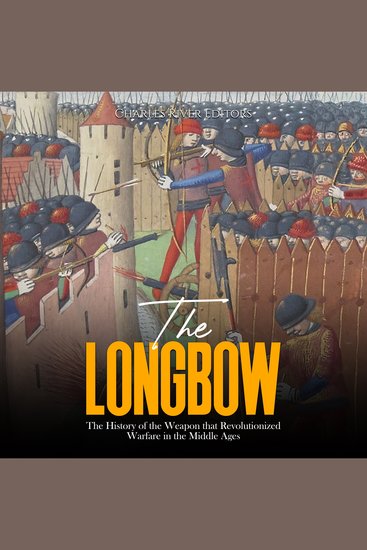
    While the bow was used throughout ancient times and the Middle Ages, on mainland Europe it was mostly replaced by the crossbow in the early 13th century, but that would change with the introduction of the longbow, a more powerful weapon than the traditional hunting bows. The original longbowmen were Welshmen recruited by King Edward I of England after he conquered Wales, and the weapon got its name from the fact that it was almost as tall as the man using it. This gave it a longer draw and therefore more force, as longbows were generally made of yew, a strong and pliable wood. The longbow was cheap and easy to make, but they required extensive training to be used well, so in England, commoners were encouraged and at times required to practice archery. A statute of Richard II dating from 1388 reads, “Servants and Laborers shall have Bows and Arrows, and use the same the Sundays and Holydays, and leave all playing at tennis or foot-ball, and other games called coits, dice, casting of the stone, kaikles [skittles], and other such importune games.” 
    	The longbow’s greatest day was at Agincourt in 1415, but the fact that this did not end the age of heavy plate cavalry indicated the longbow did have some limitations. For example, modern tests show that longbow arrows had trouble piercing plate armor, likely the main reason they were used as a massed weapon. With arrows raining down, it increased the chances of hitting a joint in the armor or an imperfection. Also, horse armor couldn’t protect the entire animal and the knights would soon find themselves dismounted. At some battles like Agincourt, the knights foundered in soft earth, and as their horses fell and the men became confused and hampered by the arrows clanking off their armor, they got mired in the mud and the English infantry could move in and finish them off. 
    Show book
  • Private Censorship - cover

    Private Censorship

    J.P. Messina

    • 0
    • 0
    • 0
    Concerns about censorship have once again reached a fever pitch across the liberal West. With a few notable exceptions, complaints about censorship in the twenty-first century West are complaints about the behavior of private parties: employers, media conglomerates, social media platforms, and search engines. 


    To better understand the concerns surrounding nonstate interference with speech, Private Censorship offers an account of censorship, as well as an assessment of the ethical and political issues it raises across contexts. J. P. Messina asks and variously answers questions like: what should we think when employees get fired for things they say and how might patterns of such firings create a climate of fear inimical to free inquiry? When is it appropriate for social media firms to deplatform users, and what does it mean for our democracy that those in charge of such decisions are often wealthy Silicon Valley executives? Do search engines act as massive gatekeepers to information in troubling ways, and how might they be constrained, if they do? Along the way, Messina casts a critical eye on many popular proposals for responding to these complaints. Unlike these popular approaches, Private Censorship foregrounds the importance of rights to property, association, and free expression for thinking well about twenty-first century censorship concerns.
    Show book
  • US Naval Power in the 21st Century - A New Strategy for Facing the Chinese and Russian Threat - cover

    US Naval Power in the 21st...

    Brent Droste Sadler, J. William...

    • 0
    • 0
    • 0
    This nation's Cold War and Global War on Terror defense structures need an update. U.S. Naval Power in the 21st Century provides such a framework for the changed world we live in, offering a roadmap that shows how the U.S. can field a war-winning fleet that can also compete aggressively in peacetime against dangerous competitors. Brent Sadler presents a compelling new strategy and organizing approach that he calls naval statecraft, which acknowledges the centrality and importance of the maritime domain. While similar to Cold War containment strategies against the Soviets, naval statecraft is much more. It must be to challenge China's involvement in global supply chains, which gives that country significant financial heft and influence around the world. Unlike what existed during of the Cold War, however, Sadler provides a unique vision for competing with China and Russia. Rather than simply calling for better coordinated U.S. diplomacy, military operations, and economic statecraft, Sadler argues for integrating the levers of national power coherently and sustainably. It is an approach imminently appropriate to our times but comes with a realization that the nation is not ready for the competition it faces from China and Russia. The book is a valuable contribution to the national debate over how best to respond to China's rise and Russia's antagonisms.
    Show book