Join us on a literary world trip!
Add this book to bookshelf
Grey
Write a new comment Default profile 50px
Grey
Subscribe to read the full book or read the first pages for free!
All characters reduced
Lodore - Gothic Romance Novel - cover

Lodore - Gothic Romance Novel

Mary Shelley

Publisher: Good Press

  • 0
  • 0
  • 0

Summary

Mary Shelley's "Lodore" intricately weaves themes of gender, power, and the complexities of personal and societal relationships against the backdrop of early 19th-century England. The novel is presented in a fluid prose style that reflects Shelley's command of romantic fiction and social critique. It narrates the tumultuous life of the titular character, Lord Lodore, whose turbulent relationships and struggles against societal norms provide a poignant exploration of the consequences of passion, ambition, and moral responsibility, embodying the period's socio-political upheaval and the evolving discourse on women's roles. Mary Shelley, renowned for her groundbreaking work "Frankenstein," was profoundly influenced by her own experiences'Äîher tumultuous relationships and the societal challenges faced by women of her time. Growing up amidst intellectual upheaval and the shadow of her prominent parents, she was uniquely positioned to critique the patriarchal structures of her society. This personal insight enriches "Lodore," illuminating the emotional and moral dilemmas faced by both men and women in the complications of personal ambition and family ties. Readers seeking a thought-provoking exploration of identity and societal roles will find "Lodore" an essential addition to the canon of feminist literature. Shelley's deft characterizations and lyrical prose invite reflection, ensuring that this novel remains relevant and compelling for modern audiences. It is a must-read for anyone interested in the intersection of gender studies and literary history.
Available since: 11/19/2023.
Print length: 423 pages.
Other books that might interest you

  • The Man Who Missed the Bus - From their pens to your ears genius in every story - cover

    The Man Who Missed the Bus -...

    Stella Benson

    • 0
    • 0
    • 0
    Stella Benson was born on the 6th January 1892 in Easthope, Shropshire to parents who were landed gentry. 
    Her early years involved frequent household moves which was difficult for the child as she suffered from ill-health.  Some of her early education was spent at schools in Germany and Switzerland and by 10 she had developed a lifelong habit of keeping a diary. 
    In the following years her parents separated, and she rarely saw her father. When she did, he encouraged to pause her writing until she had further experience and could better make sense of the world.  When he died, she learned he had been an alcoholic. 
    A winter spent in the West Indies provided material for her first novel ‘I Pose’ published the following year in 1915. 
    During the War years she became involved in the women's suffrage movement and dedicated time outside of writing to support the troops and help the poor. 
    In 1918 she decided to travel spending much time in California, where she also tutored at the University of California, and continued to write.  In China she met her future husband and after marrying in London, journeyed with him to his various Custom postings through Nanning, Beihai, and Hong Kong and the Far East. 
    The works continued to flow novels, short stories, travel essays all helped to build a deserved and burgeoning reputation. 
    Although her works are now in the forgotten and neglected department her writing style, characters, and narratives more than capably demonstrate her obvious talents.   
    Stella Benson died of pneumonia on the 7th December 1933, at Hạ Long in the Vietnamese province of Tonkin.  She was 40.
    Show book
  • A Nervous Breakdown - cover

    A Nervous Breakdown

    Anton Chekhov

    • 0
    • 0
    • 0
    In A Nervous Breakdown, Vasilyev feeling distressed after his visit to few brothels for the first time. Guilt, disgust and shame and of that little voices debating inside his mind that lead him to a symptom of a nervous breakdown. A quirky storytelling, quite distressing but entertaining.
    Show book
  • The Tower Room - From their pens to your ears genius in every story - cover

    The Tower Room - From their pens...

    Arthur Elck

    • 0
    • 0
    • 0
    The bookshelves of European literature are incredible collections that have gathered together centuries of very talented authors.  From this continent their fame spread and whilst among their number many are now forgotten or neglected their talents endure.  Among them is Arthur Elck.
    Show book
  • The Adventure of the Illustrious Client - cover

    The Adventure of the Illustrious...

    Arthur Conan Doyle

    • 0
    • 0
    • 0
    The Adventure of the Blanched Soldier by Sir Arthur Conan Doyle is one of the later Sherlock Holmes stories, first published in 1926. Told uniquely from Holmes’s own perspective rather than Dr. Watson’s, this gripping mystery follows the famed detective as he investigates a haunting case of friendship, fear, and secrecy. When a soldier’s comrade mysteriously disappears after returning from the Boer War, Holmes uncovers a chilling tale involving a hidden illness, a desperate family, and the shadows of honor and duty. With its introspective tone and intricate unraveling, this story showcases Holmes at his most analytical and human, revealing a new side of the world’s greatest detective. Perfect for fans of classic detective fiction, Victorian mysteries, and Arthur Conan Doyle’s timeless craft.
    Show book
  • The Pickwick Papers - cover

    The Pickwick Papers

    Charles Dickens

    • 0
    • 0
    • 0
    The Pickwick Papers was Charles Dickens' first novel. Because of his success with Sketches by Boz published in 1836 Dickens was asked by the publisher Chapman & Hall to supply descriptions to explain a series of comic "cockney sporting plates" by illustrator Robert Seymour,[and to connect them into a novel. The book became Britain's first real publishing phenomenon, with bootleg copies, theatrical performances, Sam Weller joke books, and other merchandise. On its cultural impact, Nicholas Dames in The Atlantic writes, “Literature” is not a big enough category for Pickwick. It defined its own, a new one that we have learned to call “entertainment.” Published in 19 issues over 20 months, the success of The Pickwick Papers popularized serialised fiction and cliffhanger endings. 
     
    Seymour's widow claimed the idea for the novel was originally her husband's, but Dickens strenuously denied any specific input in his preface to the 1867 edition: "Mr. Seymour never originated or suggested an incident, a phrase, or a word, to be found in the book." 
     
    Charles Dickens was an English writer and social critic. He created some of the world's best-known fictional characters and is regarded by many as the greatest novelist of the Victorian era. His works enjoyed unprecedented popularity during his lifetime and, by the 20th century, critics and scholars had recognized him as a literary genius. His novels and short stories are widely read today.
    Show book
  • The Castle - cover

    The Castle

    Franz Kafka

    • 0
    • 0
    • 0
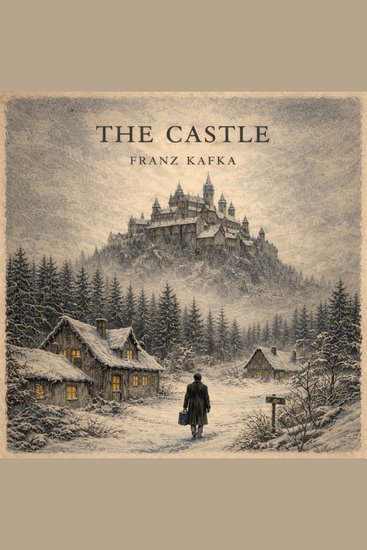
    A man arrives in a snow-covered village, summoned by authorities he cannot see and cannot reach. 
    Above the town stands the Castle — distant, silent, and absolute. 
    K., a land surveyor by profession, believes he has been hired. Yet no one confirms his position. Letters contradict each other. Officials remain unreachable. Messages pass through endless intermediaries. The system is vast, opaque, and impenetrable. 
    In The Castle, Kafka crafts a haunting exploration of bureaucracy, alienation, and the human need for recognition in a world governed by invisible power. 
    As K. struggles to gain access to the Castle, he confronts a reality where logic collapses, authority is abstract, and belonging feels perpetually out of reach. 
    Atmospheric, unsettling, and profoundly philosophical, The Castle remains one of the most powerful and enigmatic works of modern literature — a timeless meditation on power, isolation, and the search for meaning.
    Show book