Join us on a literary world trip!
Add this book to bookshelf
Grey
Write a new comment Default profile 50px
Grey
Subscribe to read the full book or read the first pages for free!
All characters reduced
Ruins and Old Trees Associated with Memorable Events in English History - cover

Ruins and Old Trees Associated with Memorable Events in English History

Mary Roberts

Publisher: DigiCat

  • 0
  • 0
  • 0

Summary

In "Ruins and Old Trees, Associated with Memorable Events in English History," Mary Roberts intricately weaves a tapestry of historical reflections and natural beauty, exploring the significant sites across England that bear witness to its storied past. Her lyrical prose captures not just the physical attributes of these ruins and trees, but also their emotional resonance within the broader narrative of English history. The book is grounded in a rich literary context, echoing the Romantic tradition of finding sublime beauty in nature while meditating on the passage of time and the legacies left behind by historical events. Mary Roberts, an eminent scholar and cultural historian, draws upon her extensive background in English literature and history, likely influenced by her deep appreciation for the intertwined nature of people and place. Her passion for England's heritage shines through every page, revealing how these remnants of the past continue to inspire contemplation and reverence. Roberts' previous works have often examined the intersection of nature with cultural identity, making this book a vital addition to her oeuvre. I wholeheartedly recommend "Ruins and Old Trees" to readers seeking a beautiful intersection of history, nature, and literature. This work is an essential guide for both the casual lover of England and the serious scholar, as it breathes life into the remnants of the past, encouraging reflection on the profound connections between history, landscape, and memory.
Available since: 09/16/2022.
Print length: 2255 pages.
Other books that might interest you

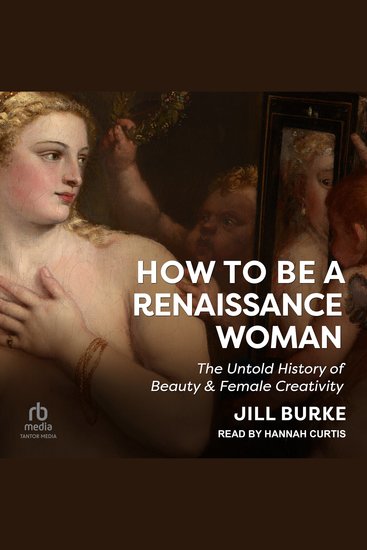
  • How to Be a Renaissance Woman - The Untold History of Beauty & Female Creativity - cover

    How to Be a Renaissance Woman -...

    Jill Burke

    • 0
    • 0
    • 0
    Beauty, make-up, art, power: How to Be a Renaissance Woman presents an alternative history of this period as told by the women behind the paintings, providing a window into their often overlooked or silenced lives. Can the pressures women feel to look good be traced back to the sixteenth century? 


    As the Renaissance visual world became populated by female nudes from the likes of Michelangelo and Titian, a vibrant literary scene of beauty tips emerged, fueling debates about cosmetics and adornment. Telling the stories of courtesans, artists, actresses, and writers rebelling against the strictures of their time, when burgeoning colonialism gave rise to increasingly sinister evaluations of bodies and skin color, this book puts beauty culture into the frame. 


    How to Be a Renaissance Woman will take listeners from bustling Italian market squares, the places where the poorest women and immigrant communities influenced cosmetic products and practices, to the highest echelons of Renaissance society, where beauty could be a powerful weapon in securing strategic marriages and family alliances. It will investigate how skin-whitening practices shifted with the emerging sub-Saharan African slave trade, how fads for fattening and thinning diets came and went, and how hairstyles and fashion could be a tool for dissent and rebellion—then as now.
    Show book
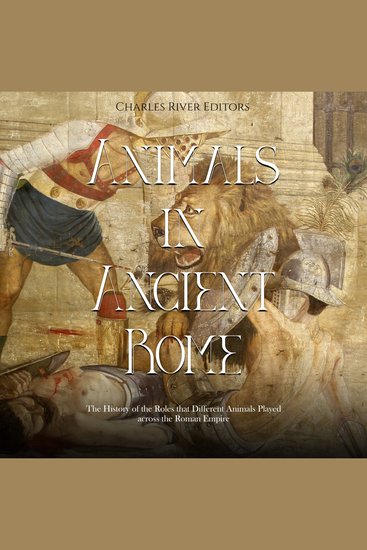
  • Animals in Ancient Rome: The History of the Roles that Different Animals Played across the Roman Empire - cover

    Animals in Ancient Rome: The...

    Editors Charles River

    • 0
    • 0
    • 0
    Rome's complex relationship with animals goes right back to its foundation myth, and even today, the wolf remains a symbol of the Eternal City, forming part of the logo for the capital's football team, A. S. Roma. According to tradition, the city of Rome was founded by Romulus, who, with his brother Remus, was nursed and sheltered by a she-wolf. That tale, widely believed as a historical fact by ancient Romans, had a profound influence on Roman culture, and in part that shaped Roman attitudes toward their animals. The actual cave where Romulus and Remus were said to have been raised, the Lupercal, is thought to have been situated on the Palatine Hill in the very heart of Rome, and there was a claim by some archaeologists it had been found in 2007. True or not, the story of the wolf and its link to the beginnings of Rome continues to intrigue modern citizens, and the recent return of a family of wolves to the outskirts of Rome was greeted with wild enthusiasm. 
    	Other than the tale of the she-wolf with Romulus and Remus, the overriding images and stories of Roman animals that have come down through popular culture to modern times largely concern the vicious animal fights put on in the Colosseum, stories of Christians being thrown to the lions, and Hannibal's invasion of Italy with elephants. Indeed, the widely accepted view is that Romans were uncommonly brutal to their animals and had little empathy for them, and in terms of the Romans' scientific knowledge about animals, it appears much of it came to them from the Greeks.
    Show book
  • Lysis - cover

    Lysis

    Plato

    • 0
    • 0
    • 0
    "Lysis" is a dialogue by Plato that explores the nature of friendship and the qualities that make it valuable. The dialogue is named after the main character, a young boy named Lysis, and is narrated by Socrates. Socrates encounters Lysis and his friend Menexenus, and begins to question them about the nature of their friendship. Lysis and Menexenus struggle to define what makes their friendship valuable, and Socrates suggests that perhaps they are not true friends if they cannot articulate why they enjoy each other's company. Read in English, unabridged.
    Show book
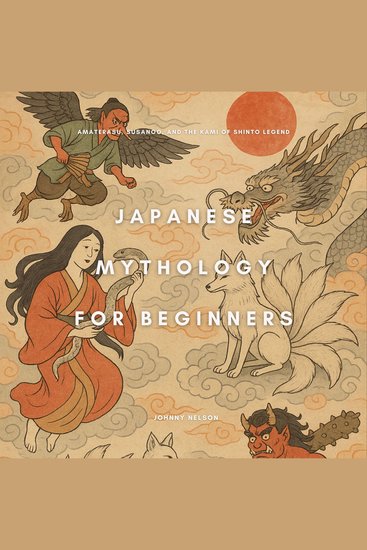
  • Japanese Mythology for Beginners - Amaterasu Susanoo and the Kami of Shinto Legend - cover

    Japanese Mythology for Beginners...

    Johnny Nelson

    • 0
    • 0
    • 0
    Embark on a captivating journey into the heart of Japanese mythology with Japanese Mythology for Beginners: Amaterasu, Susanoo, and the Kami of Shinto Legend. This audiobook offers an accessible and engaging exploration of Japan's rich mythological tapestry, delving into the stories and deities that have shaped its cultural and spiritual landscape for centuries. 
    Discover the radiant Amaterasu, the sun goddess whose emergence from a cave brought light back to the world, and her tempestuous brother Susanoo, the storm god known for his rebellious exploits and eventual redemption. Meet Tsukuyomi, the enigmatic moon god, and explore the intricate relationships among these celestial siblings. 
    Beyond the major deities, this audiobook introduces listeners to a pantheon of kami—spiritual beings that inhabit all aspects of the natural world in Shinto belief. From the sacred mountains and ancient forests to the flowing rivers and everyday objects, the presence of kami reflects a profound respect for nature and the interconnectedness of all things. 
    Through engaging narratives and insightful commentary, Japanese Mythology for Beginners delves into the foundational myths found in ancient texts like the Kojiki and Nihon Shoki, illuminating the origins of Japan's imperial lineage and the cultural values embedded within these tales. 
    Ideal for enthusiasts of mythology, religion, and Japanese culture, this audiobook serves as a comprehensive introduction to Shinto legends and their enduring influence on Japanese society. Whether you're a student, traveler, or curious listener, you'll gain a deeper appreciation for the stories that continue to inspire art, literature, and spiritual practices in Japan today. 
    With its blend of storytelling and scholarly insight, Japanese Mythology for Beginners invites you to explore a world where the divine and the natural coexist harmoniously, offering timeless wisdom and a unique perspective on the human experience.
    Show book
  • The crisis will be back What is to be done? - cover

    The crisis will be back What is...

    Yury Yavorsky

    • 0
    • 0
    • 0
    A crisis can ruin a business of any size. There is a threat of losing everything. This book offers 121 practical tips from a business owner who has overcome three crises. How to survive on your own and save your business. What to do when everyone around you is going crazy. How to find a way to earn in a crisis and go for it. How to act during a crisis and what steps to take after it is over. The recommendations given in the book are useful for businesses of any size and market niche.Content:Frequency and Causes of CrisesThe Economy is a big roulette gameRun uphill from a tsunamiSubstitution or destitution?Kinds of crises"Business Resection" or Ways to Cut SpendingTake urgent action!Crisis as foothold for new victoriesSurvival of the Most Adaptable and NimbleBeware of banking minefieldsCheating the death of businessTranscending Routine Products and Familiar MarketsThunderstorm not a conflagrationTurf warsPushing the boundariesCrises are Bulldozers of Change – Let's Learn to Handle ThemThe Great Depression as disaster referenceLoyal customers will be backStay cool about the demandAbout the Author
    Show book
  • Heavyweight - Black Boxers and the Fight for Representation - cover

    Heavyweight - Black Boxers and...

    Jordana Moore Saggese

    • 0
    • 0
    • 0
    In Heavyweight, Jordana Moore Saggese examines images of Black heavyweight boxers to map the visual terrain of racist ideology in the United States, paying particular attention to the intersecting discourses of Blackness, masculinity, and sport. Looking closely at the "shadow archive" of portrayals across fine art, vernacular imagery, and public media at the turn of the twentieth century, she demonstrates how the images of boxers reveal the racist stereotypes implicit in them, many of which continue to structure ideas of Black men today. With a focus on both anonymous fighters and notorious champions, including Jack Johnson, Saggese contends that popular images of these men provided white spectators a way to render themselves experts on Blackness and Black masculinity. These images became the blueprint for white conceptions of the Black male body—existing between fear and fantasy, simultaneously an object of desire and an instrument of violence. Reframing boxing as yet another way whiteness establishes the violent mythology of its supremacy, Saggese highlights the role of imagery in normalizing a culture of anti-Blackness.
    Show book