Join us on a literary world trip!
Add this book to bookshelf
Grey
Write a new comment Default profile 50px
Grey
Subscribe to read the full book or read the first pages for free!
All characters reduced
The History of Mary Prince - Enriched edition - cover

The History of Mary Prince - Enriched edition

Mary Prince

Publisher: DigiCat

  • 0
  • 0
  • 0

Summary

In "The History of Mary Prince," Mary Prince presents a poignant narrative of her harrowing experiences as an enslaved woman in the West Indies. Written in a straightforward and evocative style, the book combines autobiography with a compelling call for abolition, immersing readers in the brutal realities of slavery. Contextually significant, this work stands as one of the first autobiographies published by a black woman in Britain, effectively highlighting the racial and gender injustices of the time while contributing to the broader abolitionist discourse of the early 19th century. Mary Prince, born into slavery in Bermuda in 1788, underwent severe trauma before gaining her freedom in London. Her personal insights and unwavering courage are further illuminated by her engagement with prominent abolitionists, such as Thomas Pringle, who helped bring her narrative to the public. Prince's life was a testament to the resilience of enslaved individuals, and her work is a vital contribution to both African diaspora literature and historical accounts of slavery. I highly recommend "The History of Mary Prince" to readers interested in understanding the lived experiences of enslaved people, as well as those seeking to explore the intersectionality of race, gender, and class in historical narratives. Prince's voice offers a unique perspective that resonates powerfully in contemporary discussions of equality and justice.

In this enriched edition, we have carefully created added value for your reading experience:
- An Introduction draws the threads together, discussing why these diverse authors and texts belong in one collection.
- Historical Context explores the cultural and intellectual currents that shaped these works, offering insight into the shared (or contrasting) eras that influenced each writer.
- A combined Synopsis (Selection) briefly outlines the key plots or arguments of the included pieces, helping readers grasp the anthology's overall scope without giving away essential twists.
- A collective Analysis highlights common themes, stylistic variations, and significant crossovers in tone and technique, tying together writers from different backgrounds.
- Reflection questions encourage readers to compare the different voices and perspectives within the collection, fostering a richer understanding of the overarching conversation.
Available since: 11/13/2022.
Print length: 64 pages.
Other books that might interest you

  • Understanding the Buddha - cover

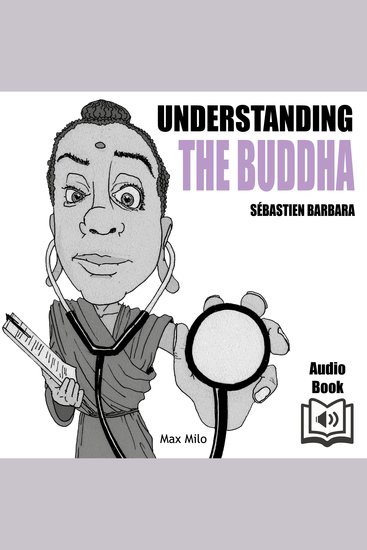
    Understanding the Buddha

    Sébastien Barbara

    • 0
    • 0
    • 0
    “Neither a god, nor a guru, nor a savior” - who is Buddha? This essay sets out to understand this unclassifiable figure by taking stock of the fundamental principles of Buddhist doctrine and unravelling its most famous shortcuts. By following Gotama's “Spiritual Awakening” step by step, this stimulating look at the man whose emancipatory quest “heals the whole world” is far removed from any reductive pessimism. From the Enlightened One's contemporary Greeks to current scientific research, from Schopenhauer to Einstein, from Nietzsche to Lévi-Strauss, this portrait of Buddha is also an illuminating account of the “elective affinities between Buddhism and the West” and of the constant influence the sage has exerted on our thinking.
    Show book
  • Vincente Blasco Ibanez - A Short Story Collection - One of Spains finest writers who's work has been made into countless Hollywood films we have an incredible anthology translated to English for your ears - cover

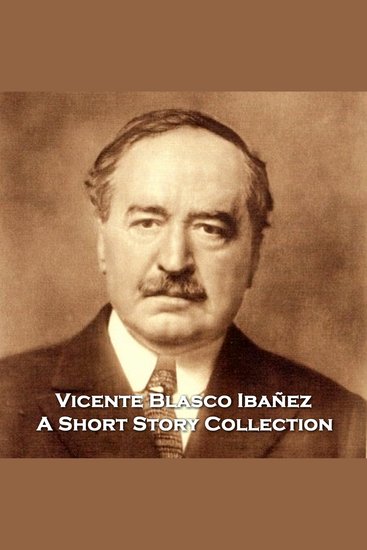
    Vincente Blasco Ibanez - A Short...

    Vincente Blasco Ibanez

    • 0
    • 0
    • 0
    Vicente Blasco Ibáñez was born in Valencia, Spain on 29th January 1867.  
     
    At university, he studied law and graduated in 1888 but never felt the urgency to practice - he was more interested in politics, journalism, literature and women.   
     
    Politically he was a militant Republican partisan and, in his youth, founded a newspaper, El Pueblo (The People). The newspaper was taken to court many times and he made many enemies. In one incident he was shot and almost killed. In 1896, Ibáñez was arrested and sentenced to a few months in prison. 
     
    Despite this colourful background he found time to write novels. His first published work was ‘La Araña Negra’ (The Black Spider) in 1892, a work that he later repudiated although at the time it was a useful vehicle for him to express his anti-clerical views. 
     
    In 1894, he published ‘Arroz y Tartana’ (Airs and Graces), about a late 19th Century widow in Valencia trying to keep up appearances in order to marry her daughters well.   
     
    Ibáñez’s next sequence of books studied rural life in the farmlands of Valencia and failed to gain much of an audience.   
     
    His writing now took on a new direction with its now familiar sensational and melodramatic themes in 1908 with ‘Sangre y Arena’ (Blood and Sand), which follows the career of Juan Gallardo from his poor beginnings as a child in Seville, to his rise to becoming a famous matador in Madrid 
     
    However, his greatest success was ‘Los Cuatro Jinetes del Apocalipsis (The Four Horsemen of the Apocalypse) in 1916, which tells a tangled tale of the French and German sons-in-law of an Argentinian land-owner who find themselves fighting on opposite sides in the First World War.  It was a literary and commercial sensation and became the best-selling book of 1919.  It also propelled Rudolph Valentino to stardom in the 1921 film. 
     
    Ironically his fame in the English-speaking world has come not as a novelist but as the stories behind some of Hollywood’s greatest silent movies. 
     
    Vicente Blasco Ibáñez died in Menton, France on January 28th, 1928, the day before his 61st birthday. 
     
    01 - Vicente Blasco Ibanez - A Short Story Collection - An Introduction 
    02 - Compassion by Vicente Blasco Ibanez 
    03 - Luxury by Vicente Blasco Ibanez 
    04 - Rabies by Vicente Blasco Ibanez 
    05 - The Last Lion by Vicente Blasco Ibanez 
    06 - The Windfall by Vicente Blasco Ibanez<
    Show book
  • Three Questions - The Wisdom of the Present Moment and the Power of Compassion - cover

    Three Questions - The Wisdom of...

    Leo Tolstoy, Tim Zengerink

    • 0
    • 0
    • 0
    What are the most important things in life—and how do we know when to act on them? 
    In Three Questions, Leo Tolstoy delivers a timeless story about a king in search of wisdom. When scholars fail to give him clear answers, a visit to a humble hermit reveals the truth through action rather than words. 
    This modern audiobook adaptation captures the heart of Tolstoy’s parable with simple, clear language, making its message of mindfulness, service, and human connection resonate for today’s listener. 
    What You’ll Hear in This Modern Translation: 
    •	A short, beautiful story about life’s most meaningful questions 
    •	A journey of discovery through compassion, humility, and presence 
    •	A timeless lesson told with quiet power and emotional warmth 
    Included in This Edition: 
    Refined for clarity and accessibility, this audiobook preserves the original’s soul while making its message more relatable than ever. 
    Listen today—and rediscover what truly matters.
    Show book
  • Book summary & analysis of Braiding Sweetgrass by Robin Wall Kimmerer - cover

    Book summary & analysis of...

    Briefly Summaries

    • 0
    • 0
    • 0
    This is a concise summary and analysis of Braiding Sweetgrass, by Robin Wall Kimmerer. It is not the original book and is not affiliated with or endorsed by Robin Wall Kimmerer. Ideal for those seeking a quick and insightful overview.
     
    Braiding Sweetgrass is a meditative exploration of the intersection between science, culture, and the natural world. Blending Indigenous wisdom with ecological knowledge, the book invites readers to reimagine their relationship with nature through stories, reflections, and lessons grounded in reciprocity and respect. Through the lens of botany and personal experience, it portrays plants not just as resources, but as teachers and relatives—offering a poetic call to heal the human connection with the Earth.
    Show book
  • I AM NELSON - The story of a little dog who is larger than life Even when he's dead - cover

    I AM NELSON - The story of a...

    Martina Mars

    • 0
    • 0
    • 0
    A beautiful book for dog lovers and anyone who’s ever loved and lost an animal. 
    Get ready to laugh, cry and fall in love with a very feisty little rescue dog called Nelson. Discover the heartwarming true story about his life with his unconventional human family and friends who are right there by his side during the good times and the bad, and love him come what may – even when he misbehaves, which, admittedly is most of the time.  
    This beautiful book, full of funny and touching memories that will make you smile through tears, is all about the very special bond between a dog and his beloved human family that not even death can break.  
    But is death really the end of his journey? 
    A funny and sad, silly and wise, bittersweet story of love and loss… and hope.
    Show book
  • Constantine the Great - The Roman Emperor Who Made Christianity the Main Religion - cover

    Constantine the Great - The...

    Kelly Mass

    • 0
    • 0
    • 0
    Constantine I, often called Constantine the Great, was one of the most significant emperors of ancient Rome, reigning from 306 to 337 AD. Born in Naissus, in the province of Dacia Mediterranea (modern-day Niš, Serbia), he was the son of Flavius Constantius, a Roman army officer and a prominent figure in the Tetrarchy, and Helena, a woman of humble Greek origins. His father's position as one of the four emperors in the Tetrarchy was instrumental in shaping Constantine's early life and military career. Under emperors Diocletian and Galerius, Constantine demonstrated his military prowess, initially fighting against barbarian tribes and the Persians in the eastern provinces. In 305 AD, he was summoned to the West to aid his father in campaigns in Britain, where he earned further distinction. 
    Following the death of his father in 306 AD, Constantine’s soldiers declared him emperor at Eboracum (modern York, England). Over the next two decades, he would overcome rival emperors, such as Maxentius and Licinius, in a series of civil wars, eventually becoming the sole ruler of the Roman Empire by 324 AD. His reign marked a period of significant transformation, both militarily and administratively. 
    To strengthen the empire, Constantine initiated a series of reforms. He reorganized the imperial administration, separating civil and military powers to create a more efficient system of governance. Acknowledging the need for economic stability, he introduced the solidus, a new gold coin that helped curb inflation. This currency would become the standard for Byzantine and European economies for nearly a millennium. He also restructured the Roman army, creating specialized units that could respond swiftly to internal threats and barbarian invasions.
    Show book