Join us on a literary world trip!
Add this book to bookshelf
Grey
Write a new comment Default profile 50px
Grey
Subscribe to read the full book or read the first pages for free!
All characters reduced
The Evolution of an Empire: A Brief Historical Sketch of France - cover

The Evolution of an Empire: A Brief Historical Sketch of France

Mary Platt Parmele

Publisher: DigiCat

  • 0
  • 0
  • 0

Summary

In "The Evolution of an Empire: A Brief Historical Sketch of France," Mary Platt Parmele offers a concise yet comprehensive examination of the multifaceted history of France, deftly weaving together political, social, and cultural threads that have shaped the nation. Written in a clear and engaging prose style characteristic of late 19th-century historical scholarship, Parmele's work is situated within a burgeoning interest in national histories as Europe grappled with its imperialistic impulses and national identities. The book's organization, marked by thematic sections that explore various epochs, provides readers with both an introductory framework and an insightful analysis of France's evolution through revolutions, wars, and cultural shifts. Mary Platt Parmele, an educator and historian of her time, dedicated her career to making history accessible to a broader audience, often focusing on the intersection of societal progress and national narratives. Influenced by her own experiences as a woman navigating a predominantly male scholarly field, Parmele sought to empower her readers through knowledge, illustrating how historical contexts shape contemporary society. Her keen awareness of social dynamics and commitment to education profoundly impacted her narrative choices in this work. This illuminating text is a vital resource for anyone interested in understanding France's complex past and its implications for the present. Parmele's engaging style and thorough research make this book an essential read for students, educators, and history enthusiasts seeking a nuanced perspective on the evolution of one of the world's most influential empires.
Available since: 09/04/2022.
Print length: 137 pages.

Other books that might interest you

  • Advanced English Collocations and Phrases in Dialogues - Master English Collocations and Phrases with the Aid of Functional Dialogues once and for all - cover

    Advanced English Collocations...

    Robert Allans

    • 0
    • 0
    • 0
    Why is it important to learn collocations and idioms? 
    An appreciation of collocations and idioms will help you to use the words you know more accurately. In other words, you’ll make (NOT do) fewer mistakes. 
    Sound more natural when you speak and write. 
    By saying, for example, go blank, rather than forget everything, you won’t just be understood, you will – quite rightly – sound like a fluent user of English. 
    Vary your speech and, probably more importantly, your writing 
    Instead of repeating everyday words like very, good or nice, you will be able to get access to wider range of language. 
    Mastering collocations, idioms and phrases means no more struggle, pausing or confusion while dealing with any of the major skills of the language (writing, reading, speaking and listening). This is the most effective method to use English words in a correct but natural way.
    Show book
  • The Fortune Teller's Prophecy - A Memoir of an Unlikely Doctor - cover

    The Fortune Teller's Prophecy -...

    Lally Pia

    • 0
    • 0
    • 0
    When a military coup in Ghana leads to the abrupt closure of Lally Pia's medical school, she is stranded thousands of miles away from her family - and left with no educational prospects, no money, and a botched American Green Card. But a Sri Lankan priest told Lally's father that she will one day become a "Doctor of Doctors" - a laughable outcome, given her current predicament. 
    This multicultural roller coaster illustrates the power of self-determination as Lally takes on obstacle after obstacle - an abusive relationship, the welfare state and a gruesome job where she has to dismember human bodies - in order to fulfill her dreams. A searing examination of the immigrant experience. The Fortune Teller's Prophecy is a nail-biting, four-continent quest for ultimate triumph.
    Show book
  • A Walker in the City - cover

    A Walker in the City

    Alfred Kazin

    • 0
    • 0
    • 0
    A literary icon's "singular and beautiful" memoir of growing up as a first-generation Jewish American in Brownsville, Brooklyn (The New Yorker). 


    A classic portrait of immigrant life in the early decades of the twentieth century, A Walker in the City is a tour of tenements, subways, and synagogues—but also a universal story of the desires and fears we experience as we try to leave our small, familiar neighborhoods for something new. 


    With vivid imagery and sensual detail—the smell of half-sour pickles, the dry rattle of newspapers, the women in their shapeless flowered housedresses—Alfred Kazin recounts his boyhood walks through this working-class community, and his eventual foray across the river to "the city," the mysterious, compelling Manhattan, where treasures like the New York Public Library and the Metropolitan Museum beckoned. Eventually, he would travel even farther, building a life around books and language and literature and exploring all that the world had to offer.
    Show book
  • Dramatis Personae - cover

    Dramatis Personae

    W. B. Yeats

    • 0
    • 0
    • 0
    Dramatis Personae is a four part autobiographic collection, published by Yeats in 1936 and detailing incidents, events, and people he met who influenced his artistic development as a poet.
    
    The first section is Dramatis Personae and describes Yeats' meetings with Lady Augusta Gregory at Coole Park, Galway, which eventually led to the creation of the Irish National Theatre Society and the opening of the Abbey Theatre in 1904.
    
    The second section, Estrangement, deals with Yeat's anxiety that his works were not accessible to their intended audience, the Irish people. Yeats came from a wealthy Anglo-Irish Protestant family but became a committed nationalist, attracted to Celtic mysticism, legends and folklore. Nonetheless he lamented that, as part of the elite and an intellectual artist, he felt aloof from the common Irish Catholic population who were largely indifferent to his work.
    
    The third section, The Death Of Synge, describes Yeats' association with John Millington Synge, the child of a wealthy Anglo-Irish Protestant family. Yeats encouraged Synge to travel to the Aran Islands to study the Irish peasants and fishermen who lived there and to use them as inspiration for his work.
    
    In the fourth and final section, The Bounty Of Sweden, Yeats' pays tribute to Sweden for awarding him with the Nobel Peace Prize for Literature in 1923. The award was given to Yeats in the period immediately after the end of the Irish Civil War when the Irish Free State emerged as a newly independent nation. Yeats sought to use the event to establish himself as the cultural representative of Irish independence and Irish nationalism.
    Show book
  • College Jocks and Frat House Bros - Gay Erotic Stories from University Life - cover

    College Jocks and Frat House...

    Matthew Cooper

    • 0
    • 0
    • 0
    College. A time to figure out who you really are. Get out of your parents’ house and experience the world on your own. A time to try new things, experiment, and have the time of your life. Sure, there are the books and the classes and all those late nights studying in your dorm room. But the true college experience is about growing, learning, and discovering yourself—and what your body can do. The young men in these stories are eager, willing, horny, and ready for anything. From frat parties, community showers, dorm rooms, come back to the best four years of your life and read stories of hook-ups, new love, sexual awakening, and erotic connections. Who was it for you? The student athlete, the quiet nerd, the partying frat boy? They’re all here in COLLEGE JOCKS AND FRAT HOUSE BROS. And you’re invited to the all-night rager. Meet Josh, who has a parking lot run-in with a hot sexy stranger. Peek in on Issac, the dorm room mate who doesn’t lock the door and doesn’t mind if you watch. Bump into your R.A. just when you need a place to crash. There are frat parties to attend, community showers to cruise, and cramped dorm rooms to hunker down in. Just make sure the door is locked – unless you don’t mind being caught. Matthew Cooper delivers story after story of young love and young lust in a collection of steamy, erotic stories sure to pique your interest and get your juices flowing. So turn the lights down, slide into bed, and start enjoying yourself with COLLEGE JOCK AND FRAT HOUSE BROS. I mean, hey, it’s just bros doing bro things.
    Show book
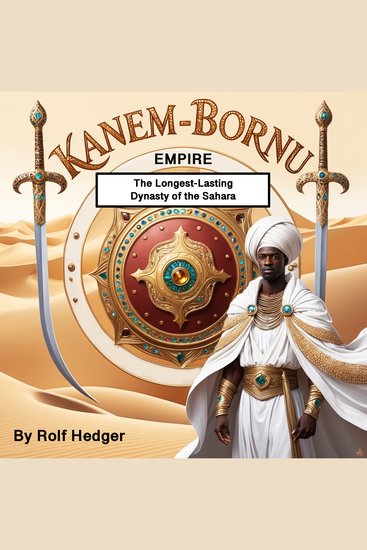
  • Kanem-Bornu - The Longest-Lasting Dynasty of the Sahara - cover

    Kanem-Bornu - The...

    Rolf Hedger

    • 0
    • 0
    • 0
    Before the rise of the mighty Kanem-Bornu dynasty, the vast expanse of the Sahel was home to diverse tribes and scattered settlements that laid the groundwork for what would become one of the Sahara’s longest-lasting empires. In this early era, communities thrived in a challenging environment where survival hinged on adaptability and a profound connection with the land. The region, bridging the fertile savannahs and the arid expanse of the desert, nurtured a mosaic of cultures that developed sophisticated social structures long before centralized power emerged. 
    The early inhabitants relied on oral traditions to pass down stories of heroic ancestors, migrations, and the intimate bond they shared with nature. These narratives, rich in symbolism and local lore, served as the cultural bedrock for later generations. They recounted times of plentiful harvests and the strategic use of scarce water resources, highlighting the ingenuity and resilience of communities that innovated in agriculture and irrigation. Such stories not only preserved the memory of a once-abundant land but also inspired the collaborative spirit that would be essential for forming larger political entities.  
    Over time, as environmental challenges and the need for security intensified, these small communities began to coalesce into broader tribal alliances. The bonds formed through intermarriage, trade, and mutual defense gradually paved the way for the emergence of rudimentary governance structures. Early leaders, often revered for their wisdom and ability to resolve conflicts, began to assert influence over wider territories, laying the foundational framework for centralized authority. These leaders capitalized on the established trade networks that crisscrossed the region, facilitating the exchange of goods, ideas, and technologies that further solidified communal bonds.
    Show book