Join us on a literary world trip!
Add this book to bookshelf
Grey
Write a new comment Default profile 50px
Grey
Subscribe to read the full book or read the first pages for free!
All characters reduced
Behind the scenes in Peking : Being experiences during the siege of the Legations - cover

Behind the scenes in Peking : Being experiences during the siege of the Legations

Mary Hooker

Publisher: Good Press

  • 0
  • 0
  • 0

Summary

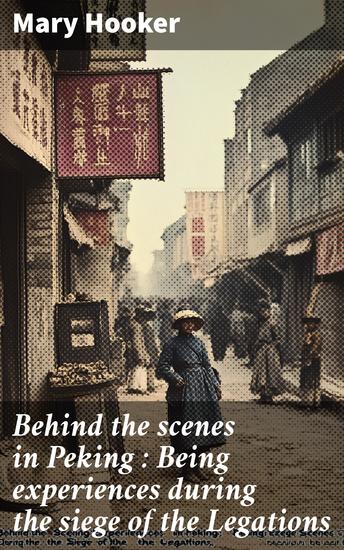
In "Behind the Scenes in Peking: Being Experiences During the Siege of the Legations," Mary Hooker presents a vivid, first-hand account of her experiences during the harrowing Boxer Rebellion in 1900. Hooker's narrative intertwines personal recollections with detailed descriptions of the political tensions and cultural upheaval in China at the time. Her literary style is marked by compelling imagery and a candid voice that captures both the fear and resilience of those besieged. This memoir not only reflects the chaos surrounding the siege of the foreign legations in Beijing but also serves as a poignant social commentary on Western imperialism and its consequences in Asia. Mary Hooker, an American missionary in China, was directly engaged in humanitarian efforts during the siege, which sharpened her insights into the cultural and political dynamics of the era. Her background in education and social work, coupled with her linguistic skills, allowed her to navigate and document the complexities of life in a besieged city. Hooker's unique perspective infuses her account with authenticity and depth, making it a valuable historical document. This book is highly recommended for readers interested in military history, colonial literature, or women's narratives in times of crisis. Hooker's eloquent prose not only chronicles a significant historical event but also prompts readers to reflect on the broader implications of cultural encounter and conflict.
Available since: 03/02/2025.
Print length: 190 pages.
Other books that might interest you

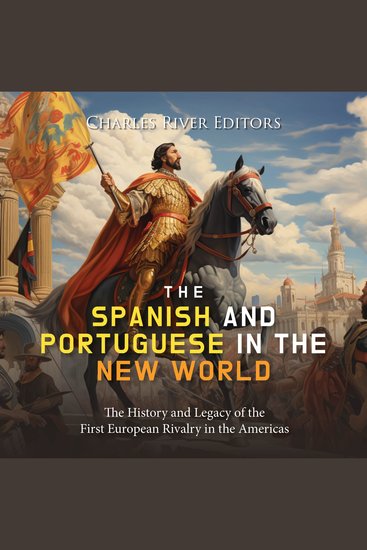
  • Spanish and Portuguese in the New World The: The History and Legacy of the First European Rivalry in the Americas - cover

    Spanish and Portuguese in the...

    Editors Charles River

    • 0
    • 0
    • 0
    In 1451, Prince Henry the Navigator helped fund and develop a new type of ship, the caravel, that featured triangular lateen sails and would be able to travel in the open ocean and sail against the wind. In 1488, Bartholomew Diaz rounded the southern tip of Africa, named the Cape of Good Hope by King John of Portugal, and entered the Indian Ocean from the Atlantic. 
    One explorer, Christopher Columbus, sought funding from the Portuguese to search for a passage to Asia by sailing westwards, but he was rejected. At this time in the late 15th century, Portugal’s domination of the western African sea routes prompted the neighboring Crown of Castile and the Catholic monarchs in modern Spain to search for an alternative route to south and east Asia (termed Indies), so they provided Columbus with the funding he required. By the time Christopher Columbus started setting back east from the New World after landing there in October 1492, he had explored San Salvador in the Bahamas (which he thought was Japan), Cuba (which he thought was China), and Hispaniola, the source of gold. As the common story goes, Columbus, en route back to Spain from his first journey, called in at Lisbon as a courtesy to brief the Portuguese King John II of his discovery of the New World. King John subsequently protested that according to the 1479 Treaty of Alcáçovas, which divided the Atlantic Ocean between Spanish and Portuguese spheres of influence, the newly discovered lands rightly belonged to Portugal. To make clear the point, a Portuguese fleet was authorized and dispatched west from the Tagus to lay claim to the “Indies,” which prompted a flurry of diplomatic activity in the court of Ferdinand and Isabella.
    Show book
  • Being Really Confused - A Guide to Heidegger and Other Crimes Against Clarity - cover

    Being Really Confused - A Guide...

    Sophia Blackwell

    • 0
    • 0
    • 0
    Ever opened Being and Time and wondered if your brain had a stroke? 
    Ever wanted to understand Heidegger, but all you got was a migraine and a vague sense of personal failure? 
    This is the book for you. 
    Being Really Confused is the hilariously brutal, no-holds-barred, sarcasm-soaked guide to Martin Heidegger’s philosophical fever dream. Whether you’re a burned-out philosophy major, a curious masochist, or someone who just wants to sound terrifyingly deep at brunch, this book unpacks the most infamously unreadable thinker of the 20th century—with jokes, rants, and zero patience for pretension. 
    Inside, you'll find: 
    What “Dasein” actually means (spoiler: it’s just you, but anxious) 
    How to ruin conversations with phrases like “Being-toward-death” 
    Why “the they” is probably responsible for your haircut 
    And how to survive Being and Time without filing a lawsuit against your own brain 
    Equal parts roast and revelation, this book doesn’t just explain Heidegger—it drags him, hugs him, then drags him again. 
    Read it if: 
    You want to laugh at existential dread 
    You love philosophy but hate suffering 
    You’ve been pretending to understand Heidegger and want to finally maybe mean it 
    Warning: May cause spontaneous existential crises, unbearable smugness, and the urge to buy a black turtleneck.
    Show book
  • Existentialism: Philosophical and Literary Works - Notes from Underground Fear and Trembling Ecce Homo The Metamorphosis and others - cover

    Existentialism: Philosophical...

    Fyodor Dostoevsky, Søren...

    • 0
    • 0
    • 0
    "Existentialism: Philosophical and Literary Works" is a compelling anthology that delves into the realm of existentialist thought, exploring the profound philosophical and literary works that have shaped this influential movement. From the psychological depths of Fyodor Dostoevsky's "Notes from Underground" to the existential dilemmas of Søren Kierkegaard's "Fear and Trembling," and the introspective reflections of Friedrich Nietzsche's "Ecce Homo," this collection encompasses a wide range of existentialist voices.Through thought-provoking narratives and philosophical musings, the selected works explore fundamental existential themes such as individuality, freedom, authenticity, despair, and the search for meaning in an uncertain world. Franz Kafka's "The Metamorphosis" takes readers on a surreal journey through the absurdity of existence.Spanning across different literary styles and historical periods, these works offer readers an immersive experience into the complexities of existentialism. They challenge conventional norms, question the nature of reality, and invite readers to grapple with existential questions that lie at the core of human existence. "Existentialism: Philosophical and Literary Works" serves as a valuable resource for students, scholars, and enthusiasts seeking a comprehensive understanding of existentialist philosophy and its interplay with literature. It provides a nuanced exploration of existentialism's key ideas through diverse voices, encouraging readers to engage with the philosophical and existential dilemmas that shape our understanding of self, society, and the human condition.Contents:Fyodor Dostoevsky. Notes from UndergroundSoren Kierkegaard. Fear and TremblingSoren Kierkegaard. Philosophical FragmentsSoren Kierkegaard. Sickness Unto DeathFriedrich Nietzsche. Ecce Homo: How One Becomes What One IsRainer Maria Rilke. PoemsFranz Kafka. The Metamorphosis
    Show book
  • The American Transportation Revolution - A Social and Cultural History - cover

    The American Transportation...

    Aaron W. Marrs

    • 0
    • 0
    • 0
    In the first half of the nineteenth century, transportation in the United States underwent an extraordinary transformation. In The American Transportation Revolution, Aaron W. Marrs explores the cultural influence of steamboats and railroads, which fascinated Americans across the country. 


    Demonstrating the wide cultural reach of steam transit, Marrs draws from an eclectic set of sources, including children's books, comic almanacs, musical works, sermons, etiquette guides, cartoons, and employee rulebooks. This rich tapestry of cultural production helped "naturalize" steam technology for Americans before they ever encountered steam transit in person. Before ever seeing a railroad, Americans could read a novel that took place on a railroad, see an image of a train on currency, or purchase piano music imitating a train. These cultural artifacts made these new forms of transport feel familiar and natural. 


    Marrs examines how cultural norms about travel emerged through the prescriptions of etiquette authors and the actions of travelers themselves, how enslaved people made innovative use of transportation networks to escape from slavery, and much more. Marrs convincingly demonstrates steam transportation's broad cultural impact on the United States, and how Americans, in turn, imprinted their own meaning on this new technology.
    Show book
  • Math Fun: Exciting Daily Challenges for Young Learners - "Unlock math mastery with exciting daily audio challenges designed to make learning enjoyable for young minds!" - cover

    Math Fun: Exciting Daily...

    Jasper Bellingham

    • 0
    • 0
    • 0
    Math Fun: Exciting Daily Challenges for Young Learners 
    ⭐⭐ Simplified Guide & Explanations Included ⭐⭐ 
    Are you eager to advance your skills and solidify your understanding of essential math concepts? 
    Searching for a comprehensive resource that includes everything you need to master essential math skills through engaging and reproducible practice? 
    Your search ends here! 
    This guide will be your ultimate companion for enhancing your understanding, applying your skills, and participating in hands-on activities. With this book, you’ll be fully prepared for success. 
    Updated for the latest learning techniques. 
    Key features of this enhanced guide: 
    - In-depth insights into mastering essential math skills 
    - Clear explanations of fundamental math concepts 
    - Effective strategies for practicing and problem-solving 
    Our guide stands out with its thorough approach, ensuring you grasp important concepts deeply rather than just skimming the surface. 
    Please note that this guide is an independent resource and not affiliated with any official educational entity. 
    Crafted with a straightforward structure and easy-to-follow language, our guide ensures seamless transitions between topics. Say goodbye to complex jargon and embrace clear, precise, and accurate content. 
    So, why wait? Click the BUY NOW button, get your guide, and embark on your journey to mastering essential math skills through engaging daily challenges! 
    Choose Math Fun: Exciting Daily Challenges for Young Learners today and transform your learning experience!
    Show book
  • Bricks that Build Us Book 1 - Understanding how modern communities develop by looking at its people philosophies and reasoning - cover

    Bricks that Build Us Book 1 -...

    Robin Howat

    • 0
    • 0
    • 0
    We live in a time of increasing conflict due to ignorance, lack of self-discipline and polarization. Just look at what happened in recent events at the White House! Other examples are the Covid Tanker blockade, destructive rioting in cities, hospitals coming under siege, and the Russia-Ukraine conflict.... all were and are avoidable. 
    Staple Society results from succeeding constructive and protective concepts meeting obligations which generally follow traditions aimed at accepted common responsibilities. 
    Rob Howat discusses and explores these social building blocks in these four books with facts and examples. He shows that for society and the law to work responsibilities must be fulfilled before meaningful rights can follow. He suggests the ongoing need for calm discussion, research and reviews, an aim for balance, and well-understood and universally agreed 'ground rules' for educational pursuits. 
    The best time to open calm discussions with a goal to start building change is now, using constructive philosophy, logic, and religious proven wisdom. This set of books will greatly simplify and assist in building that deeper informed debate.
    Show book