Join us on a literary world trip!
Add this book to bookshelf
Grey
Write a new comment Default profile 50px
Grey
Subscribe to read the full book or read the first pages for free!
All characters reduced
Dahcotah: Life and Legends of the Sioux Around Fort Snelling - cover

Dahcotah: Life and Legends of the Sioux Around Fort Snelling

Mary H. Eastman

Publisher: DigiCat

  • 0
  • 0
  • 0

Summary

In "Dahcotah: Life and Legends of the Sioux Around Fort Snelling," Mary H. Eastman offers a profound exploration of the Sioux Nation, weaving together personal narrative, historical account, and cultural commentary. Written in the 19th century, the book showcases a vivid literary style, characterized by rich descriptions and emotive storytelling that illuminate the complexities of Sioux life during a period of significant change. Eastman's work serves as both an ethnographic study and a poignant reflection on the interplay between indigenous culture and Euro-American encroachment, capturing the essence of the Sioux's rich oral traditions and legends as they coexisted with the encroaching settlers at Fort Snelling. Mary H. Eastman, a prominent figure in American literature and the wife of an Indian agent, was deeply immersed in the cultural tensions of her time, which provided her with unique perspectives on Native American life. Her personal experiences and connections with the Sioux community, coupled with her sensitivity to their struggles, are woven into the narratives she presents. As a female author in a male-dominated literary era, Eastman's work stands out for its empathetic portrayal of a marginalized culture, challenging prevailing stereotypes of her time. I highly recommend "Dahcotah" to readers interested in American history, indigenous studies, or ethnography. Eastman's insights provide a nuanced understanding of Sioux culture and the impact of colonialism, making this book an essential read for anyone seeking to grasp the intricate relationship between Native American tribes and European settlers.
Available since: 05/29/2022.
Print length: 186 pages.


Other books that might interest you

  • COVID-19 - A History - cover

    COVID-19 - A History

    Jacalyn Duffin

    • 0
    • 0
    • 0
    For two years the COVID-19 pandemic has upended the world. The physician and medical historian Jacalyn Duffin presents a global history of the virus, with a focus on Canada.  
    Duffin describes the frightening appearance of the virus and its identification by scientists in China; subsequent outbreaks on cruise ships; the relentless spread to Europe, the Americas, Africa, and elsewhere; and the immediate attempts to confront it. COVID-19 next explores the scientific history of infections generally, and the discovery of coronaviruses in particular. Taking a broad approach, the book explains the advent of tests, treatments, and vaccines, as well as the practical politics behind interventions, including quarantines, barrier technologies, lockdowns, and social and financial supports. In concluding chapters Duffin analyzes the outcome of successive waves of COVID-19 infection around the world: the toll of human suffering, the successes and failures of control measures, vaccine rollouts, and grassroots opposition to governments’ attempts to limit the spread and mitigate social and economic damages.  
    Closing with the fraught search for the origins of COVID-19, Duffin considers the implications of an “infodemic” and provides an cautionary outlook for the future.
    Show book
  • The Shocking Truth about International Aid - cover

    The Shocking Truth about...

    Zoey Fraisers

    • 0
    • 0
    • 0
    International aid has long been heralded as a solution to the world’s most pressing problems, from poverty and hunger to disease and disaster recovery. It is a system built on the idea that wealthier nations and organizations have the responsibility to assist those in need, providing the necessary resources to help vulnerable populations rise above their circumstances. With trillions of dollars allocated to aid efforts across the globe, it would seem that international aid is fulfilling its mission to promote global well-being. However, a closer examination reveals a far more complex, and often disheartening, reality. 
      
    While aid is essential in times of crisis, its long-term effects are often overlooked. Far too frequently, the aid process is tainted by inefficiencies, corruption, and political agendas, which hinder its effectiveness and frequently exacerbate the problems it seeks to solve. Donor countries may provide aid with specific political or economic interests in mind, making the assistance less about altruism and more about advancing a nation's own objectives. Likewise, organizations tasked with distributing aid can become bogged down by bureaucratic red tape, mismanagement, and a lack of accountability, leading to resources being squandered or diverted from the people who need them most. 
      
    The impact of international aid is not always as straightforward as it appears. While some projects undoubtedly achieve their goals, many others fail to deliver lasting results, leaving behind a trail of dependency rather than empowerment. Aid can often unintentionally disrupt local economies and social structures, creating reliance on external support rather than fostering self-sufficiency. In some cases, aid even perpetuates cycles of poverty by undermining local industries or creating a mindset of dependency that stifles innovation and growth.
    Show book
  • Courage and a Clear Mind - True Adventures of the Ancient Greeks - cover

    Courage and a Clear Mind - True...

    Jim Weiss

    • 0
    • 0
    • 0
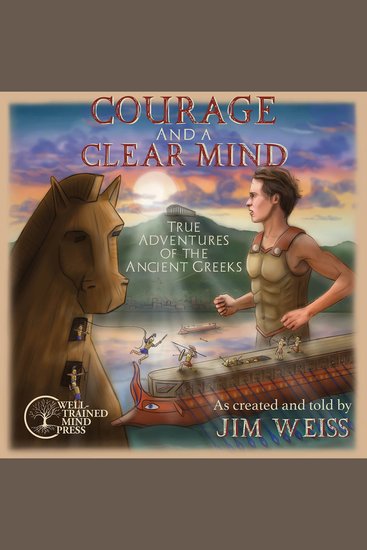
    Jim Weiss narrates thrilling episodes from the history and culture of ancient Greece, including the Olympics, the 300 Spartans, and the wisdom of Socrates.  In these vivid, true stories, Jim Weiss takes you back 25 centuries to Golden Age Greece. You'll charge into land & sea battles to defend the world's first democracy against a vast, tyrannical empire; attend the original Olympics; hear history's most famous storyteller, Homer, spin his classic adventure, "The Trojan Horse;" laugh and learn with Socrates, the wisest (and funniest) man in Greece; and meet artists and authors, as well as typical families, in the rival cities of Athens and Sparta. Jim Weiss's "Courage and a Clear Mind" is sure to inspire your own exploration of the potential that lies within us all.
    Show book
  • How to Leave a Group Chat - A guide to navigating digital communication - cover

    How to Leave a Group Chat - A...

    Louisa Guise

    • 0
    • 0
    • 0
    Do you lose hours of your life scrolling social media? 
    Have too many group chats on your smartphone? 
    Do you want to leave them, but don’t know how? 
    Then this book is for you. How to Leave a Group Chat is a practical guide that will help you navigate the world of digital communication. 
    Since the late eighties, communication has been developing at a speed that has greatly outpaced us and continues to do so. Social media and instant messengers might just be the tip of the iceberg but, although we enjoy them, they have pushed us into a new digital dimension which has dehumanised us, and we haven’t quite had the chance to understand what this means. 
    How to Leave a Group Chat is a ground-breaking book which makes sense of this new digital age whilst providing a fascinating look at how we communicate and how this has changed over time.
    Show book
  • Start of the Crusades The: The Origins of the World’s Most Famous Religious Wars - cover

    Start of the Crusades The: The...

    Charles River Editors

    • 0
    • 0
    • 0
    Though it went largely unremarked in the Islamic world at the time, the First Crusade has since become a contentious symbol of European imperialism in the Middle East. Debate over whether the Crusades can truly be perceived as an early example of European colonialism continues in medieval historiography, though the evidence for this is thin. The territory taken by the Franks from the Turks had previously belonged to Eastern Christians and had only recently been seized by the Turks themselves. The Crusader States were relatively small and weak, and they were reconquered centuries before modern European colonialism began. The Crusaders themselves saw it as a holy war of reclamation of previously lost (albeit almost-mythical) territory. To them, the Muslims were the first aggressors, and they were somewhat bolstered in this view by the support that they largely held from local Christians.   
    	The Crusader States were relatively small and weak, and while they tried to be a bulwark of Christianity in the Holy Land, the Crusader States were reconquered centuries before modern European colonialism began. Nonetheless, the Crusades and the Crusader States galvanized the Christians of Western Europe to expand their world. While it remains unclear how much that world expanded in practical terms such as trade, or how it affected later attitudes during the expansion to the New World and other regions, it definitely engaged the European mind in both positive and negative ways. As such, the crusades soon achieved near-mythic status in the European literature and remain among the most important events of the Middle Ages.  
    At the same time, the Crusader States were not one homogenized region but actually several distinct territories that had their own unique histories and interests. In fact, many of them were founded a century apart.
    Show book
  • How to Care About Animals - An Ancient Guide to Creatures Great and Small - cover

    How to Care About Animals - An...

    Porphyry

    • 0
    • 0
    • 0
    An entertaining and enlightening anthology of classical Greek and Roman writings on animals—and our vital relationships with them 


    How to Care about Animals is a fascinating menagerie of passages from classical literature about animals and the lives we share with them. Drawing on ancient writers from Aesop to Ovid, classicist and farmer M. D. Usher has gathered a healthy litter of selections that reveal some of the ways Greeks and Romans thought about everything from lions, bears, and wolves to birds, octopuses, and snails—and that might inspire us to rethink our own relationships with our fellow creatures. Presented in lively new translations, these pieces are filled with surprises—anticipating but also offering new perspectives on many of our current feelings and ideas about animals. 


    Here, Porphyry makes a compelling argument for vegetarianism and asserts that the just treatment of animals makes us better people; Pliny the Elder praises the virtuosity of songbirds and the virtuousness of elephants; Plutarch has one of Circe's pigs from the Odyssey make a serio-comic case for the dignity of the beasts of the field; Aristotle puts the study of animals on par with anthropology; we hear timeless Aesopian fables, including "The Hen That Laid the Golden Egg" and "The Fox and the Grapes"; and there is much, much more.
    Show book