Join us on a literary world trip!
Add this book to bookshelf
Grey
Write a new comment Default profile 50px
Grey
Subscribe to read the full book or read the first pages for free!
All characters reduced
The Complete Prose Works of Martin Farquhar Tupper - cover

The Complete Prose Works of Martin Farquhar Tupper

Martin Farquhar Tupper

Publisher: DigiCat

  • 0
  • 0
  • 0

Summary

Martin Farquhar Tupper's "The Complete Prose Works of Martin Farquhar Tupper" is an expansive collection that showcases the author's distinctive literary contributions in the Victorian era. Characterized by his intricate prose and philosophical musings, Tupper's works reflect a blend of didacticism and lyrical eloquence. The volume traverses a multitude of themes, including morality, nature, and the human experience, often infused with a conversational tone that invites readers into his contemplative world. Tupper's writing style intertwines classical references with moralistic themes, encapsulating the zeitgeist of 19th-century thought while highlighting the emerging importance of individualism and introspection. Tupper, born in 1810, was a polymath who thrived in a milieu rich in literary and intellectual fervor. His diverse background as a poet, essayist, and educator shaped his worldview and inspired him to explore the complexities of human existence. Raised in an environment steeped in tradition and learning, Tupper's philosophical inquiries often stem from his desire to reconcile faith with reason, an endeavor mirrored in his prose. Readers are encouraged to delve into Tupper's complete prose works to experience the rich tapestry of ideas and stylistic innovation that defined an era. This collection not only illuminates Tupper's poetic prowess but also serves as a vital commentary on Victorian literature, making it essential reading for scholars and enthusiasts alike.
Available since: 09/16/2022.
Print length: 546 pages.

Other books that might interest you

  • Here Come the Black Helicopters! - UN Global Domination and the Loss of Fre - cover

    Here Come the Black Helicopters!...

    Anonymous

    • 0
    • 0
    • 0
    When it comes to spotting political abuses and covert conspiracies designed to strip Americans of their rights and freedoms, no one is more vigilant than #1 New York Times bestselling authors Dick Morris and Eileen McGann (Screwed!, Revolt!, Fleeced, Outrage). In their latest call-to-arms, Here Come the Black Helicopters!, Morris and McGann expose the most potent threat to date to our cherished way of life: the brazen and treacherous Liberal plan to circumvent our democratic processes by putting ultimate governing power in the hands of unaccountable international organizations. Filled with shocking, incontrovertible evidence as well as a concrete action plan, Here Come the Black Helicopters! is an essential read that will open the public’s eyes to the catastrophe that will surely occur if we allow our misguided politicians to hand the reins of government over to a devious and frighteningly inept United Nations.
    Show book
  • The Roman Empire and Its Enemies - Conquests and Conflicts - cover

    The Roman Empire and Its Enemies...

    Rogan Fish

    • 0
    • 0
    • 0
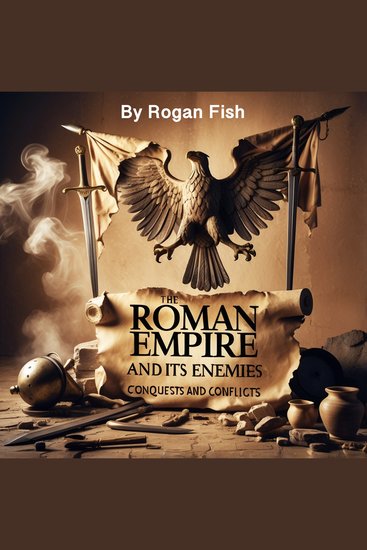
    The rise of Rome is a story of resilience, military strength, and strategic diplomacy. Emerging from a small settlement along the Tiber River, Rome transformed into a dominant power that would shape the ancient world for centuries. The foundation of Rome’s success lay in its political adaptability, disciplined military, and ability to integrate conquered peoples into its expanding empire. 
    Rome began as a monarchy, but after the expulsion of its last king in 509 BCE, it became a republic governed by elected officials and a system of checks and balances. This new structure allowed Rome to expand without being solely reliant on a single ruler. The Roman Republic was marked by a strong Senate, magistrates, and popular assemblies, which provided a balance of power. However, as Rome grew, internal conflicts between the patrician elite and the plebeian class led to significant social and political reforms, further strengthening the state’s stability. 
    The backbone of Rome’s expansion was its formidable military. The Roman legions, composed of disciplined and well-trained soldiers, were unmatched in organization and adaptability. Unlike other ancient armies that relied heavily on individual heroism, Rome’s military success stemmed from its ability to fight as a cohesive unit. Roman soldiers were rigorously trained, equipped with superior weapons, and organized into flexible formations such as the manipular system, which allowed them to adapt to various battle conditions. This military efficiency enabled Rome to conquer neighboring territories, including the Latin League, the Etruscans, and the Samnites, solidifying its control over central Italy.
    Show book
  • The Joy Document - Creating a Midlife of Surprise and Delight - cover

    The Joy Document - Creating a...

    Jennifer McGaha

    • 0
    • 0
    • 0
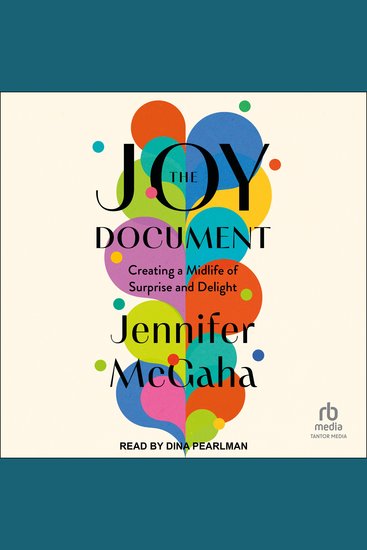
    When Jennifer McGaha's grandmother was in her late eighties, Jennifer asked her what her favorite age so far had been. "Fifty-five," her grandmother answered, as though there were something magical about this stage of life. So, in her own fifty-fifth year, Jennifer began to take note. She jotted down her impressions of simple, everyday things that struck her as beautiful or humorous or intriguing and kept a list of all the accomplishments, large and small, that actually mattered to her. 


    These observations became Jennifer's Joy Document, a radical act of reclaiming joy and an exercise in paying attention. When you are determined to find joy, almost anything can become revelatory—an Earth Day Whole Foods errand, Claire Saffitz's fruitcake recipe, a harrowing ride in Twinkly Taxi, an evening picnic at Dvorák's Symphony No. 8, or cartwheels in the driveway. While many of us at midlife have found all the things we've strived for (the career, the better life, the organization tools), those things only go so far. And the search for something greater, something truer, begins. Life after fifty becomes not the end or even the middle of life, but a new beginning, another grand adventure with endless opportunities to find joy. The Joy Document includes fifty rollicking and often humorous essays exploring the art of joy and inspiring the rest of us to do the same.
    Show book
  • The Life Of The Buddha - cover

    The Life Of The Buddha

    Radha Krsna Das

    • 0
    • 0
    • 0
    The Buddha, also known as Siddhartha Gautama, was a philosopher, mendicant, meditator, spiritual teacher, and religious leader who lived in Ancient India. He is revered as the founder of Buddhism. He taught for around forty five years and built a large following, both monastic and lay. His teaching is based on his insight into suffering and the end of such – the state called Nirvana.Prince Gautama was born into an aristocratic family but eventually joined the renounced order of life. After several years of mendicancy, meditation, and asceticism, he awakened to understand the workings of the cycle of rebirth and how it can be escaped. The Buddha then traveled widely teaching. He taught the middle way between sensual indulgence and severe asceticism. He taught a training of the mind that included self-restraint, and meditative practices such as mindfulness. The Buddha also critiqued the practices of Brahmin priests, such as animal sacrifice.Here is the illumined heart of his divine timeless teachings.
    Show book
  • God's Own Gentlewoman - The Life of Margaret Paston - cover

    God's Own Gentlewoman - The Life...

    Diane Watt

    • 0
    • 0
    • 0
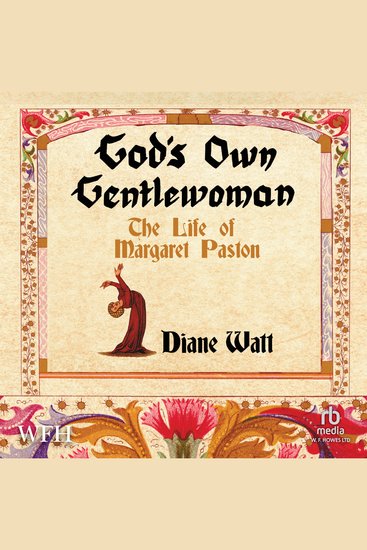
    The remarkable story of Margaret Paston, whose letters form the most extensive collection of personal writings by a medieval English woman. 
     
    Drawing on the largest archive of medieval correspondence relating to a single family in the UK, God's Own Gentlewoman explores what everyday life was like during the turbulent decades at the height of the Wars of the Roses. Covering topics including political conflicts and familial in-fighting; forbidden love affairs and clandestine marriages; bloody battles and sieges; fear of plague and sudden death; friendships and animosity; and childbirth and child mortality, Margaret's letters provide us with unparalleled insight into all aspects of life in late medieval England. 
     
    Diane Watt is a world expert on medieval women's writing, and God's Own Gentlewoman explores how Margaret's personal archive provides an insight into her activities, experiences, emotions and relationships, as well as the life of a medieval woman who was at times absorbed by the mundane and domestic, but who found herself caught up in the most extraordinary situations and events.
    Show book
  • The Civil Rights Act of 1964 - cover

    The Civil Rights Act of 1964

    Various

    • 0
    • 0
    • 0
    This program is read by an AI-based synthesized voice.
    Show book