Join us on a literary world trip!
Add this book to bookshelf
Grey
Write a new comment Default profile 50px
Grey
Subscribe to read the full book or read the first pages for free!
All characters reduced
An Author's Mind : The Book of Title-pages - cover

An Author's Mind : The Book of Title-pages

Martin Farquhar Tupper

Publisher: DigiCat

  • 0
  • 0
  • 0

Summary

In "An Author's Mind: The Book of Title-pages," Martin Farquhar Tupper explores the intricate relationship between literary creation and its presentation. Tupper employs a unique blend of introspective prose and structured verse to dissect the concepts of authorship, identity, and the role of aesthetic in literature. This work, characterized by its reflective tone and meticulous attention to typographical design, highlights the importance of title-pages as both artistic expressions and gateways to the text. Set within the context of 19th-century literature, Tupper's profound insights echo the emerging romantic sensibilities, challenging readers to consider the significance of form alongside content. Martin Farquhar Tupper (1810–1889) was a celebrated English poet and essayist whose intellectual engagements frequently revolved around the nature of writing and its cultural implications. His background in law and his exposure to various literary circles deeply influenced his philosophy of writing, prompting him to contemplate the intricacies of literary craftsmanship. Tupper's innovative perspectives on authorship were, in part, a response to the shifting literary paradigms of his time, allowing him to carve a niche for himself within the Victorian literary landscape. "An Author's Mind" is a must-read for those intrigued by the intersections of art, literature, and authorship. Tupper's sophisticated analysis invites readers not only to appreciate the visual and conceptual beauty of title-pages but also to ponder the profound questions surrounding creativity and identity in the literary world. This book serves both scholars and casual readers, illuminating the vital role of presentation in the artistic endeavor.
Available since: 09/15/2022.
Print length: 141 pages.


Other books that might interest you

  • The Prince - cover

    The Prince

    Niccolò Machiavelli

    • 0
    • 0
    • 0
    The Prince is a 16th century political treatise by Nicolo Machiavelli. In it, Machiavelli argues that it is better for a ruler to be feared than loved, and that the ends justify the means. The book has been praised and condemned by various scholars over the years, but is still considered one of the most influential political works ever written. Read in English, unabridged.
    Show book
  • Young Lions - cover

    Young Lions

    Andrew Mackay

    • 0
    • 0
    • 0
    This is the story of two teenage British boys in a Britain occupied by the Germans, which is what might have happened if the Nazis had successfully carried out their plans to invade Britain under Operation Sea Lion in the 1940s. Alan Mitchell and Sam Roberts study at St. John's Academy in the fictional Cambridgeshire market town of Hereward. Their Home Guard unit is defeated and the Schutzstaffel (S.S.) massacres the prisoners but the boys escape and return to German occupied Hereward.
    Show book
  • Being Cosmopolitan - A Political Approach - cover

    Being Cosmopolitan - A Political...

    Luke Ulas

    • 0
    • 0
    • 0
    What does it mean to be cosmopolitan? Typically, cosmopolitanism is understood as a broad moral orientation, involving some kind of commitment to global moral equality. On this understanding, to be cosmopolitan is simply to evidence that moral orientation oneself. By contrast, Being Cosmopolitan takes up a thoroughly political approach. The focus is on what it might mean, and what it is like, to be political in a distinctly cosmopolitan form. What it means to be cosmopolitan in this thoroughly political sense cannot involve appeal to any particular moral orientation, because politics is about, inter alia, the contestation of such orientations and commitments. Instead, this book offers an account that is based upon the internalization of particular kind of global "social imaginary," involving the imagination of a global public to which certain issues—or global public affairs—are understood to pertain. 


    Within which kind of global order is it possible, or comfortable, for a cosmopolitical agent to live? In answer to this question, the book argues against the viability of both a world of self-determining peoples, and of "pluralist" global visions—both of which are popular with moral cosmopolitan theorists.
    Show book
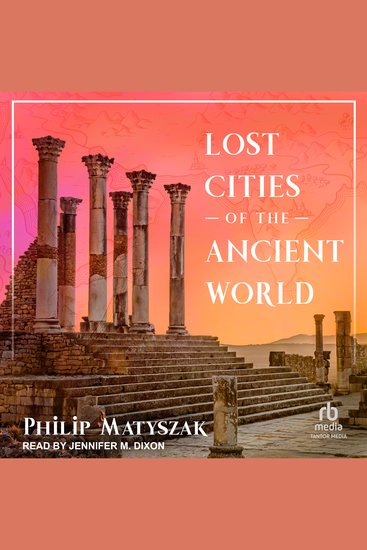
  • Lost Cities of the Ancient World - cover

    Lost Cities of the Ancient World

    Philip Matyszak

    • 0
    • 0
    • 0
    The ruins of ancient Athens, Luxor, and Rome are familiar cornerstones of world history, visited by travelers from across the globe. But what about the cities that have dropped off the map? Where are they, and what can they tell us about our past? 


    In this compendium of forgotten cities, Philip Matyszak explores the trials, tribulations, and triumphs these cities faced. Lost Cities of the Ancient World brings to life the sites and settlements across Europe, the Middle East, and beyond that time forgot, from the sunken city of Pavlopetri in the Mediterranean to the deep cave dwellings of Derinkuyu in Turkey. Four thousand years of human history are covered in this volume, offering unique insights into forgotten cities and ways of life. 


    Matyszak reveals a dynamic network of peoples and cultures who fought and traded between themselves, exchanging inventions, ideas, and philosophies, with the result that people as far apart as Catalhöyükin Turkey and Skara Brae in Scotland's Orkney Islands shared a common heritage. By examining the motivations that first drew populations to gather and settle together, as well as the challenges that led to their cities' abandonment, this striking and often surprising book offers us a fresh perspective on our urban origins.
    Show book
  • The Twilight of the Idols - cover

    The Twilight of the Idols

    Friedrich Nietzsche

    • 0
    • 0
    • 0
    In this book, Nietzsche examines and critiques many of the prominent ideas and figures of his time, including morality, religion, and philosophy itself. Nietzsche argues that traditional moral concepts, such as good and evil, are based on outdated and irrational beliefs that hinder the individual's pursuit of a fulfilling life. He also criticizes Christianity and its values, claiming that they are hostile to life and undermine individual freedom. Furthermore, Nietzsche criticizes the philosophical traditions of the past, including Platonism and Kantianism, for their limitations and inability to provide a meaningful framework for life. Instead, Nietzsche proposes a new philosophy, which he calls "the philosophy of the future," that embraces life's complexity and encourages the individual to create their own values. Read in English, unabridged.
    Show book
  • Learn French while you sleep - 1000 phrases for beginners - cover

    Learn French while you sleep -...

    1000-words.com

    • 0
    • 0
    • 0
    This audiobook is narrated by an AI Voice.   
    Learn French anytime, anywhere — while you sleep, drive, walk, study, or work out.  
    1000 Words is your calm and immersive way to master French through audio.  
    Each episode helps you expand your vocabulary, improve pronunciation, and understand real French — without stress, screens, or interruptions.  
    In this audiobook, you’ll hear 1000 essential French phrases for beginners, clearly spoken with English translations.  
    Perfect for beginners, travelers, and language lovers who want to absorb French naturally through repeated listening.  
    Listen in bed, at the gym, in the car, or during your daily routine — every minute helps you grow your French effortlessly.  
    🌙 Relax. Focus. Learn French anywhere.  
    For more content, games and exclusive video lessons, visit 👉 ⁠1000-words.com⁠.
    Show book