Join us on a literary world trip!
Add this book to bookshelf
Grey
Write a new comment Default profile 50px
Grey
Subscribe to read the full book or read the first pages for free!
All characters reduced
Patricia Gets Ready (for a date with the man that used to hit her) (NHB Modern Plays) - cover

Patricia Gets Ready (for a date with the man that used to hit her) (NHB Modern Plays)

Martha Watson Allpress

Publisher: Nick Hern Books

  • 0
  • 0
  • 0

Summary

Patricia has spent a year recovering from an abusive relationship. But when she bumps into her ex on the street, she accidentally agrees to go to dinner with him that night.
Now she's got some big decisions to make. What to wear? What to say? And... whether or not to go?
Martha Watson Allpress's Patricia Gets Ready (for a date with the man that used to hit her) is a play for one actor that was first seen at VAULT Festival 2020, directed by Kaleya Baxe and performed by Angelina Chudi, then at the Edinburgh Festival Fringe 2021, winning numerous awards and receiving rave reviews. It was revived on a UK tour in 2022, performed by Yasmin Dawes, including a run at Brixton House, London.
'The standout production of this EdFringe' - The Stage
'Brilliant... A script that refuses to simplify, to be neat and tidy, to apologise, to paint Patricia as just a victim. Rather, she is bold, funny (very funny) and sexually confident' - Guardian
Available since: 05/19/2022.
Print length: 48 pages.

Other books that might interest you

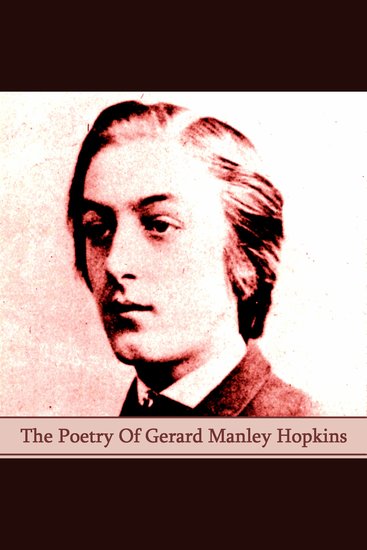
  • The Poetry of Gerard Manley Hopkins - Innovative poet that posthumously inspired T S Eliot Dylan Thomas W H Auden & others - cover

    The Poetry of Gerard Manley...

    Gerard Manley Hopkins

    • 0
    • 0
    • 0
    Gerard Manley Hopkins was born in Stratford, then part of Essex on 28th July, 1844, to deeply religious parents?the first of nine children. 
    The family moved to Hampstead in 1852, near to where John Keats had lived thirty years before.  At age ten the young Gerard was sent to school in nearby Highgate and afterwards to Balliol College, Oxford. 
    Hopkins was unusually shy and reserved and prone to bizarre ideas. He once argued that most people drank more liquids than they really needed and bet that he could go without drinking for a week. He persisted until his tongue was black and he collapsed.  
    In January 1866 Hopkins composed his most ascetic poem, The Habit of Perfection but a few days later he included poetry in the list of things to be given up for Lent. In July he decided to become a Catholic and by May 1868 Hopkins firmly "resolved to be religious." Less than a week later, he made a bonfire of his poems and ceased to write for almost seven years.  
    In 1874 Hopkins returned to the Society of Jesus at Manresa House, Roehampton to teach classics. While he was studying in the Jesuit house of theological studies in North Wales, he was asked to write a poem to commemorate the foundering of a German ship in a storm. So in 1875 he was moved to take up poetry once more and write a lengthy poem, The Wreck of the Deutschland, inspired by the Deutschland maritime disaster in which 157 people died, including five nuns.  The poem was accepted but not printed by a Jesuit publication. This rejection fed his ambivalence about his poetry. Most of his poetry remained unpublished until after his death. 
    Hopkins chose the austere and restrictive life of a Jesuit and was at times gloomy. The brilliant student who had left Oxford with a first-class honours degree failed his final theology exam and although ordained in 1877, Hopkins would not progress in the order. That same year he wrote God’s Grandeur, and sonnets including The Starlight Night and finished The Windhover. 
    In 1884 he became professor of Greek and Latin at University College Dublin. His English roots, his disagreement with current Irish politics, as well as his own small stature (5'2"), shy nature and personal foibles meant that he was not an effective teacher. This and his isolation in Ireland deepened his gloom.  
    The final years of his life continued to find him in a depressed state and to restrict his poetic inspiration. His extremely heavy work load coupled with the dislike of living in Dublin, away from England and friends meant his health further deteriorated, even his eyesight began to fail. As a devout Jesuit, he found himself in an artistic dilemma. To subdue any egotism which would violate the humility required by his religious position, he decided never to publish his poems.  
    After suffering several bouts of diarrhoea, Gerard Manley Hopkins died of typhoid fever on 8th June, 1889 at the early age of 44. On his death bed, his last words were, "I am so happy, I am so happy. I loved my life." 
     This volume comes to you from Portable Poetry, a specialized imprint from Deadtree Publishing.  Our range is large and growing and covers single poets, themes, and many compilations.
    Show book
  • Northanger Abbey - (stage version) - cover

    Northanger Abbey - (stage version)

    Zoe Cooper

    • 0
    • 0
    • 0
    'Friendship is certainly the finest balm for the pangs of any sort of… disappointed love.'
    Catherine Morland knows little of the world, but who needs real-life experience when you have novels to guide you? Seizing her chance to escape her claustrophobic family and join the smart set in Bath, she meets worldly, sophisticated Isabella Thorpe – Iz, to her friends – and so Cath's very own adventure begins.
    This playful and surprising reimagining of Northanger Abbey is infused with the spirit of Jane Austen's original novel and fizzes with imagination and humour. It was premiered in 2024 at the Orange Tree Theatre, London, before touring to Octagon Theatre, Bolton, Stephen Joseph Theatre, Scarborough, and Theatre by the Lake, Keswick.
    Show book
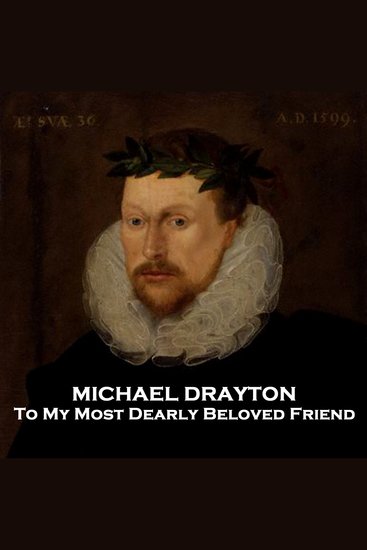
  • To My Most Dearly Beloved Friend - Michael Drayton has often been neglected down the centuries This poem will make you question just why that happened - cover

    To My Most Dearly Beloved Friend...

    Michael Drayton

    • 0
    • 0
    • 0
    Michael Drayton was born in 1563 at Hartshill, near Nuneaton, Warwickshire, England. The facts of his early life remain unknown.  Drayton first published, in 1590, a volume of spiritual poems; The Harmony of the Church.  Ironically the Archbishop of Canterbury seized almost the entire edition and had it destroyed.  In 1593 he published Idea: The Shepherd's Garland, 9 pastorals celebrating his own love-sorrows under the poetic name of Rowland. This was later expanded to a 64 sonnet cycle.  With the publication of The Legend of Piers Gaveston, Matilda and Mortimeriados, later enlarged and re-published, in 1603, under the title of The Barons' Wars. His career began to gather interest and attention.  In 1596, The Legend of Robert, Duke of Normandy, another historical poem was published, followed in 1597 by England's Heroical Epistles, a series of historical studies, in imitation of those of Ovid. Written in the heroic couplet, they contain some of his finest writing.  Like other poets of his era, Drayton wrote for the theatre; but unlike Shakespeare, Jonson, or Samuel Daniel, he invested little of his art in the genre. Between 1597 and 1602, Drayton was a member of the stable of playwrights who worked for Philip Henslowe. Henslowe's Diary links Drayton's name with 23 plays from that period, and, for all but one unfinished work, in collaboration with others such as Thomas Dekker, Anthony Munday, and Henry Chettle. Only one play has survived; Part 1 of Sir John Oldcastle, which Drayton wrote with Munday, Robert Wilson, and Richard Hathwaye but little of Drayton can be seen in its pages.  By this time, as a poet, Drayton was well received and admired at the Court of Elizabeth 1st. If he hoped to continue that admiration with the accession of James 1st he thought wrong.  In 1603, he addressed a poem of compliment to James I, but it was ridiculed, and his services rudely rejected.  In 1605 Drayton reprinted his most important works; the historical poems and the Idea. Also published was a fantastic satire called The Man in the Moon and, for the for the first time the famous Ballad of Agincourt.  Since 1598 he had worked on Poly-Olbion, a work to celebrate all the points of topographical or antiquarian interest in Great Britain. Eighteen books in total, the first were published in 1614 and the last in 1622.  In 1627 he published another of his miscellaneous volumes.  In it Drayton printed The Battle of Agincourt (an historical poem but not to be confused with his ballad on the same subject), The Miseries of Queen Margaret, and the acclaimed Nimphidia, the Court of Faery, as well as several other important pieces.  Drayton last published in 1630 with The Muses' Elizium.  Michael Drayton died in London on December 23rd, 1631.  He was buried in Westminster Abbey, in Poets' Corner.  A monument was placed there with memorial lines attributed to Ben Jonson.
    Show book

  • Imaginari - A Collection of Fantasy and Science Fiction Poetry - cover

    Imaginari - A Collection of...

    Kristina W. Kelly

    • 0
    • 0
    • 0
    Step into lyrics of science, science fiction, and fantasy where robots fight for their autonomy, fairies wage war against goblins, and humanity reaches for what awaits them in the stars. 
    This collection of poetry holds a glimpse of the human experience disguised in fairytales and stardust. You will encounter themes that resonate with our reality, such as motherhood, growth, feminism, hope, and nature. Whether you are a fan of epic sagas, whimsical tales, or lyrical reflections, you will find something to spark the imagination in this collection. Prepare to be enchanted by an invitation to dreams of the fantastical. 
    Read by the author.
    Show book
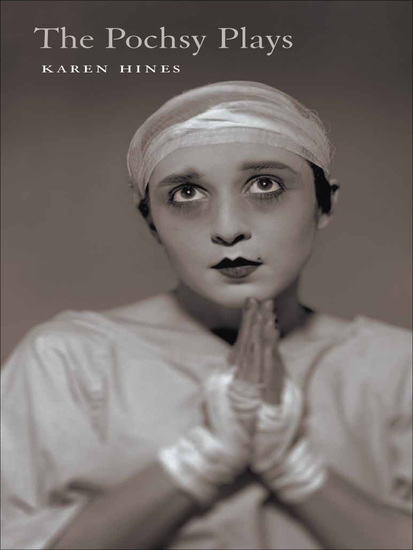
  • The Pochsy Plays - cover

    The Pochsy Plays

    Karen Hines

    • 0
    • 0
    • 0
    Beckett meets Betty Boop in this trilogy of monologues by Canadian cult heroine Pochsy, a nasty, vapid, utterly charming vixen. In Pochsy's Lips, she's in the hospital, convinced she's sick because she's got a squid where her heart should be. In Oh Baby, she's at the Last Resort, on holiday from her job packing mercury. And in Citizen Pochsy, our little minx is in the waiting room at an audit from hell. In The Pochsy Plays, Hines remodels and melds traditions like stand-up, absurdism, clowning and neo-cabaret to create some of the most original and cutting satire to hit the stage – and, now, the page. Walk a mile in her distressed calfskin boots as the dark and ditzy Pochsy garbles ad slogans, self-help mantras and desperate grabs at meaning into a postmodern pastiche that is hilarious and harrowing, sweet and bitter at the same time. With extensive photos and musical scores, and an introduction by Darren O'Donnell.
    Show book
  • Rhyme A Dozen A - 12 Poets 12 Poems 1 Topic ― Birthdays - 12 Poets 12 Poems 1 Topic - cover

    Rhyme A Dozen A - 12 Poets 12...

    Christina Rossetti, Lucretia...

    • 0
    • 0
    • 0
    ‘A dime a dozen’ as known in America, is perhaps equal to the English ‘cheap as chips’ but whatever the lingua franca of your choice in this series we hereby submit ‘A Rhyme a Dozen’ as 12 poems on many given subjects that are a well-rounded gathering, maybe even an essential guide, from the knowing pens of classic poets and their beautifully spoken verse to the comfort of your ears. 
     
    1 - A Rhyme A Dozen - 12 Poems, 12 Poets, 1 Topic - Birthdays - An Introduction 
    2 - A Birthday by Christina Rossetti 
    3 - On My Mother's Fiftieth Birthday by Lucretia Maria Davidson 
    4 - On My Thirty Third Birthday, January 22nd 1821 by Lord Byron 
    5 - To My Father on His Birthday by Elizabeth Barrett Browning 
    6 - Song of the Democratic Review of it's Birthday, October the 1st 1857 by William Ross Wallace 
    7 - Stella's Birthday, March 13th 1727 by Jonathan Swift 
    8 - On Tea by Edmund Waller 
    9 - To H W L on His Birthday 27th February 1867 by James Russell Lowell 
    10 - To Mrs Jane Forster, On Her Birthday, August 4th 1724 by Henry Baker 
    11 - To the Memory of Mrs Lefroy Who Died December 16 My Birthday by Jane Austen 
    12 - Shakespeare. An Ode for His Three-Hundreth Birthday by Martin Farquhar Tupper 
    13 - On the Morning of Christs Nativity by John Milton
    Show book