Join us on a literary world trip!
Add this book to bookshelf
Grey
Write a new comment Default profile 50px
Grey
Subscribe to read the full book or read the first pages for free!
All characters reduced
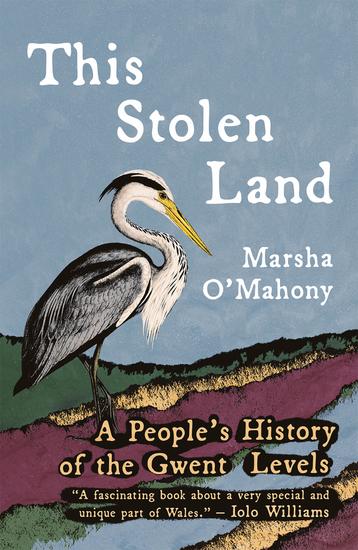
This Stolen Land - A People's History of the Gwent Levels - cover

This Stolen Land - A People's History of the Gwent Levels

Marsha O'Mahony

Publisher: Seren

  • 0
  • 0
  • 0

Summary

The Gwent Levels line the north shore of the Severn Estuary in South Wales: Chepstow at their head; their more famous cousin, the Somerset Levels, across the water; the Welsh capital, Cardiff at their feet. You could waste an hour crossing the Levels by motorway. Or brush aside the journey by train. But writer Marsha O'Mahony has chosen the slow route of foreshore, footpath, and country lane. Over the course of two years, she meandered from village to village collecting conversations and anecdotes as she went. The result is a remarkable oral and social history of this unique landscape and the people who live there.
Available since: 09/08/2025.
Print length: 142 pages.

Other books that might interest you

  • The Nile Cruise - cover

    The Nile Cruise

    Caroline James

    • 0
    • 0
    • 0
    Not Yet Available
    Show book
  • The Shocking Truth about Travel Safety - cover

    The Shocking Truth about Travel...

    Zoey Fraisers

    • 0
    • 0
    • 0
    Traveling is one of life’s greatest pleasures. It opens doors to new cultures, breathtaking landscapes, and unforgettable experiences. Yet, amidst the allure of adventure, many travelers overlook one critical aspect of their journey: safety. Whether venturing to bustling cities or remote destinations, the risks associated with travel are real, often hidden beneath the surface of wanderlust and excitement. Understanding these risks is the first step toward ensuring a secure and enjoyable journey.  
      
    The concept of travel safety isn’t just about avoiding danger—it’s about being prepared for the unexpected. From lost belongings to health emergencies, navigating unfamiliar environments can be challenging. Every destination comes with its unique set of hazards, and even the most seasoned travelers can encounter unforeseen circumstances. However, being aware of these challenges and taking proactive steps to mitigate them can make all the difference between a smooth trip and one fraught with complications.  
      
    One of the most common misconceptions about travel safety is that it’s only necessary for “high-risk” destinations. The reality is that risks exist everywhere, even in the most familiar or seemingly safe locations. A well-planned trip can go awry due to factors as simple as a missed flight, a lost passport, or a moment of carelessness in a crowded market. These situations, though common, can leave travelers vulnerable and unprepared. 
    Show book
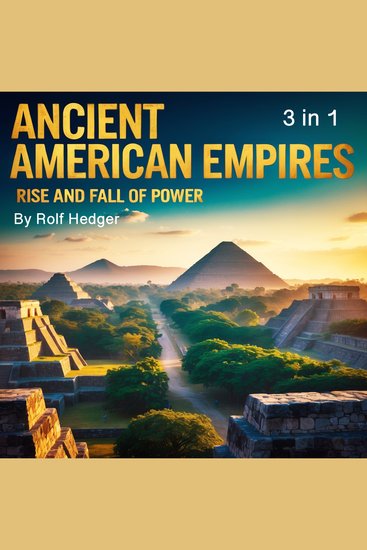
  • Ancient American Empires - Rise and Fall of Power (3 in 1) - cover

    Ancient American Empires - Rise...

    Rolf Hedger

    • 0
    • 0
    • 0
    This book offers a captivating journey through the rise, dominance, and eventual decline of three of the most powerful civilizations in the Americas: the Aztec, Inca, and Maya.  
    This comprehensive guide delves into their origins, cultural achievements, religious beliefs, and sophisticated societies. Discover the grandeur of the Aztec Empire, with its mighty capital of Tenochtitlán and powerful rulers; the vast and intricate Inca Empire, known for its engineering marvels and road networks; and the enigmatic Maya Civilization, famous for its advanced calendar, writing system, and towering pyramids.  
    Through war, conquest, and internal struggles, these civilizations left behind a legacy that continues to fascinate historians and archaeologists today. Perfect for history enthusiasts, this book unravels the mysteries of these ancient empires, their rise to power, and the forces that led to their downfall.
    Show book
  • Egyptian Warfare - Battles Strategies and Military Innovations - cover

    Egyptian Warfare - Battles...

    Omar Khalil

    • 0
    • 0
    • 0
    In the earliest periods of Ancient Egypt, military organization was relatively simplistic, reflecting the needs of a society transitioning from small, independent communities to a unified state. During the Predynastic and Early Dynastic periods, military efforts were often led by local chieftains or emerging kings, whose power was consolidated through the control of small, regional armies. These early forces primarily consisted of able-bodied men called upon when conflicts arose, rather than a standing army.  
    The unification of Upper and Lower Egypt under King Narmer marked a significant turning point in the military structure. With this unification came the need for more organized military strategies to maintain control over the expansive territories. The pharaoh, regarded as both a political and military leader, played a central role in directing military campaigns and defending borders. Early depictions on palettes and reliefs show the pharaoh as a warrior, symbolizing strength and divine authority in battle. This image was crucial in asserting dominance and maintaining internal order. 
    Weapons used during this time were relatively basic, often crafted from stone, wood, and copper. Warriors wielded maces, spears, and simple bows, which were effective in close combat and hunting but limited in more advanced warfare. Shields made from animal hides provided some defense, but armor was scarce, as mobility remained more valued than heavy protection. Chariots, which would later become integral to Egyptian military prowess, had not yet been introduced, and combat primarily involved foot soldiers engaging in skirmishes.
    Show book
  • Unravelling the Silk Road - Travels and Textiles in Central Asia - cover

    Unravelling the Silk Road -...

    Christopher Alexander

    • 0
    • 0
    • 0
    Three textile roads tangle their way through Central Asia. The famous Silk Road united east and west through trade. Older still was the Wool Road, of critical importance when houses made from wool enabled nomads to traverse the inhospitable winter steppes. Then there was the Cotton Road, marked by greed, colonialism and environmental disaster.
    
    At this intersection of human history, fortunes were made and lost through shimmering silks, life-giving felts and gossamer cottons. Chris Aslan, who has spent fifteen years living and working in the region, expertly unravels the strands of this tangled history and embroiders them with his own experiences of life in the heart of Asia.
    Show book
  • Travel Diaries of an Atypical Businessman - UNFILTERED - cover

    Travel Diaries of an Atypical...

    Malcolm Teasdale

    • 0
    • 0
    • 0
    Traveling the World in search of new business seems like a glamorous occupation, but in reality, it presents many complications, misunderstandings, misinterpretations, and plenty of opportunities to make mistakes. 
    Malcolm Teasdale is one of those fortunate people, who has been given the chance to experience the many wonderful places and people on our planet. Chilling out on vacation in a far off distant exotic place is a dream come true for most of us. However, when the primary reason for travel is to conduct business, the challenges caused by the competitiveness of the industry is compounded by the necessity to understand foreign cultures and mannerisms. 
    Flight delays, overcrowded planes, unscheduled hotel stays, language barriers, unfamiliar food, strange people with confusing dialects, bizarre social behavior, are just some of the day to day happenings when traveling overseas. 
    With an attitude of “I'll go to any place at least once”, Malcolm goes in search of business opportunities in emerging markets around the Globe, some of which bring success and others that can be classified as a waste of time and energy. 
    The negatives are completely outweighed by the positives. A bad experience becomes a learning experience. Bad luck relates to something that didn't go as planned, but as much as a good experience, it is forever etched in memory. 
    Malcolm decided to document everything, so that when he retires, and is too feeble to play golf, scuba dive, or even walk along a beach, he will have something to read, and maybe laugh at his past escapades. 
     
    Show book