Join us on a literary world trip!
Add this book to bookshelf
Grey
Write a new comment Default profile 50px
Grey
Subscribe to read the full book or read the first pages for free!
All characters reduced
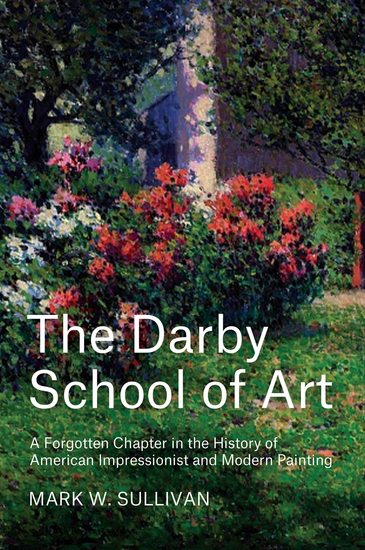
The Darby School of Art - A Forgotten Chapter in the History of American Impressionist and Modern Painting - cover

The Darby School of Art - A Forgotten Chapter in the History of American Impressionist and Modern Painting

Mark W. Sullivan

Publisher: Brookline Books

  • 0
  • 0
  • 0

Summary

This first full-length account of the Darby School of Art overturns Philadelphia’s long-held unwarranted reputation and demonstrates that Philadelphia was a hub of avant-garde painting in the early twentieth century.

This first full-length account of the Darby School of Art overturns Philadelphia’s long-held unwarranted reputation as artistically stodgy—unwilling and unable to embrace Impressionism, post-Impressionist, and abstract art—and demonstrates that Philadelphia was more avant-garde in the early twentieth century than previously thought.

This is the story of an almost completely forgotten summer art school that flourished first in Darby, PA, and then in Fort Washington, PA, between 1898 and 1918. The Darby School of Art was founded and operated by Thomas Anshutz and Hugh Breckenridge, two artists who taught during the academic year at the Pennsylvania Academy of the Fine Arts. Anshutz and Breckenridge brought a lot of new ideas about painting back to Philadelphia after their European sojourns, and introduced those ideas to a public that was initially not very responsive to Impressionism, Post-Impressionism, and semi-abstract art. But an appreciation for modern styles of painting began to slowly grow among Philadelphia artists and collectors, and Anshutz and Breckenridge were in the forefront of this development. They also sympathized with what some have called the "New Woman" movement, which backed women who wanted to pursue careers outside of the home.

In this new history, expert Mark Sullivan argues that the Philadelphia area was a genuine hub of avant-garde painting in the early twentieth century, even though it has earned the reputation of lagging far behind New York City in its openness to new styles of painting. It also discusses how the Darby School should be recognized as an institution that got behind the idea of women as professional artists at a time when that concept was quite radical.
Available since: 11/15/2023.
Print length: 200 pages.

Other books that might interest you

  • This is Not New - Art Culture and the Promise of Change - cover

    This is Not New - Art Culture...

    David Balzer

    • 0
    • 0
    • 0
    Praise for Curationism: "Balzer writes with zest, skepticism, and sly humor" —Sheila Heti, author of Pure Colour 


    What does it mean to call something "new"? Why is Western art and culture, even after postmodernism, still so obsessed with the concept? What are the consequences of relying on culture to bring about social change? 


    In this provocative book, David Balzer argues that Western culture was never designed to produce truly new or original artifacts. Rather, we move from fixation to fixation, trend to trend—a cycle of creation and destruction with deep origins in Judeo-Christianity and the paganism that preceded it. The culture industry promises its own form of change while preserving existing systems of power exactly as they are. 


    From the New Jerusalem to the New Left, from Vannevar Bush to Kate Bush, This is Not New asks difficult questions about the role of culture not in making change, but in delaying—even preventing—it.
    Show book
  • They Can't Kill Us Until They Kill Us - cover

    They Can't Kill Us Until They...

    Hanif Abdurraqib

    • 0
    • 0
    • 0
    *2018 "12 best books to give this holiday season" TODAY Show 
    *Best Books of 2018* Rolling Stone 
    "A Best Book of 2017" NPR, Buzzfeed, Paste Magazine, Esquire, Chicago Tribune, Vol. 1 Brooklyn, CBC, Stereogum, National Post, Entropy, Heavy, Book Riot, Chicago Review of Books, The Los Angeles Review, Michigan Daily 
    *American Booksellers Association (ABA) 'December 2017 Indie Next List Great Reads' 
    *Midwest Indie Bestseller 
    In an age of confusion, fear, and loss, Hanif Abdurraqib's is a voice that matters. Whether he's attending a Bruce Springsteen concert the day after visiting Michael Brown's grave, or discussing public displays of affection at a Carly Rae Jepsen show, he writes with a poignancy and magnetism that resonates profoundly. 
    In the wake of the nightclub attacks in Paris, he recalls how he sought refuge as a teenager in music, at shows, and wonders whether the next generation of young Muslims will not be afforded that opportunity now. While discussing the everyday threat to the lives of black Americans, Abdurraqib recounts the first time he was ordered to the ground by police officers: for attempting to enter his own car. 
    In essays that have been published by the New York Times, MTV, and Pitchfork, among others along with original, previously unreleased essays Abdurraqib uses music and culture as a lens through which to view our world, so that we might better understand ourselves, and in so doing proves himself a bellwether for our times. 
    "Funny, painful, precise, desperate, and loving throughout. Not a day has sounded the same since I read him." Greil Marcus,
    Show book
  • Spomenik - cover

    Spomenik

    Marc Nair

    • 0
    • 0
    • 0
    Spomenik is a collection of poems and photographs from the Balkans. These impressions of people and places bookmark a glimpse of life across a multitude of cities, crossing terrains of history, war, culture and faith.
    Show book
  • Fuente Ovejuna - cover

    Fuente Ovejuna

    Lope de Vega, Adrian Mitchell

    • 0
    • 0
    • 0
    A cruel conqueror has captured the Spanish city of Fuente Ovejuna. As his reign of terror builds, the townspeople look within themselves to find the courage to overthrow him. The eminent Spanish playwright Lope de Vega based his best-known play on a historical incident that took place in 1476. Written in the early 17th century, the play remains a timely meditation on honor and selflessness in the face of oppression. 
      
     Recorded at the DoubleTree Guest Suites, Santa Monica in June 1993. 
      
     Directed by Robert Robinson 
     Producing Director: Susan Albert Loewenberg 
      
     An L.A. Theatre Works full-cast recording starring: 
     Christine Avila as Laurencia 
     Ivonne Coll as Jacinta and Queen Isabel 
     Héctor Elizondo as Commander Fernándo Gómez de Guzmán 
     Jorge Galván as Mengo 
     Carlos Gómez as Frondoso 
     Peter A. Jacobs as Captain Flores and Master Rodrigo Téllez Girón 
     Marabina Jaimes as Pascuala 
     Jonathan Nichols as Barrildo and Cimbranos 
     Al Rodrigo as Leonelo, King Ferdinand, and Soldier 
     Ruben Sierra as Esteban  
     Sam Vlahos as Sergeant, Alonso, and Alderman  
      
     Associate Producer: Robert Robinson  
     Technical Director: Raymond Guarna  
     Second Engineer: Jim Machowsky  
     Technical Advisor: Leo del Aguila  
     Music Director: Gerald Sternbach  
     Guitar performed by Ricardo Gomez
    Show book
  • AI meets UX: Designing the Next Generation of User- Centered Products - Where innovation meets empathy to shape the future of design - cover

    AI meets UX: Designing the Next...

    Wandher Souza

    • 0
    • 0
    • 0
    Ready to shape the future of design? AI meets UX: Designing the Next Generation of User-Centered Products is the ultimate guide for anyone looking to create user-centered products powered by artificial intelligence. Whether you're a UX designer, product manager, developer, or AI enthusiast, this book offers actionable insights and real-world examples to help you craft meaningful, ethical, and innovative experiences. 
    What's Inside:Learn the Basics: Understand AI technologies like machine learning and natural language processing, and how they impact user experiences.Design for Trust: Build transparency, fairness, and personalization into your AI features.Tackle Ethical Challenges: Address privacy, bias, and inclusivity with proven frameworks.Work Smarter: Use exercises, examples, and workshop ideas to apply what you learn right away.Collaborate Effectively: Bridge the gap between designers, developers, and data scientists to create seamless AI integration. 
    Who Should Read This?Designers and Product Managers who want to stay ahead in AI-powered design.Developers and AI Enthusiasts eager to learn how design shapes user trust and satisfaction.Leaders and Innovators looking to unlock new ideas and opportunities. 
    AI meets UX is more than a guide—it's your step-by-step toolkit for creating products that users love. Drawing on his extensive experience designing for some of the world's leading tech companies, Wandher Souza provides the insights and tools you need to innovate, collaborate, and push the boundaries of what's possible in AI-driven design. 
    * Portions of this book were developed with the support of AI technology.
    Show book
  • Mali Empire - Gold Mansa Musa and the Wealth of West Africa - cover

    Mali Empire - Gold Mansa Musa...

    Rolf Hedger

    • 0
    • 0
    • 0
    The Mali Empire emerged in the early 13th century, rising from the remnants of the Ghana Empire and the consolidation of the Malinke people under a visionary leader, Sundiata Keita. The region that would become Mali was already a center of commerce, culture, and political organization, benefiting from its strategic position along the trans-Saharan trade routes. However, it was the collapse of Ghana and the subsequent struggle for power that allowed Mali to emerge as a dominant force in West Africa. 
    The Ghana Empire, which had once controlled vast gold reserves and major trade routes, began to decline due to internal conflicts, overexpansion, and pressure from external forces such as the Almoravid invasions. As Ghana weakened, many of its vassal states and ethnic groups, including the Malinke people, sought independence and new opportunities for leadership. The Malinke, a subgroup of the Mande-speaking people, inhabited the area along the upper Niger River and had long engaged in trade and farming. Their political organization had been fragmented, but under Sundiata Keita, they would come together to form a unified and powerful state. 
    Sundiata Keita’s rise to power is deeply rooted in legend and oral tradition, preserved in the Epic of Sundiata. According to the narrative, Sundiata was born into the Keita royal family but faced exile due to political rivalries. During this time, the Sosso Kingdom, under the rule of Sumanguru Kanté, expanded its influence and sought to dominate the Malinke. Sundiata, gathering allies among different clans and neighboring groups, returned from exile to lead a coalition against Sumanguru at the Battle of Kirina around 1235. His victory in this decisive conflict not only ended Sosso rule but also laid the foundation for the Mali Empire.
    Show book