Join us on a literary world trip!
Add this book to bookshelf
Grey
Write a new comment Default profile 50px
Grey
Subscribe to read the full book or read the first pages for free!
All characters reduced
The Complete Works of Mark Twain (Illustrated Edition) - Enriched edition Masterpieces of American Humor and Social Commentary - cover

The Complete Works of Mark Twain (Illustrated Edition) - Enriched edition Masterpieces of American Humor and Social Commentary

Mark Twain

Publisher: Good Press

  • 0
  • 0
  • 0

Summary

In "The Complete Works of Mark Twain (Illustrated Edition)," readers are invited to explore the vividly crafted literary world of one of America's most celebrated authors. This comprehensive collection showcases Twain's mastery of satire, humor, and social critique through his renowned novels, essays, and short stories. The illustrated edition enriches the text with visual interpretations that enhance the reader's experience, providing essential context for Twain's keen observations on human behavior and societal norms during the late 19th century. Spanning a range of themes, from the moral dilemmas faced by characters like Huck Finn to scathing commentaries on race and class, this anthology serves as a vital reflection of American life in Twain's era. Mark Twain, born Samuel Langhorne Clemens, emerged as a literary figure deeply influenced by his own experiences along the Mississippi River and the complexities of American society in the post-Civil War period. His background as a riverboat pilot, newspaper writer, and humorist shaped his unparalleled ability to weave intricate narratives while simultaneously challenging the status quo. Throughout his career, Twain sought to illuminate the absurdities lurking beneath the veneer of civilization and propriety, making his works timeless and relevant. This illustrated edition is highly recommended for scholars, students, and general readers alike, serving as both a treasured collector's item and an accessible entry point into Twain's profound legacy. Whether revisiting Twain's stories or discovering them anew, readers will find themselves engaged with the intricacies of his storytelling and humor, fostering both enjoyment and critical reflection on the themes that still resonate today.

In this enriched edition, we have carefully created added value for your reading experience:
- A comprehensive Introduction outlines these selected works' unifying features, themes, or stylistic evolutions.
- The Author Biography highlights personal milestones and literary influences that shape the entire body of writing.
- A Historical Context section situates the works in their broader era—social currents, cultural trends, and key events that underpin their creation.
- A concise Synopsis (Selection) offers an accessible overview of the included texts, helping readers navigate plotlines and main ideas without revealing critical twists.
- A unified Analysis examines recurring motifs and stylistic hallmarks across the collection, tying the stories together while spotlighting the different work's strengths.
- Reflection questions inspire deeper contemplation of the author's overarching message, inviting readers to draw connections among different texts and relate them to modern contexts.
- Lastly, our hand‐picked Memorable Quotes distill pivotal lines and turning points, serving as touchstones for the collection's central themes.
Available since: 01/16/2024.
Print length: 10975 pages.

Other books that might interest you

  • Detective Stories – Volume 3 - George Griffiths to Richard Marsh - cover

    Detective Stories – Volume 3 -...

    Anonymous

    • 0
    • 0
    • 0
    The Detective has been a mainstay of fiction writing ever since we can remember.   
    Their deductive powers, their intuition and fleet-footed grasp of every detail can often turn the unlikeliest situation, or bunch of red herrings, into a breakthrough to capture even the most ingenious and dastardly of criminals. 
    In this series our classic authors explore not only various themes, such as Occult Detectives, Female Detectives, Curious Crimes and a whole host more, but also bring a range and depth to the whole culture of criminality as we send in the Long Arm of the Law to bring justice on behalf of the society it serves. 
     
    01 - The Detective - Volume 3 - An Introduction 
    02 - Five Hundred Carats by George Griffiths 
    03 - The Riddle of the Lilac Room by Thomas W Hanshew 
    04 - The Adventures of Lady Pearl-Broker by Beatrice Heron-Maxwell 
    05 - The Sapient Monkey by Headon Hill 
    06 - Carnacki, The Ghost Finder - No 1 - The Gateway of the Monster by William Hope Hodgson 
    07 - The Criminologists' Club by E W Hornung 
    08 - An Expiation by Arabella Kenealy 
    09 - The Mark of the Beast by Rudyard Kipling 
    10 - Green Tea - Part 1 by Sheridan Le Fanu 
    11 - Green Tea - Part 2 by Sheridan Le Fanu 
    12 - The Arrest of Arsene Lupin by Maurice LeBlanc 
    13 - The Horror at Red Hook by H P Lovecraft 
    14 - Conscience by Richard Marsh
    Show book
  • Willie Horton: 23 - Detroit's Own Willie the Wonder the Tigers' First Black Great - cover

    Willie Horton: 23 - Detroit's...

    Kevin Allen, Willie Horton, Jake...

    • 0
    • 0
    • 0
    A compelling autobiography from one of Detroit's favorite sons 


    At fifteen, Willie Horton received his first contract offer to become a professional baseball player. At twenty, he smacked his first major-league home run. At twenty-four, Horton stood in full uniform on the hood of his car, in the midst of burning homes and overturned vehicles, and pleaded for an end to the violence of the 1967 Detroit riots. 


    In this new autobiography, Horton shares the fascinating story of his life and career, from growing up in Detroit's Jeffries Projects as the youngest of twenty-one children to winning a World Series with his hometown Tigers in 1968. Horton also candidly discusses the opposition he faced as a Black player, his fond memories of Al Kaline, the joy he felt in returning to the Tigers as a front office executive, and the many ways he still tries to give back to Detroit and his community. 


    By turns heartrending and hilarious, this timely chronicle is an essential contribution to baseball's written history.
    Show book
  • After the Race - From their pens to your ears genius in every story - cover

    After the Race - From their pens...

    James Joyce

    • 0
    • 0
    • 0
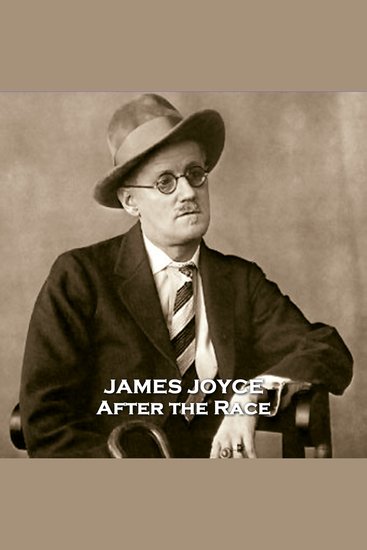
    James Augustine Aloysius Joyce was born on the 2nd February 1882 in Dublin into a middle-class family, and the eldest of ten surviving siblings 
    Admired as a brilliant student he briefly attended the Christian Brothers-run O'Connell School before excelling at the Jesuit schools of Clongowes and Belvedere.  From there he went on to attend University College Dublin from 1898, studying English, French and Italian 
    In 1902, Joyce was now in his early twenties, and went to Paris to study Medicine but soon abandoned his teachings.  Back in Dublin to attend to his dying Mother he met Nora Barnacle. They bonded immediately into a life-long match. Together they decided to emigrate to Europe.  The couple lived in Trieste, Rome, Paris, and finally Zürich where Joyce pursued a variety of jobs and ventures to supplement his literary pursuits but none of these paid off.  
    After publishing a poetry volume, ‘Chamber Music’, in 1907, his short story collection ‘The Dubliners’, in 1914, helped establish his talent in the rapidly changing world.  
    Although far from home Joyce’s literary heart and works were set in his recollections of Dublin.  Characters are close resemblances of family and friends and indeed enemies.  His landmark work ‘Ulysses’, published in 1922, is set in the streets and alleyways of the city as it parallels Homer’s Odyssey in a variety of styles including its famed stream of consciousness. 
    His pen continued to produce classics of the order of ‘A Portrait of the Artist as A Young Man’ and ‘Finnegan’s Wake’ together with several volumes of poetry and a play ‘The Exiles, in 1918.   
    On the 11th January 1941, Joyce underwent surgery in Zürich for a perforated duodenal ulcer. The next day he fell into a coma. On the 13th after a brief period of lucidity in which he called for his wife and son he passed.  He was 58.
    Show book
  • My Secret Life Vol 7 Chapter 7 - cover

    My Secret Life Vol 7 Chapter 7

    Dominic Crawford Collins

    • 0
    • 0
    • 0
    My Secret Life is an anonymously penned memoir written during a period from the 1840s to the 1880s by a wealthy and sex obsessed English gentleman who refers to himself simply as ‘Walter’. Part confessional, part investigative erotic journalism, it meticulously documents every detail of the author’s prolific sexual encounters, offering us in the process an eye and thigh opening account of life behind closed doors in the Victorian age.
    
    Women, in both mind and body, were the all consuming object of Walter’s interest. From early youth through to old age his quest for erotic discovery and adventure with them was never diminished.
    
    Unlike contemporary 19th century erotic texts, such as The Pearl, whose sole object was to titillate, Walter’s interest in his subjects did not end with the extinguishing of the carnal flame. His hunger to understand the circumstances and minds of the women he encountered is never upstaged by the sex. Their potted life histories, their most intimate desires and acts were shared with him and in turn meticulously recorded by him, written down verbatim while still fresh in his mind.
    
    The resulting poignant record of a lost era and the intimate moments of the women who inhabited it offer us a remarkable insight into the 19th century that cannot be gleaned from any other source.
    
    The complete unabridged text is being released as a fully scored audiofilm (an audio book with accompanying music soundtrack) by film composer Dominic Crawford Collins.
    Show book
  • Lou and JonBenét - A Legendary Lawman's Quest to Solve a Child Beauty Queen's Murder - cover

    Lou and JonBenét - A Legendary...

    John Wesley Anderson

    • 0
    • 0
    • 0
    THE STORY OF LOU SMIT, THE DEDICATED HOMICIDE DETECTIVE FEATURED IN THE GRIPPING NEW THREE-PART NETFLIX DOCUMENTARY: COLD CASE: WHO KILLED JONBENÉT RAMSEY?   On Christmas night in 1996, the brutal murder of six-year-old JonBenét Ramsey shocked the nation. Found dead in her family's Boulder, Colorado home, JonBenét's body was discovered in the basement, with a broken skull and strangled by a garrote. A ransom note left in the home added to the confusion, but the truth would prove even more elusive.   As the case unfolded, the media swarmed and speculation ran rampant. JonBenét’s status as a child beauty queen only fueled the fire, with many focusing on her parents, John and Patsy Ramsey, as the primary suspects. However, the case took an unexpected turn when Boulder District Attorney's office brought in legendary homicide detective Lou Smit.   Smit, known for his unyielding pursuit of the truth, quickly grew disillusioned with the Boulder police’s focus on the Ramsey family. He believed that vital evidence pointing away from the parents was being ignored. Resigning from his official role, Smit chose to continue his investigation privately, using his own resources, determined to find justice for JonBenét.   Smit’s findings would change the direction of the investigation. He was convinced the Ramsey family had no involvement, but tragically passed away in 2010, just before he could solve the case.   Now, in Lou and JonBenét, Smit’s longtime friend and colleague, John Anderson, reveals the story behind Smit’s tireless investigation and the profound legacy he left behind. Drawing on Smit’s extensive work, Anderson and the detective’s family and colleagues believe the elusive killer can finally be identified, bringing justice to a case that has haunted the nation for nearly three decades.   This book offers a compelling, behind-the-scenes look at one of America’s most infamous unsolved murders, providing new insights into the case and honoring the unwavering dedication of Lou Smit, the legendary detective who refused to give up.
    Show book
  • Hollywood’s Favorite Screwball Actresses: The Lives and Legacies of the Women Who Popularized the Comedy Genre - cover

    Hollywood’s Favorite Screwball...

    Editors Charles River

    • 0
    • 0
    • 0
    “If I couldn't laugh, I'd rather die.” – Claudette Colbert 
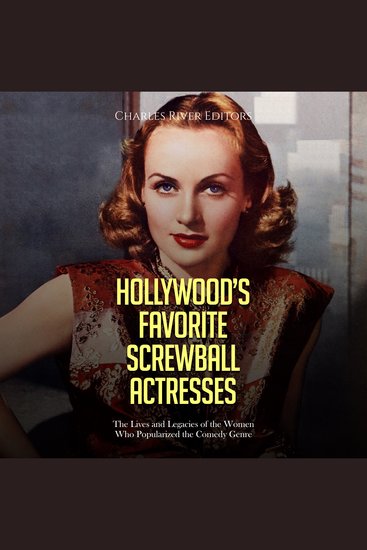
    The 1930s were the height of the classical Hollywood era, known for lavish studio productions by heavyweights like MGM, RKO, Warner Brothers, Paramount, and 20th Century Fox, which were operating at the height of their powers. Every major studio possessed a long roster of contract players, and films were released at such a rapid pace that it made for an especially competitive environment within the industry. Even while America remained in the throes of the Great Depression, the film industry continued to flourish, and movies easily supplanted the theater as the main attraction for American entertainment. Indeed, it would be no exaggeration to claim that the film industry reached its zenith during the decade precisely because it offered an affordable (if very temporary) escape from the anxieties of the economic woes of the era. 
    When the American Film Institute ranked its top 50 screen legends of the 20th century, many of the people named had careers spanning several decades, but one of them managed the feat despite living less than three decades. Ranked as the 22nd greatest actress of the 20th century, Jean Harlow was on the screen for less than 10 years, but in that time the “Blonde Bombshell” became the most popular actress of the 1930s, eclipsing superstars like Joan Crawford and Norma Shearer along the way. In fact, the platinum blonde accomplished that feat as a leading lady for just five years before her premature death of renal failure at the age of 26. 
    Carole Lombard has been memorialized in many fitting ways as an actress, and one of her biggest contributions to Hollywood was the blond archetype that the film industry used successfully for decades in screwball comedies, paving the way for the success of women like Marilyn Monroe. Perhaps the most remarkable aspect of that fact is that it was actually based on Carole’s gushing personality. 
    Show book