Join us on a literary world trip!
Add this book to bookshelf
Grey
Write a new comment Default profile 50px
Grey
Subscribe to read the full book or read the first pages for free!
All characters reduced
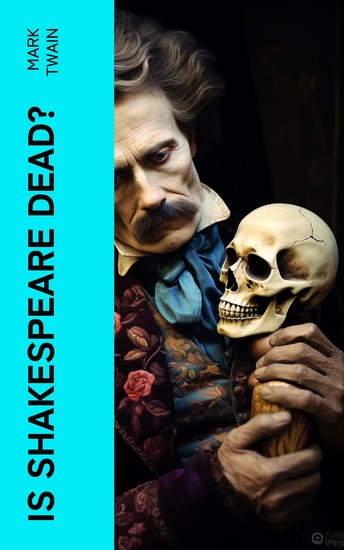
Is Shakespeare Dead? - From My Autobiography - cover

Is Shakespeare Dead? - From My Autobiography

Mark Twain

Publisher: e-artnow

  • 0
  • 0
  • 0

Summary

"Is Shakespeare Dead?" by Mark Twain. Published by e-artnow. e-artnow publishes a wide range of titles that encompasses every genre. From well-known classics & literary fiction and non-fiction to forgotten−or yet undiscovered gems−of world literature, we issue the books that need to be read. Each e-artnow edition has been meticulously edited and formatted to boost readability for all e-readers and devices. Our goal is to produce eBooks that are user-friendly and accessible to everyone in a high-quality digital format.
Available since: 11/27/2023.
Print length: 143 pages.

Other books that might interest you

  • The Wolf Age - The Vikings the Anglo-Saxons and the Battle for the North Sea Empire - cover

    The Wolf Age - The Vikings the...

    Tore Skeie

    • 0
    • 0
    • 0
    The first major book on Vikings by a Scandinavian author to be published in English reframes the struggle for a North Sea empire and puts listeners in the mindset of Vikings, providing new insight into their goals, values, and what they chose to live and die for. 


    The Wolf Age takes listeners on a thrilling journey through the bloody shared history of England and Scandinavia, and on across early medieval Europe, from the wild Norwegian fjords to the wealthy cities of Muslim Andalusia. 


    Warfare, plotting, backstabbing, and bribery abound as Tore Skeie skillfully weaves sagas and skaldic poetry with breathless dramatization as he entertainingly brings the world of the Vikings and Anglo-Saxons to vivid life. 


    In the eleventh century, the rulers of the lands surrounding the North Sea are all hungry for power. To get power they need soldiers, to get soldiers they need silver, and to get silver there is no better way than war and plunder. 


    This vicious cycle draws all the lands of the north into a brutal struggle for supremacy and survival that will shatter kingdoms and forge an empire . . .
    Show book
  • Tuskegee Airmen and Montford Point Marines The: The History of the Men Who Broke the Color Barrier in the US Army Air Forces and Marine Corps - cover

    Tuskegee Airmen and Montford...

    Charles River Editors

    • 0
    • 0
    • 0
    The United States has no shortage of famous military units, from the Civil War’s Iron Brigade to the 101st Airborne, but one would be hard pressed to find one that had to go through as many hardships off the field as the Tuskegee Airmen, a group of African American fighter pilots who overcame Jim Crow at home and official segregation in the military to serve their country in the final years of World War II. In fact, it required a concerted effort by groups such as the National Association for the Advancement of Colored People (NAACP) and the extreme circumstances brought about by World War II that the military eventually decided to establish the “Tuskegee Experiment.” 
    The black crews trained at Tuskegee before being sent overseas, and even then, they faced discrimination from those who didn’t trust them to do more than escort bombers flown by white pilots. However, as the men proved their worth in the heat of battle, some of the squadrons’ red markings helped them earn the nickname “Red Tails,” and their track record was so good that eventually the white pilots of American bombers wanted to fly with them. As Tuskegee airman Roscoe Brown eloquently put it, “They have a saying that excellence is the antidote to prejudice; so, once you show you can do it, some of the barriers will come down.” 
    In the summer of 1942, the first group of African American recruits stepped off a bus into the pine woods of North Carolina, bound for an experiment the Marine Corps had long vowed never to attempt. Their destination - Montford Point, a hastily constructed satellite to the new Camp Lejeune - was more than a training ground. It was a compromise with democracy, a segregated doorway into an institution that had defined itself for generations by who could not enter. The Corps’ exclusivity had a racial edge, as the Marines had barred black men outright from 1798 all the way up the start of the Second World War. 
    Show book
  • Byzantium: The History of the Ancient Greek City Before It Became Constantinople - cover

    Byzantium: The History of the...

    Editors Charles River

    • 0
    • 0
    • 0
    Byzantium may have reached its zenith during the Middle Ages as Constantinople, but it had previously stood out among Greek and other ancient cities for its wealth, size, and strategic location. It is probable that given the location, if the Megarans had not founded their city where they did, another Greek polis would have. It is equally probable that any city in that area would have enjoyed success from the wealth generated from its involvement in the key two-way trade between the Greek states and their numerous colonies around the Black Sea and the increasing general east-west trade between the Roman Empire and the exotic lands to the east.  
    Byzantium’s position as guardian of the Bosphorus gave it advantages that stood the city in good stead for thousands of years and consolidated the city as an intercontinental and international trading hub. Inevitably, such a vibrant international center produced many creative thinkers, and Byzantium was the birthplace or home to such figures as Homerus, a tragedian who lived in the early 3rd century BCE. Another overlooked figure was Philo, an engineer who lived from 280-220 BCE and is known as Philo Mechanicus. Although he was primarily an engineer, he was also a physicist and writer on mechanics. His most important work was the huge Syntaxis, which contained sections on general mathematics, mechanics, harbor construction, siege engine construction, pneumatics, mechanical toys, and coding for military use. The military sections Belopoeica and Poliorcetica survived, and they detailed how to build missiles, construct fortresses, and how to properly provision an army.
    Show book
  • Centuries of Conflict: Palestine's Struggle and Resilience - Unlock 'Centuries of Conflict' and master Palestine's history with powerful audio guides - cover

    Centuries of Conflict:...

    Reynard Thorne

    • 0
    • 0
    • 0
    Centuries of Conflict: Palestine's Struggle and Resilience 
    ⭐⭐ A Simplified Guide with In-Depth Explanations⭐⭐ 
    Are you interested in deepening your understanding of Palestine's history and its enduring spirit through centuries of conflict? 
    Looking for a comprehensive guide that provides all the essential elements to grasp the resilience and continued struggle of Palestine? 
    Your search ends here! 
    This audiobook serves as your definitive companion for gaining profound insights, applying historical context, and engaging with detailed narratives. With this, you're geared for a thorough understanding. 
    Updated with the latest research and historical perspectives. 
    Key features of this enriched guide: 
    - Profound insights about Palestine's history, resilience, and enduring spirit 
    - Detailed explanation of significant events and periods in Palestinian history 
    - Fruitful strategies for understanding and analyzing historical conflicts 
    Our audiobook distinguishes itself through comprehensive coverage, essential for a deep understanding of Palestine's journey. Concepts aren't merely skimmed over; they are explored with precision. 
    Designed with a clear structure and easy-to-understand language, our guide to Palestine's history ensures smooth transitions between topics. Say goodbye to dense jargon and welcome clear, precise, and historically accurate content. 
    So, why wait? Click the BUY NOW button, secure your audiobook, and begin your journey to understanding the history, resilience, and enduring spirit of Palestine!
    Show book
  • The People Who Own the World - Behind the Scenes of Global Power and Influence - cover

    The People Who Own the World -...

    John Harpoon

    • 0
    • 0
    • 0
    Power has always been a driving force behind the world's greatest shifts, shaping nations, economies, and cultures. While political leaders and public figures often take the spotlight, true power often lies in the hands of those who operate behind the scenes. These individuals, families, and organizations wield influence not through democratic processes, but through wealth, strategic connections, and the ability to manipulate societal frameworks. Understanding this hidden power structure is crucial to grasping how the world truly functions. 
      
    Wealth has long been a powerful tool for control, enabling elites to shape policies, industries, and even social norms. Financial empires built by powerful banking families, corporate giants, and investment firms have grown to dominate global economies. Their influence extends far beyond Wall Street or corporate boardrooms — it reaches into political systems, media narratives, and cultural trends. Those with the greatest financial resources have the capacity to mold the world to their advantage, often with little public awareness. 
      
    Secret societies, elite networks, and exclusive organizations further strengthen these power structures. Groups like the Bilderberg Group, the Trilateral Commission, and other closed-door forums provide platforms for powerful individuals to collaborate and strategize. While their intentions may vary, these groups foster an environment where a select few can guide global agendas without public scrutiny. This covert decision-making shapes economic trends, diplomatic relations, and social movements in ways that are difficult to trace.
    Show book
  • The Encyclopedia of Out of Place Artifacts - cover

    The Encyclopedia of Out of Place...

    Martin K. Ettington

    • 0
    • 0
    • 0
    Out of Place Artifacts is a fascinating subject. There are too many of these unusual objects for them to be fakes. I’ve already written several books on this subject including “Strange Objects Which Should Not Exist”, “More Out of Place Objects”, and “A 300 Million Year Old Civilization Existed on Earth”. 
     In this book I’ve compiled everything I could find out about these unusual finds from my prior three books and additional research. 54 artifacts are covered in detail. 
     I’ve included all of this information except that specifically related to Aliens and UFOs since that information is in my books on those topics. 
     The information here is presented in five parts: 
     Part A: Artifacts Found in Historical Times 
    Part B: Very Ancient Objects to Millions of Years Old 
    Part C: A Civilization 300 Million Years Ago 
    Part D: Human Footprints in Rock 
    Part E: Artifacts of Undetermined Ages 
     I hope you find all of this information as interesting as I do since it changes our understanding of the history of our planet in incredible ways.
    Show book