Join us on a literary world trip!
Add this book to bookshelf
Grey
Write a new comment Default profile 50px
Grey
Subscribe to read the full book or read the first pages for free!
All characters reduced
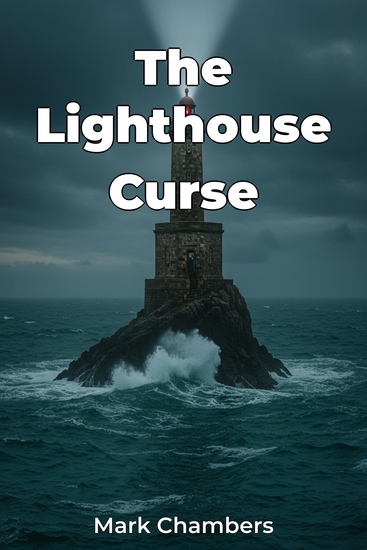
The Lighthouse Curse - cover

The Lighthouse Curse

Mark Chambers

Translator A AI

Publisher: Publifye

  • 0
  • 0
  • 0

Summary

“The Lighthouse Curse” explores the dark side of maritime history, investigating why these beacons of safety so often became sites of tragedy. Challenging the notion of supernatural forces, the book argues that environmental hazards, psychological pressures, and institutional neglect were the true culprits behind the misfortunes of lighthouse keepers. Isolation, a constant companion for these individuals, often led to mental decline and paranoia. It also highlights that inadequate support systems left keepers vulnerable in unforgiving environments. The book uses a narrative non-fiction approach, combining historical investigation with elements of true crime to dissect the grim realities behind the legends of cursed lighthouses. It presents case studies of infamous locations like the Flannan Isles, Smalls Lighthouse, and Point Cloates, each chosen for their unique contribution to understanding the overarching themes. By examining historical records, psychological profiles, and environmental conditions, the book reveals how systemic failures contributed to the repeated tragedies. The book progresses by first dissecting the mythology of “cursed lighthouses,” then diving into detailed case studies, and finally synthesizing the findings to offer a comprehensive analysis. It offers valuable insights into the lives of these often-overlooked workers and the lessons applicable to modern-day professions involving isolation and risk.
Available since: 02/20/2025.
Print length: 61 pages.
Other books that might interest you

  • Muhammad Ali - cover

    Muhammad Ali

    Geoffrey Giuliano

    • 0
    • 0
    • 0
    Muhammad Ali was one of the most celebrated and influential athletes of the twentieth century. A heavyweight boxing champion, humanitarian, and cultural icon, he transcended sport to become a global figure whose impact was felt far beyond the boxing ring. His skill, charisma, confidence, and convictions made him one of the most recognizable personalities in modern history. 
     
    Born Cassius Marcellus Clay Jr. in Louisville, Kentucky, in 1942, Ali rose to prominence after winning a gold medal at the 1960 Olympic Games. He soon captured the world heavyweight championship and established himself as one of boxing's greatest talents. Known for his speed, intelligence, and unforgettable self-promotion, he produced legendary contests against some of the finest fighters of his era. Outside the ring, Ali became a central figure in discussions of religion, civil rights, war, and personal freedom. His refusal to be drafted into military service during the Vietnam War generated national controversy and transformed him into a symbol of conscience and principle. 
     
    This biography traces Ali's remarkable journey from young boxer to international icon. Drawing upon historical records, interviews, memoirs, and contemporary accounts, it explores his athletic achievements, personal struggles, public controversies, and enduring legacy.
    Show book
  • Why Alanis Morissette Matters - cover

    Why Alanis Morissette Matters

    Megan Volpert

    • 0
    • 0
    • 0
    Since 1991, only three albums have sold more than 15 million copies---Metallica (Metallica), Come on Over (Shania Twain), and Jagged Little Pill, by Alanis Morissette. JLP won Grammys, Junos, and stayed in the Billboad 200 for more than a year. The record remains a touchstone for many listeners, as evidenced by the Tony Award-winning musical by the same name that premiered in 2018. If you listened to the radio in 1995, you probably recognize "You Oughta Know," "One Hand in My Pocket," and several other songs if only for Morissette's distinctive voice (or, as the author puts it, "this aggressively female noise").  
    Megan Volpert works through Alanis Morissette's career via JLP, her best-known record. Each chapter dives into one of the 13 tracks from the album, dissecting that song while connecting to later work that extends the relevant theme. For instance, the first chapter makes the point that "All I Really Want" reflects a highly sensitive person rather than an angry one, and discusses Morissette's producing on the documentary Sensitive (2015). Later chapters take up mental health, queer symbolism, skepticism vs. Catholicism, as well as more explicitly feminist concerns. As with most of the books in this series, her own experience is an occasional but consistent lens. As she writes in the prologue, JLP got the author through high school and it captures a "specifically female existential anger" that suggests deploying some memoir is appropriate. References to Derrida, Sophocles, and the films of Kevin Smith among others balance the personal side. Publication of this book will coincide with the 30th anniversary of Jagged Little Pill. (Officially released on June 13, 1995.)
    Show book
  • Mafia - The Complete History of a Criminal World - cover

    Mafia - The Complete History of...

    Jo Durden Smith

    • 0
    • 0
    • 0
    Organized crime is perhaps the most fascinating phenomenon of our time. From Al Capone, who boldly claimed his bootlegging activities were a public service, to the flamboyant Teflon Don, John Gotti, the criminals of the underworld who garnered headlines and captured our imagination wth their violent and extravagant lifestyles. 'Mafia' is an an absorbing introduction to the mob's most influential personalities - their ives, loves and terrible crimes. It also provides an in-depth history of the role of the Mob in Sicily and America. For anyone who wants to know the truth about organized crime and understand the violent forces that have shaped it over the last century, this book is an indispensable guide.
    Show book
  • Elisabeth Elliot - Joyful Surrender - cover

    Elisabeth Elliot - Joyful Surrender

    Janet Benge, Geoff Benge

    • 0
    • 0
    • 0
    Since she was young, Elisabeth Elliot had been intrigued by missionaries who gave up so much to tell others about God s love. With a passion to translate the Bible into new languages, she followed God's call to work among tribes in Ecuador, including the Waorani (Auca), who had killed her husband and four others. Elisabeth kept a detailed journal of her life and missionary service. She returned to the United States after many years in South America, becoming one of the most influential Christian women of our time. A prolific author, speaker, and radio host, she passes on a message of joyful surrender to the world.
    Show book
  • Conquistadors: The Lives and Legacies of Hernán Cortés and Francisco Pizarro - cover

    Conquistadors: The Lives and...

    Editors Charles River

    • 0
    • 0
    • 0
    During the Age of Exploration, some of the most famous and infamous individuals were Spain’s best known conquistadors. Naturally, as the best known conquistador, Hernán Cortés is also the most controversial. Like Christopher Columbus before him, Cortés was lionized for his successes for centuries without questioning his tactics or motives, while indigenous views of the man have been overwhelmingly negative for the consequences his conquests had on the Aztecs and other natives in the region. Just about the only thing everyone agrees upon is that Cortés had a profound impact on the history of North America. Of course, the lionization and demonization of Cortés often take place without fully analyzing the man himself, especially because there are almost no contemporaneous sources that explain what his thinking and motivation was. If anything, Cortés seemed to have been less concerned with posterity or the effects of the Spanish conquest on the natives than he was on relations with the Mother Country itself.  
    	If Columbus and Cortés were the pioneers of Spain’s new global empire, Pizarro consolidated its immense power and riches, and his successes inspired a further generation to expand Spain’s dominions to unheard of dimensions. Furthermore, he participated in the forging of a new culture: like Cortés, he took an indigenous mistress with whom he had two mixed-race children, and yet the woman has none of the lasting fame of Cortés’s Doña Marina. With all of this in mind, it is again remarkable that Pizarro remains one of the less well-known and less written about of the explorers of his age. On the other hand, there are certain factors that may account for the conqueror of Peru’s relative lack of lasting glory. Cortés’s reputation was built on being the first to overthrow a great empire, so Pizarro’s similar feat, even if it bore even greater fruit in the long run, would always be overshadowed by his predecessor’s precedent. 
    Show book
  • The Striding Place - From their pens to your ears genius in every story - cover

    The Striding Place - From their...

    Gertrude Atherton

    • 0
    • 0
    • 0
    Gertrude Franklin Horn was born on October 30th, 1857, in San Francisco, California. Her parents separated in 1860 when she was two years old, and she was raised by her maternal grandfather, Stephen Franklin, a devout Presbyterian. He insisted she be well read, and was a great influence on her.  
    She attended St. Mary's Hall high school in Benicia, California, and, briefly, the Sayre School in Lexington, Kentucky. 
    In Kentucky, the rebellious Gertrude met George H.B. Atherton, who was courting her mother. His attentions wandered to Gertrude and, after she accepted his sixth proposal, they eloped on February 15th, 1876.  
    She went to live with him and his domineering Chilean mother. Gertrude found life stultifying. As a result of her disappointment she began to develop an independent life. But two tragedies changed her life dramatically: her son George died of diphtheria, and her husband died at sea. She was left with their daughter Muriel but and needed to support herself. Her mother-in-law agreed to raise Muriel. 
    Her first publication was ‘The Randolphs of Redwood: A Romance’, and serialised in The Argonaut in 1882. When she told her family, she was ostracized.  
    Gertrude’s first novel, ‘What Dreams May Come’, was published in 1888 under the pseudonym Frank Lin. 
    With the death of her grandfather and her mother-in-law she returned to California to resume care of Muriel. In 1891, while writing a weekly column for The San Francisco Examiner, she met Ambrose Bierce, with whom she carried on a love-hate relationship. 
    She wrote ‘Doomswoman’ in 1892, it was published in Lippincott's Monthly Magazine and as a book in 1893. The story focuses on Chonita Moncada y Iturbi and her love of Diego Estenega, as he dreams of modernizing California.  
    In 1892, Atherton left for New York to write for the New York World. She wrote letters to Bierce, confiding her loneliness, her dismay at freelance writing and her dislike of eastern literary circles. Whilst there though she published another California novel, ‘Before the Gringo Came’ (1894). 
    Following this was ‘Patience Sparhawk and Her Times’ (1897), but it proved to be controversial. Its rejection encouraged her to leave for London.  
    In 1898, she completed ‘The Californians’, her first novel set in the post-Spanish era. Critics received this much more positively: The Spectator said "The novel fairly establishes her claim to be considered as one of the most vivid and entertaining interpreters of the complex characters of emancipated American womanhood."  
    Further works followed, many from her California series dealing with the social history of California.  
    Gertrude wrote several stories of supernatural horror, including ‘Death and the Woman’, and ‘Crowned with One Crest’, as well as ‘The Foghorn’, and the much anthologised ‘The Striding Place’.  
    She was an early feminist well acquainted with the plight of women although she spoke against its militancy. Add to this her strong-will, independent-mind, and sometimes her oversteps into controversy, especially over anti-communism and its easy to identify why her novels had such sharp and strong characters. 
    Gertrude Atherton died on June 14th, 1948. She is buried in Cypress Lawn cemetery in Colma, California.
    Show book