Join us on a literary world trip!
Add this book to bookshelf
Grey
Write a new comment Default profile 50px
Grey
Subscribe to read the full book or read the first pages for free!
All characters reduced
Housing Access - cover

Housing Access

Mark Chambers

Translator A AI

Publisher: Publifye

  • 0
  • 0
  • 0

Summary

Housing Access examines the critical link between women's independent housing access and true gender equality. The book argues that securing property rights for women is not only a matter of social justice but also a catalyst for economic development and poverty reduction. It highlights how deeply entrenched socio-cultural barriers and discriminatory legal frameworks often prevent women from owning or inheriting property, impacting their financial security and autonomy.

 
The book is structured to explore legal, socio-cultural, and economic dimensions, analyzing specific laws and cultural contexts. It draws upon comparative legal analysis, statistical data, and case studies to illustrate how unequal access affects women's lived experiences. For instance, biases in inheritance laws and lending practices can significantly limit women's ability to secure housing.

 
The book emphasizes the need for policy reforms, awareness campaigns, and innovative financing mechanisms to promote equitable housing access. Ultimately, Housing Access demonstrates that empowering women through property ownership creates a ripple effect, benefiting families, communities, and national economies. By addressing these systemic issues, societies can foster inclusive economic growth and advance social justice for women worldwide.
Available since: 05/06/2025.
Print length: 90 pages.
Other books that might interest you

  • Crusading against Christians: The History and Legacy of the Catholic Church’s Crusades against Other Christians during the Middle Ages - cover

    Crusading against Christians:...

    Editors Charles River

    • 0
    • 0
    • 0
    After the fall of the Western Roman Empire in the 5th century, when Western Europe was governed by a Germanic warrior-caste, the theory of a just and virtuous war took root. The Roman Church enhanced its authority by sanctifying oaths taken for just military purposes, and Bishop Anselm of Lucca (d. 1086) was the first to suggest that military action for the cause of religion could remit sin. At the Council of Clermont in July 1095, Pope Urban II canonized religious war by urging Western Europe's nobility to take up arms in defense of the Byzantine Empire against the Muslims, thus launching the Crusades. Religious military orders such as the Knights of Saint John, the Templars, and the Hospitallers arose, ostensibly founded to protect the weak and the sick but also to extend the boundaries of Christianity and the power of the Church. In Europe, the knight, originally a mounted warrior, became a consecrated soldier of Christ, dedicated to the defense of the Church by solemn vows made before an altar. 
    Naturally, the question remained concerning the use of arms against other Christians. Eastern Christians did not acknowledge the Pope's supremacy, and many held that it was lawful for him to declare a crusade to bring schismatics back to the obedience of Rome. German knights fighting the Orthodox Russians at the Battle on the Ice in 1242 believed this, as did the Hungarian prosecutors of the 1235 invasion of Bosnia, which was thinly disguised as a crusade. The Church even extended the object of crusade to believers in communion with Rome, who refused to obey lawful authority. After peasants revolted against the Prince-Archbishop of Bremen in 1204 over tithes and land rights, Pope Gregory IX was persuaded to declare them heretics and proclaim a crusade against them.
    Show book
  • White Thinking - Behind the Mask of Racial Identity - cover

    White Thinking - Behind the Mask...

    Lilian Thuram

    • 0
    • 0
    • 0
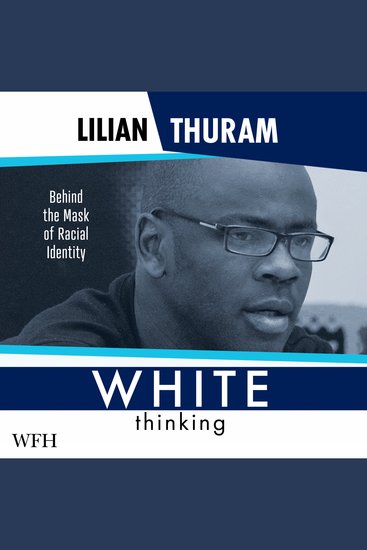
    What does it mean to be white? Beyond just a skin colour, is it also a way of thinking? If so, how did it come about, and why? 
     
    In this book, drawing on history, personal experience and activist literature, the former footballer and World Champion Lilian Thuram looks at the origins and workings of white thinking, how it divides us and how it has become ubiquitous and accepted without challenge. He demonstrates how centuries of white bias and denial justified slavery and colonialism, and have reinforced norms and structures of oppression, limiting the roles and horizons of both non-whites and whites alike. 
    Crucially, while White Thinking is a critique of ingrained structural inequities, it calls for an inclusive approach to solving the problem, and aims to raise awareness and imagine a new world in which all of humanity is given equal weight. 
    “White Thinking patiently demonstrates… how European societies, through their creation of Black people, also invented White people.” LE MONDE 
    “Strikes another blow in his battle against racial stereotypes.” LA VIE 
    “This book is not interested in repentance or white guilt but in the ability to face up to historical reality and to the fact that others might have a very different understanding of that history.” REVUE DES DEUX MONDES 
    “He is almost unique amongst retired sportspeople, having left his old life behind him in the dressing room. Today, the activist has replaced the footballer.” LIBÉRATION
    Show book
  • Lesbian Leaving Party - Lesbian Erotica - cover

    Lesbian Leaving Party - Lesbian...

    Kelly Sanders

    • 0
    • 0
    • 0
    When a girl attending an upper-class boarding school steals a bottle of whiskey from her teacher's store room, she invites her two friends to join her in celebrating the impending end of the semester. As the hot summer sunshine beams in through the window and the alcohol takes effect, they decide to play truth or dare, at which point their frolicking turns ultra-steamy!   
    This story contains sex scenes and is suitable for adults only. All characters are fictional and are over 18 years old.
    Show book
  • Francis of Assisi: A short biography - 5 Minutes: Short on time – long on info! - cover

    Francis of Assisi: A short...

    5 Minutes, 5 Minute Biographies,...

    • 0
    • 0
    • 0
    Francis of Assisi, saint, friend of animals, and founder of the Franciscan order: Life and work in a short biography! Everything you need to know, brief and concise. Infotainment, education and entertainment at its best!
    Show book
  • Tsar Nicholas II - Biography of the Last Romanov Emperor of Russia - cover

    Tsar Nicholas II - Biography of...

    Kelly Mass

    • 0
    • 0
    • 0
    Nicholas II, or Nikolai II Alexandrovich Romanov (18 May [O.S. 6 May] 1868 – 17 July 1918), was the last Emperor of Russia, reigning from 1 November 1894 to 15 March 1917. Revered as Saint Nicholas the Passion-Bearer in the Russian Orthodox Church, he also held the titles of King of Congress Poland and Grand Duke of Finland. His reign marked the end of the Romanov dynasty's 304-year rule over Russia. Though Nicholas supported economic and political reforms proposed by his prime ministers, Sergei Witte and Pyotr Stolypin, his adherence to authoritarianism and reluctance to empower the Duma stymied significant progress. His reign was further undermined by aristocratic resistance and military defeats during the Russo-Japanese War and World War I, which eroded public confidence in his leadership. 
    Internationally, Nicholas sought to bolster Russia's position through alliances and diplomatic agreements. He signed the Anglo-Russian Convention of 1907, aiming to counter German influence in the Middle East and end the longstanding Great Game rivalry with Britain. Earlier, he had initiated the Hague Convention of 1899, a pioneering but ultimately unsuccessful effort to promote disarmament and peaceful conflict resolution. These measures were part of his broader vision to solidify the Franco-Russian Alliance and strengthen Russia's global standing. 
    Domestically, however, Nicholas' reign was plagued by crises and controversies. He faced widespread criticism for his government's repressive policies, particularly during moments of significant unrest. The Khodynka Tragedy, a catastrophic stampede at his coronation celebrations, set a grim tone for his rule. His apparent complicity in anti-Jewish pogroms, the violent crackdown on Bloody Sunday in 1905, and the brutal suppression of the Russian Revolution that same year further tarnished his reputation.
    Show book
  • Issue between Black & White The (Vol1) - The Real War - cover

    Issue between Black & White The...

    Pen of Venom

    • 0
    • 0
    • 0
    This is the first of what I expect to be many, covering 'The Real War', "The RACE-WAR!" The struggles of Whites, Blacks and Ethnic minorities to co-exist peacefully, with historical events, current affairs, controversial ideologies and much more, in an attempt to bring clarity and context to perhaps the most polarizing subject known to man besides Politics and Religion..."Race!"
    Show book