Join us on a literary world trip!
Add this book to bookshelf
Grey
Write a new comment Default profile 50px
Grey
Subscribe to read the full book or read the first pages for free!
All characters reduced
Forensic Law Interface - cover

Forensic Law Interface

Mark Chambers

Translator A AI

Publisher: Publifye

  • 0
  • 0
  • 0

Summary

Forensic Law Interface explores the crucial intersection of forensic science and criminal law, revealing how legal and political forces shape the interpretation and admissibility of forensic evidence. The book delves into the evolving legal standards, particularly the Daubert standard, that determine whether scientific evidence is deemed reliable enough for courtroom use. It also highlights the potential for cognitive bias among forensic examiners, which can unintentionally influence their analysis and findings. The book examines landmark cases and various forensic techniques, such as DNA analysis and digital forensics, while acknowledging their limitations. It progresses through fundamental legal and scientific concepts, followed by detailed analyses of specific forensic disciplines and their legal challenges. Major sections focus on admissibility standards, the impact of cognitive biases, and the ethical obligations of expert witnesses. What makes this book particularly valuable is its focus on the practical implications of legal decisions on forensic practice and the reciprocal impact of forensic findings on judicial outcomes. By bridging the gap between law and science, Forensic Law Interface offers insights relevant to criminal justice, forensic psychology, and public policy, making it a comprehensive guide for legal professionals, forensic scientists, and anyone interested in true crime and the integrity of the justice system.
Available since: 04/05/2025.
Print length: 70 pages.

Other books that might interest you

  • Encounters with the Archdruid - cover

    Encounters with the Archdruid

    John McPhee

    • 0
    • 0
    • 0
    The narratives in this book are of journeys made in three wildernesses—on a coastal island, in a Western mountain range, and on the Colorado River in the Grand Canyon. The four men portrayed here have different relationships to their environment, and they encounter each other on mountain trails, in forests and rapids, sometimes with reserve, sometimes with friendliness, sometimes fighting hard across a philosophical divide.
    Show book
  • Walks Like A Duck - How a Mom with ADHD Led Her Neurodiverse Family to Peace of Mind - cover

    Walks Like A Duck - How a Mom...

    Kim R. Livingston

    • 0
    • 0
    • 0
    When her son's teacher suggests the boy be tested for ADHD, Kim Livingston, uninformed and wary of the label, fights her. She fights the social worker, the doctor. "We can call it whatever you like," the doctor says. "But if he walks like a duck and talks like a duck, they're all going to know he's a duck." 


    This English professor grew up spacey and overweight. Drowning in the unrealistic demands of motherhood, Livingston steals her son's ADHD medication and watches it transform her life—for good and bad. 


    She grows weary of subjective diagnoses and chemical treatments from traditional psychology experts, and experiments with functional medicine—brain mapping and nutritional supplements—as a way to understand her brain's potential, bio-hacking her way to a healthy body and mind. 


    Kim Livingston's story is for the overextended, out-of-shape parent embarrassed over their messy house, or worried whether to medicate their children; and for teachers who seek insight into the mind of that quiet back-row student. It includes frustration, denial, some bold decisions—moments many listeners will recognize in their own lives.
    Show book
  • CS Lewis For Beginners - cover

    CS Lewis For Beginners

    Louis Markos

    • 0
    • 0
    • 0
    C.S. Lewis For Beginners is a thorough examination of C. S. Lewis, the greatest Christian apologist of the twentieth century, throughout his career as an author and as a professor at Oxford University. A Christian apologist defends Christianity as a consistent and coherent worldview that squares with human reason, history, and desire. It offers answers to every facet of our lives on earth as well as answers to our questions about what happens after we die. What makes C.S. Lewis unique as an apologist is the way he balanced so perfectly reason and imagination, logic and intuition, and head and heart. In addition to writing such non-fiction apologetics books as Mere Christianity, The Problem of Pain, and Miracles, he wrote eleven novels: the seven Chronicles of Narnia, a trilogy of science-fiction adventures, and a haunting retelling of an old myth set in the ancient world. All eleven tell wonderful, captivating stories that stand on their own as fiction but that also support and bring to life the kinds of apologetical arguments he makes in his non-fiction. He also wrote two utterly unique works of fiction, The Screwtape Letters and The Great Divorce, that offer a fresh, highly original take on sin and temptation, angels and devils, and heaven and hell. And that’s not all. Lewis the apologist and novelist had a day job. He was a celebrated English professor at Oxford, and then Cambridge, University who wrote works of literary criticism that are still famous today. C.S. Lewis For Beginners takes the reader through the wardrobe of his complete catalog of writing.
    Show book
  • Poems From The Chinese - A Selection of Waley's Best Translations - cover

    Poems From The Chinese - A...

    Arthur Waley

    • 0
    • 0
    • 0
    These are called ''' Poems from the Chinese"" and we have Mr. Waley's assurance that there are in existence Oriental originals. But if it be so (and, of course it is) then we have here a literary miracle. It is a platitude that translation of poetry is either bad verse or bad translation. But Mr. Waley, translating not merely from one language into another, but almost from one planet into another, has produced a body of living poetry, in which there is every reason to believe he re-creates, without distorting, the Chinese poets. This is an unparalleled feat. But as we are, with about six exceptions in the whole of Great Britain, incapable of comparing the English and the Chinese, we must address ourselves to these poems as though they had been written by an Englishman of the twentieth century, and judge them on that basis. It is a severe test to apply to translations, but Mr. Waley emerges from it serenely victorious. Indeed, serenity is the keynote of all this work—the serenity of assured mastery in a difficult medium but still more of outlook. The beauty with which these poems are. inlaid is fundamentally a wise beauty and the wisdom is as much in the shape of Mr. Waley's mind as in that of China. There is no need to hurry here. Wisdom goes at an even pace, and has time between her penetrations of the stars to observe the smallest things of life. Her leisurely glance sweeps over them with patient gold, and they settle, almost without a sigh, into decoration and into pattern. We have lost {and the Chinese have lost) the secret of their enamels of the great periods. But Mr. Waley has private access to them, and his poems, varnished with just that cool and even certainty of paint and texture, achieve one filial translation— the translation of colour into speech. -- Humbert Wolfe.
    Show book
  • Without Ever Reaching the Summit - A Journey - cover

    Without Ever Reaching the Summit...

    Paolo Cognetti

    • 0
    • 0
    • 0
    In this exquisitely written journal-turned-journey of self-discovery, international bestselling author Paolo Cognetti examines our universal desire for connection through a voyage in the Himalayas. 
    Why climb a mountain without ever reaching the summit? 
    In 2017, Paolo Cognetti returned to Nepal, not to conquer the mountains but to journey through the high valleys of the Dolpo with a copy of Peter Matthiessen's The Snow Leopard in hand. Drawing on memories of his childhood in theAlps, Cognetti explored the roots of life in the mountains, truly getting to know the communities and the nature that forged this resilient, almost mythical region.  
    Accompanying him was Remigio, a childhood friend who had never left the mountains of Italy, and Nicola, a painter he had recently met. Joined by a stalwart team of local sherpas, the trio started out in the remote Dolpo region of Nepal. From there, a journey of self-discovery shaped by illness, human connection, and empathy was born.
    Show book
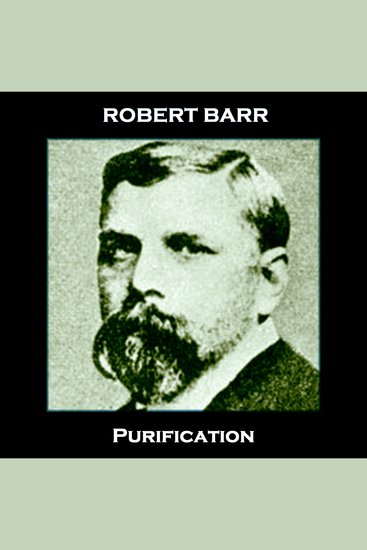
  • Purification - From their pens to your ears genius in every story - cover

    Purification - From their pens...

    Robert Barr

    • 0
    • 0
    • 0
    Robert Barr was born in Glasgow, Scotland on the 16th September 1849.  Five years later the family emigrated to a farm near Muirkirk in Upper Canada.  
    His early years were uneventful as the family settled into their new lives and Barr began his education. 
    A career path as a teacher opened up for him and, by 1874, he had been appointed as headmaster at the Central School at Windsor.  Concurrently he also wrote travel and humourous articles for magazines.  Within two years their success in the regional periodicals encouraged him to change careers to become a reporter and columnist. 
    In August 1876, at age 27, he married Eva Bennett and they began a family. 
    A half decade later he was the exchange editor of the ‘Free Press’ but decided to relocate to London to establish an English edition and to write fiction, which both met with much success. 
    Over the years he was a prolific writer and in 1892, along with Jerome K Jerome, he established ‘The Idler’ magazine and, just after the turn of the century, became its sole proprietor. 
    Although a number of his crime novels and short stories are parodies on Sherlock Holmes and other best-selling detectives of the time, he also wrote short stories across a whole range of subjects and genres usually with intriguing ideas and many laced with wit and humour. 
    Robert Barr died at his home in Woldingham, Surrey of heart disease on the 21st October 1912.  He was 63.
    Show book