Join us on a literary world trip!
Add this book to bookshelf
Grey
Write a new comment Default profile 50px
Grey
Subscribe to read the full book or read the first pages for free!
All characters reduced
Real-World Meetups - Five Everyday Places to Spark Connection Without Swiping - cover

Real-World Meetups - Five Everyday Places to Spark Connection Without Swiping

Marisa Blake

Publisher: BookRix

  • 0
  • 0
  • 0

Summary

Tired of endless swipes, ghosting, and the exhausting cycle of dating apps? It’s time to step out of the digital world and back into real-life connection. Real-World Meetups reveals five powerful “third places”—social spaces outside of home and work—where authentic relationships naturally begin.From casual encounters at coffee shops to meaningful conversations in community spaces, this guide shows you how to create sparks without screens. You’ll discover how to approach others with confidence, read subtle signals of attraction, and transform everyday environments into opportunities for genuine connection.Packed with practical strategies and inspiring insights, this book helps you reclaim dating as fun, organic, and human again. Whether you’re looking for friendship, romance, or a lasting relationship, you’ll learn exactly where and how to meet people who are ready to connect beyond apps.Real love still happens in the real world. Here’s how to find it.
Available since: 09/16/2025.
Other books that might interest you

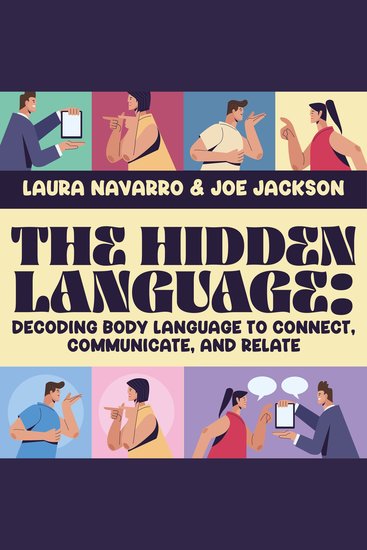
  • The Hidden Language - Decoding Body Language to Connect Communicate and Relate - cover

    The Hidden Language - Decoding...

    Laura Navarro, Joe Jackson

    • 0
    • 0
    • 0
    The Hidden Language: Decoding Body Language to Connect, Communicate, and Relate 
    This insightful book unlocks the secrets of nonverbal communication, revealing the powerful messages transmitted through gestures, postures, and expressions that often bypass words yet say so much more. 
    Introducing "The Hidden Language: Decoding Body Language to Connect, Communicate, and Relate." Master the silent symphony of body language to enhance your personal and professional relationships, by learning to interpret the subtleties that speak volumes. 
    Decode the silent signals with: 
    🚶‍♂️ Postural Prose: Learn to read the stories told by stance and posture, the unspoken narratives of confidence, nervousness, or openness that shape our perceptions. 
    👀 Gaze Guidance: Understand the language of the eyes, from the flicker of a glance to the steady gaze, and how they command attention or convey sincerity. 
    👐 Gestural Grammar: Unravel the meaning behind gestures and touch, the punctuation of our physical expressions that can emphasize, contradict, or reinforce our words. 
    🤝 Relational Rhythms: Discover how body language varies across cultures and contexts, influencing relationships and communication in an increasingly interconnected world. 
    "The Hidden Language" is an essential guide for anyone looking to improve their communication skills, from business professionals and educators to individuals looking to foster deeper personal connections. 
    Embark on the journey of understanding with 'The Hidden Language,' and transform the way you communicate in the silent spaces between words. 📚🔍🤝
    Show book
  • Summary of Simon Singh’s The Code Book - cover

    Summary of Simon Singh’s The...

    Falcon Press

    • 0
    • 0
    • 0
    Buy now to get the main key ideas from Simon Singh’s The Code Book 
      
    As the value of information increases by the second and new methods of communication alter societies, the process of securing messages and data, which is called encryption, will be playing an increasingly significant part in our daily life. 
    In The Code Book (1999), Simon Singh traces the history of secret codes and their crucial role in deciding the outcomes of wars and dynasties. He explores the evolution of encryption from simple substitution of letters to a complex cipher system, and shows how the subject of coding is more relevant in the Digital Age than ever before.
    Show book
  • Titus - The World English Bible Book 56 (Unabridged) - cover

    Titus - The World English Bible...

    Various Authors

    • 0
    • 0
    • 0
    Titus is one of the three pastoral epistles (along with 1 Timothy and 2 Timothy) in the New Testament, historically attributed to Paul the Apostle. It is addressed to Saint Titus and describes the requirements and duties of elders and bishops.
    Show book
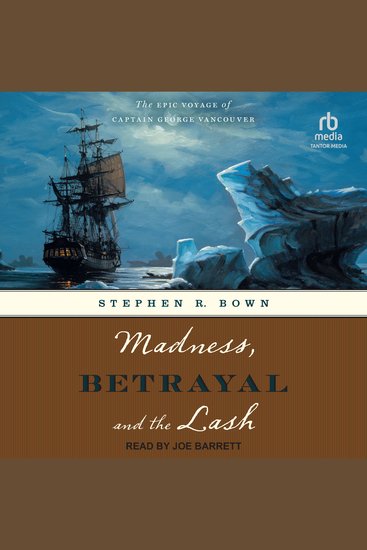
  • Madness Betrayal and the Lash - The Epic Voyage of Captain George Vancouver - cover

    Madness Betrayal and the Lash -...

    Stephen R. Bown

    • 0
    • 0
    • 0
    From 1792 to 1795, George Vancouver sailed the Pacific as the captain of his own expedition and as an agent of imperial ambition. To map a place is to control it, and Britain had its eyes on America's Pacific coast. And map it Vancouver did. His voyage was one of history's greatest feats of maritime daring, discovery, and diplomacy, and his marine survey of Hawaii and the Pacific coast was at its time the most comprehensive ever undertaken. But just two years after returning to Britain, the forty-year-old Vancouver, hounded by critics, shamed by public humiliation at the fists of an aristocratic sailor he had flogged, and blacklisted because of a perceived failure to follow the Admiralty's directives, died in poverty, nearly forgotten. In this riveting and perceptive biography, historian Stephen Bown delves into the events that destroyed Vancouver's reputation and restores his position as one of the greatest explorers of the Age of Discovery.
    Show book
  • The Holy Roman Empire - A Complex Realm - cover

    The Holy Roman Empire - A...

    Harris Ropes

    • 0
    • 0
    • 0
    The Holy Roman Empire traces its origins to a time of shifting power dynamics, spiritual authority, and the enduring legacy of Rome. It was neither wholly holy, Roman, nor an empire in the traditional sense, but it stood as a significant political and spiritual entity in European history for nearly a millennium. The story begins with the fall of the Western Roman Empire in 476 CE, which left a power vacuum in Europe. Centuries later, Charlemagne, King of the Franks, would revive the idea of a Roman imperium in the West. In the year 800, Pope Leo III crowned Charlemagne as Emperor of the Romans, symbolically linking his rule to the legacy of ancient Rome and establishing a precedent for divine sanction of imperial authority. 
    While Charlemagne’s empire did not last beyond his heirs, his imperial title endured in memory and ambition. The true foundations of the Holy Roman Empire, however, are often credited to Otto I, Duke of Saxony, who became King of East Francia in 936. Through military successes and strong alliances with the Church, Otto consolidated his power. In 962, he was crowned Emperor by Pope John XII, an act widely regarded as the formal beginning of the Holy Roman Empire. Otto’s coronation re-established the notion of a Christian emperor in the West and initiated a tradition that would persist for centuries. 
    This early period also marked the beginning of what would become a recurring struggle between secular rulers and the papacy for supremacy. The Investiture Controversy, though it would fully erupt later, had its roots in the growing tensions between emperors who believed they had the right to appoint bishops and popes who insisted on spiritual independence. This rivalry between church and state would shape the development of the empire’s political structure, often blurring the lines between religious and secular authority.
    Show book
  • United States Presidents - Martin van Buren Abraham Lincoln George Washington and Ulysses Grant - cover

    United States Presidents -...

    Kelly Mass

    • 0
    • 0
    • 0
    This is a combo book with biographies about the following United States presidents: 
    1 - Martin Van Buren was an American attorney and statesman who acted as the United States' 8th president between 1837 to 1841. He was the ninth ruler of New York, the tenth US Secretary of State, and the 8th Vice President of the United States. He was a creator of the Democratic Party. With the support of well-known leaving President Andrew Jackson and the Democratic Party's organizational strength, he won the 1836 governmental election. 
    2 - From 1861 till his assassination in 1865, Abraham Lincoln was an American legal representative and statesman who functioned as the 16th president of the United States. Lincoln led the nation through the American Civil War, preserving the Union, eliminating slavery, enhancing the federal government, and helping the economy of the United States. 
    3 - George Washington was an American soldier, statesman, and Founding Father who worked as the nation's first president from 1789 to 1797. Washington was called leader of the Continental Army by the Continental Congress, and he led the Patriot forces to triumph in the American Revolutionary War. 
    4 - Ulysses S. Grant was an American army officer and political leader who acted as the United States' 18th president from 1869 to 1877. Grant was an achieved civil liberties executive at the time of his presidency, developing the Justice Department and teaming up with the Radical Republicans to secure African Americans at the time of Restoration. He led the Union Army to success in the American Civil War as Commanding General in the year 1865, and after that briefly functioned as Secretary of War.
    Show book