Join us on a literary world trip!
Add this book to bookshelf
Grey
Write a new comment Default profile 50px
Grey
Subscribe to read the full book or read the first pages for free!
All characters reduced
Loitering in Pleasant Paths - cover

Loitering in Pleasant Paths

Marion Harland

Publisher: DigiCat

  • 0
  • 0
  • 0

Summary

In "Loitering in Pleasant Paths," Marion Harland weaves a tapestry of reflections that celebrate the beauty of everyday life, offering readers a rich interplay of personal anecdote and meditative prose. Written in a style that bursts with vivid imagery and emotional resonance, this collection stands as a quintessential example of 19th-century American literature, steeped in the tradition of transcendentalism and domesticity. Harland's poignant observations on nature, home, and the societal roles of women invite readers to linger in her eloquent descriptions while contemplating their own experiences and surroundings. Born Mary E. Wilkins Freeman in 1830, Marion Harland grew to become a pioneering figure in American women's literature. Her background as a Southern woman, combined with her keen insights into the complexities of marriage and domestic life, informed her writing, compelling her to explore themes of self-discovery and fulfillment. Harland's literary journey was marked by her collaboration with various publications, reinforcing her commitment to enhancing women's voices in literature during her time. "Loitering in Pleasant Paths" is a delightful read for anyone who appreciates the serenity found in ordinary moments. It offers a gentle reminder to savor life's simple pleasures and encourages a thoughtful exploration of one's surroundings. This book is perfect for readers seeking inspiration through the lens of poetic thought and historical context.
Available since: 09/05/2022.
Print length: 341 pages.
Other books that might interest you

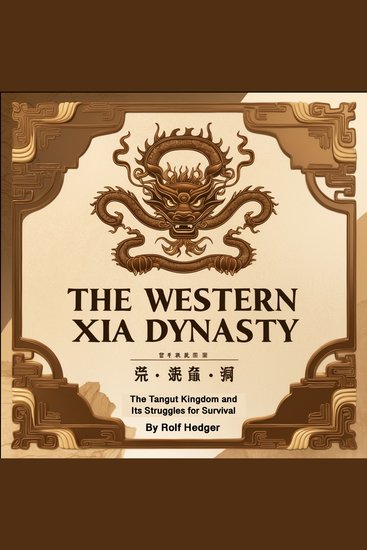
  • The Western Xia Dynasty - The Tangut Kingdom and Its Struggles for Survival - cover

    The Western Xia Dynasty - The...

    Rolf Hedger

    • 0
    • 0
    • 0
    The Western Xia Dynasty, founded by the Tangut people, emerged as a powerful and distinct kingdom in northwestern China during the 11th century. Its establishment marked the rise of a unique civilization that balanced influences from the Chinese, Tibetan, and Central Asian cultures while maintaining its own identity. The Tanguts, originally a nomadic group, gradually settled in the Ordos region and later expanded into the Hexi Corridor, an area of strategic importance due to its location along the Silk Road. 
    The dynasty was officially established in 1038 by Li Yuanhao, who declared himself emperor and adopted the title of the Great Xia. Li Yuanhao sought to solidify Tangut sovereignty by breaking free from the dominance of the Song Dynasty. To emphasize independence, he introduced significant reforms, including the creation of the Tangut script, a writing system distinct from Chinese characters, reinforcing cultural identity. Under his rule, Western Xia developed a centralized government, with administrative structures modeled in part after the Song system but adapted to suit Tangut traditions. 
    Expansion and military strength played crucial roles in the rise of the Western Xia. The Tanguts, skilled in cavalry warfare, built a formidable army that enabled them to challenge the Song Dynasty, the Liao Dynasty of the Khitans, and later, the Jin Dynasty of the Jurchens. Frequent conflicts with these neighboring states shaped Western Xia’s military strategies, leading to a highly fortified kingdom capable of defending its territory against multiple threats. While diplomacy was occasionally pursued, warfare was often the means through which the dynasty maintained its influence.
    Show book
  • Five Coimbra Poets - cover

    Five Coimbra Poets

    Dinis Dom, Sá de Miranda, Antero...

    • 0
    • 0
    • 0
    Five Coimbra Poets takes historical contingency—the accident—as a pretext that would seem to unify profoundly different poetical voices from diverse centuries. Its chronological range is ample, starting in late medieval Portugal with Dom Dinis and ending with Fernando Assis Pacheco in the last half of the 20th century. To this historical contingency a contingency of choices is added—an accident of choices. A dual opportunity, a dual purpose: firstly, to bring together certain poets who were either born or lived in Coimbra and who were touched in a way—more or less asymmetrically, more or less explicitly—by the city, by the surrounding countryside and the region; secondly, to offer up poets and poems, some more canonical than others, whose occasion here reflects a personal and subjective choice that is tailored towards both initiation and concision.
    Dom Dinis and Sá de Miranda are joined by the two 19th century poets who most marked the memory of literature which the city keeps alive and which the poems themselves keep alive of the city. Both Antero de Quental and Camilo Pessanha are, in this sense, crucial. The lyrical intensity of landscape and cityscape is alive as well in Fernando Assis Pacheco, who perhaps wrote the most penetrating and moving poems about Coimbra and its worlds, which were those of his childhood, adolescence and early manhood.
    Show book
  • I Suck at Girls - cover

    I Suck at Girls

    Anonymous

    • 0
    • 0
    • 0
    From the #1 New York Times bestseller author of Sh*t My Dad Says, Justin Halpern, comes a laugh-out-loud funny and deeply touching collection of personal stories about relationships with the opposite sex, from a first kiss to getting engaged and all the awkward moments in between. With Sh*t My Dad Says, Halpern brought his brand of talented comedic writing to the world. Now, with this equally poignant, hilarious, and provocative memoir, he establishes himself as one of popular writing’s great humorists among the likes of David Sedaris, Sarah Vowell, and David Rakoff. Fans of biting, honor-infused memoirs such as Me Talk Pretty One Day and Assassination Vacation will find Halpern’s I Suck at Girls an unforgettable journey into the best and worst moments of one man’s adventures in romance.
    Show book
  • Woman Who Brings the Rain - A Memoir of Hokkaido Japan - cover

    Woman Who Brings the Rain - A...

    Eluned Gramich

    • 0
    • 0
    • 0
    Winner of the 2015 New Welsh Writing Awards: WWF Cymru Prize for Writing on Nature and the Environment
    Shortlisted for the 2016 Wales Book of the Year: The Open University in Wales Creative Non-Fiction Award
    'Eluned Gramich has written the perfect essay - a minutely detailed yet nuanced evocation of place and personalities that is full of ecologically precise imagery and is as attentive to the Japanese language as it is to Hokkaidan landscape.' – Mark Cocker
    As precise and nuanced as Japanese calligraphy, this memoir of the author's stay on the remote Hokkaido island in the far north of Japan, has at its heart the mountain, Yotei-san, the region's iconic equivalent to Mount Fuji. As much about learning a language (with connotations of 'reading' a wild landscape) as it is about nature, this dignified and nuanced work evokes what is cultured and cultivated, and yet also honours the wild; the untranslatable. With its themes of seasonal transformation, the peripheral, folklore, loneliness and learning to belong, this work takes a personal philosophical stance in relation to the centre and the periphery.
    '"Eluned Gramich" is a name to hear time and again in the future. [This writing] is as good as we the jurors have ever read... short but perfectly formed... absolutely perfect.' – Justin Albert
    'Quite beautiful. [The author encounters a culture that is completely alien] and she does it with a poet's eye... precisely and vitally. She reads this unfamiliarity with all her imaginative nerve-endings open: the effect is quite remarkable...' – Tony Brown
    'Most rewarding is the philosophical approach... [Gramich's] embracing of... cultural multiplicity, fluidity and adaptability... suits perfectly the changing boundaries of our modern world.' – Wales Arts Review
    Show book
  • Aussiedoodle Dog Training Audio Book - Crate Obedience Food & Potty Training a Puppy - cover

    Aussiedoodle Dog Training Audio...

    Brian Mahoney

    • 0
    • 0
    • 0
    Aussiedoodle Dog Training Audio Book 
    Crate, Obedience, Food, & Potty training a Puppy  
    by Brian Mahoney 
    This dog training book is an essential guide for dog owners who want to establish a strong foundation of training for their new furry companions. This comprehensive book provides expert advice, practical techniques, and step-by-step instructions to ensure successful training in four key areas: crate training, obedience training, food & nutrition, and potty training.  
    But also Discover... 
    * Why a Aussiedoodle is a great dog to own 
    * Aussiedoodle Characteristics 
    * Proper food & nutrition 
    * Quick & Easy House Training 
    * Essential dog training commands 
    * Essential dog training commands part 2 
    * Expert Social & Behavioral Training 
    * Puppy Loving Healthcare 
    * Puppy Care Resources 
    With a wealth of practical tips, troubleshooting advice, and real-life examples, this book equips dog owners with the knowledge and tools to establish a strong bond with their pups while instilling good behavior and habits. Whether you're a first-time dog owner or looking to enhance your training skills, this book is an invaluable resource for raising a well-behaved and happy canine companion. 
    "An investment in knowledge always pays the best interest" Benjamin Franklin 
    Order now, and take advantage of this time tested knowledge... don't wait... you'll wait your life away...
    Show book
  • Composting Basics - All the Skills and Tools You Need to Get Started - cover

    Composting Basics - All the...

    Eric Ebeling, Carl Hursch, Patti...

    • 0
    • 0
    • 0
    From bin placement to vermicomposting, learn how to naturally recycle household waste—whether you live in the country, the suburbs, or the city.    You don’t need a science degree or a shed full of sophisticated equipment to make quality compost. What you need to get started is the know-how provided in this basic how-to book along a little elbow grease and the pile of organic materials you regularly throw away. Nature does the rest.    Whether you live in a rural or urban home, whether you have a garden or not, you can recycle household waste in an environmentally friendly way and turn it into black gold: compost. You’ll learn what and how to compost, how to make or buy bins, how to build a compost pile and make compost tea, and how to compost with worms. It’s simple and easy to do, and the best part is that you’ll be saving money and helping to save the earth as well.
    Show book