Rejoignez-nous pour un voyage dans le monde des livres!
Ajouter ce livre à l'électronique
Grey
Ecrivez un nouveau commentaire Default profile 50px
Grey
Abonnez-vous pour lire le livre complet ou lisez les premières pages gratuitement!
All characters reduced
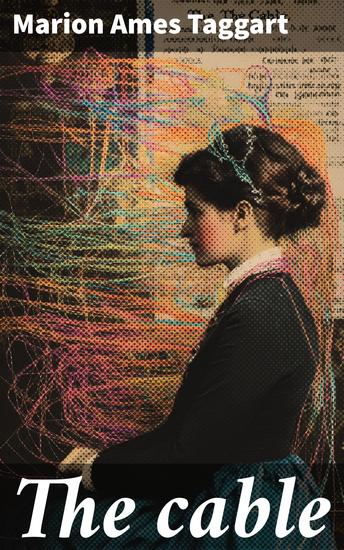
The cable - A novel - cover

The cable - A novel

Marion Ames Taggart

Maison d'édition: Good Press

  • 0
  • 0
  • 0

Synopsis

In "The Cable," Marion Ames Taggart intricately weaves an engaging narrative that explores the interplay between human relationships and the complexities of communication in a rapidly evolving technological age. Set against the backdrop of early 20th-century America, the novel employs a vivid prose style and nuanced character development, delving into themes of connection, separation, and the societal changes brought about by the advent of the telegraph. Taggart's deft use of dialogue and rich imagery evokes a sense of nostalgia while simultaneously critiquing the very means of communication that both unite and isolate individuals. Marion Ames Taggart, a prominent figure in American literature during the early 1900s, was influenced by her own experiences with the burgeoning technological advancements of her time. As a writer with a keen interest in social issues, she sought to reflect on the emotional landscape shaped by these innovations, which mirrored her observations of the evolving dynamics in urban society. Her background in teaching and her thoughtful engagement with contemporary societal shifts provided fertile ground for the exploration of the themes presented in "The Cable." A compelling read for those interested in early 20th-century literature, "The Cable" not only entertains but also invites readers to reflect on their own experiences with communication in an increasingly digital world. Taggart's incisive insights paired with her elegant prose make this novel a vital addition to the canon of American literary works, deserving of attention from scholars and casual readers alike.
Disponible depuis: 02/03/2025.
Longueur d'impression: 210 pages.

D'autres livres qui pourraient vous intéresser

  • Bitterroot Badlands (Stonecroft Saga Book 10) - A Historical Western Novel - cover

    Bitterroot Badlands (Stonecroft...

    B.N. Rundell

    • 0
    • 0
    • 0
    LUST, HATRED, GREED, AND VENGEANCE ALL COMBINE TO MAKE THIS JOURNEY ONE OF THE MOST DANGEROUS AND DEADLIEST OF THEM ALL. 
    They had rescued a young Nez Percé warrior from the warring Blackfoot and were bound on a journey to take him home to his people. The vast land of the Bitterroot Mountains and the badlands that lay at their feet held more obstacles than they expected. 
    It was to prove to be a treacherous journey, fraught with natural disasters and conflicts with familiar foes. But when confronted with evil of another sort, an evil that sought to destroy their very own, it became kill or be killed, and blood would soon paint the mountains and the plains of the wilderness. 
    Yet even in the most challenging times, friends can be found, and old acquaintances renewed. But it takes more than friendship and new allies to dispel the wickedness that comes from the darkness of malevolence. And when vengeance drives the demented, can there be deliverance? When women warriors prove their mettle, anything can happen, and usually does.
    Voir livre
  • Chelkash by Maxim Gorky - A small time thief is caught up in a larger scheme testing his willpower and showing the dangers of greed - cover

    Chelkash by Maxim Gorky - A...

    Maxim Gorky

    • 0
    • 0
    • 0
    Alexei Maximovich Peshkov was born on 28th March 1868, in Nizhny Novgorod, Russia. 
     
    Better known as Maxim Gorky he was orphaned at 11 and ran away from home at 12.  At 19 he had already attempted suicide and thereafter travelled, by foot, across the Russian Empire for 5 years. 
     
    His first book ‘Essays & Stories’ in 1898 was a sensation and so began a long career as an author of short stories, novels and plays.  Gorky saw writing as a moral and political act that would help to change the unjust world around him.  He was an ardent early advocate of the emerging Marxist movement and publicly opposed the Tsarist regime leading several times to his arrest.  
     
    In 1904 he began his own theatre but the censor banned every play and Gorky was forced to abandon the project. 
     
    But Gorky was a financially successful author, editor, and playwright and gave monies to political parties as well as for civil rights and social reform.  The brutal shooting of workers, which set in motion the Revolution of 1905, pushed Gorky more decisively toward radical solutions.  
     
    In 1906 he went to the United States to raise funds for the Bolsheviks. Those experiences including a scandal over travelling with his lover and not his wife deepened his contempt for the ‘bourgeois soul.’ 
     
    Gorky now moved to Capri in Italy, both for health reasons and to escape the increasingly repressive times in Russia.  
     
    An amnesty for the 300th anniversary of the Romanov dynasty saw him return to Russia in 1914. His politics remained close to the Bolshevik cause.  But soon, after the 1918 revolution, his essays referred to Lenin as a tyrant for his senseless arrests and repression.  He was soon appealing to the outside world for food aid after the catastrophic crop failure. 
     
    In October 1921 Gorky returned to Italy, now in Fascist hands, and settled in Sorrento until 1932.  His health worsened with the onset of tuberculosis. 
     
    He wrote several successful books there but now decided to find an understanding with the communist regime. Stalin invited him home and his return was hailed as a major propaganda victory.  He was decorated with the Order of Lenin, and a province, a park, and various streets re-named in his honour. 
     
    But he had his faults too.  In 1933, Gorky co-edited a book on the White Sea-Baltic Canal and denied even a single prisoner died during its construction, but thousands had. As well, knowing that some Nazis were homosexual, a phrase was attributed to him that said ‘exterminate all homosexuals and fascism will vanish’.  Although he was himself was quoting another he was decidedly homophobic. 
     
    With the increase of Stalinist repression in 1935 Gorky was placed under unannounced house arrest. 
     
    Maxim Gorky died on the 18th June 1936 from pneumonia.  He was 68. 
     
    Stalin and Molotov were among those who carried Gorky's urn of ashes at his funeral.  
     
    In Gorky’s story, a thief, Chelkash, ensnares a young man into his scheme to steal silk from a ship.  When he then sells the stolen goods he is set upon by the young accomplice.  What happens then is as unexpected as it is remarkable.
    Voir livre
  • Hard Times - cover

    Hard Times

    Charles Dickens

    • 0
    • 0
    • 0
    In the squalor of a textile town, successful businessman and arch-pragmatist Thomas Gradgrind, proclaiming that he is a self-made man, teaches his children to suppress their imaginations and embrace hard facts. He arranges the marriage of his daughter Louisa to Josiah Bounderby, an unattractive, boastful manufacturer who is thirty years older her senior, and Gradgrind' s son Tom goes to work in Bounderby's bank. But after Tom steals from his employer and Louisa flees the horrors of her marriage, Gradgrind must reconsider his lifelong devotion to facts and utility.
    Voir livre
  • God Sees the Truth But Waits - From their pens to your ears genius in every story - cover

    God Sees the Truth But Waits -...

    Leo Tolstoy

    • 0
    • 0
    • 0
    Leo Tolstoy was born in 1828 in the Russian province of Tula to a wealthy noble family. As a child, he had private tutors but he showed little interest in any formal education. When he went to the University of Kazan in 1843 to study oriental languages and law, he left without completing his courses.  Life now was relaxed and idle but with some writing also taking place.  Gambling debts forced an abrupt change of path and he joined the army to fight in the Crimean War.  He was commended for his bravery and promoted but was appalled at the brutality and loss of life.  He recorded these and other earlier experiences in his diaries which formed the basis of several of his works. 
    In 1852 ‘Childhood’ was published to immediate success and was followed by ‘Boyhood’ and ‘Youth’. 
    His experience in the army and the horrors he witnessed resulted in ‘The Cossacks’ in 1862 and the trilogy ‘Sevastopol Tales’. After the war he travelled around Europe, visiting London and Paris and meeting such luminaries as Victor Hugo and Charles Darwin.  
    It was now that Tolstoy began his masterpiece, ‘War and Peace’. Published in 1869 it was an epic work that changed literature. He quickly followed this with ‘Anna Karenina’.  
    These successes made Tolstoy rich and helped him accomplish many of his dreams but also brought problems as he grappled with his faith and the lot of the oppressed poor. These revolutionary views became so popular that the authorities now kept him under surveillance.  
    He led a life of asceticism and vegetarianism and put his socialist ideals into practice by establishing numerous schools for the poor and food programmes. He also believed in giving away his wealth, which caused much discord with his wife.  
    His writing continued to bring forth classics such as ‘The Death of Ivan Ilyich’ and many brilliant and incisive short stories such as ‘How Much Land Does A Man Need’.  
    In 1901 Tolstoy was excommunicated from the Church and controversially deselected for the Nobel Prize for Literature. 
    Whilst undertaking a pilgrimage by train in October 1910 with his daughter Aleksandra he caught pneumonia in the nearby town of Astapovo.  Leo Tolstoy died on November 9th, 1910, he was 82.
    Voir livre
  • Fall Asleep to Pride and Prejudice - A soothing reading for relaxation and sleep - cover

    Fall Asleep to Pride and...

    Jane Austen

    • 0
    • 0
    • 0
    Experience Jane Austen's timeless classic, Pride and Prejudice, as you drift off to sleep. This book has been edited, narrated, and produced especially to help you fall asleep. 
    Narrated by Elizabeth Grace for Slumber Studios. 
    Do you find yourself struggling to fall asleep? Perhaps you have insomnia or a racing mind after a long day. No matter what is keeping you up at night, soothing audio stories are one of the most effective ways to help you fall asleep and stay asleep. And that's exactly what we do at Slumber Studios. 
    So close your eyes, relax, and let the soothing voice of Elizabeth Grace guide you through the romantic tale of Elizabeth Bennet and Mr. Darcy. As you listen to the gentle and melodic tone of the narration, let your mind wander and immerse yourself in the world of Georgian England. Follow Elizabeth Bennet as she navigates the social norms of her time, deals with family drama, and ultimately falls in love. 
    Our audiobooks are expertly crafted to help you relax and drift off to sleep. Each episode is designed to instill calm, with a slower pace and soothing background music, ensuring that you will be lulled into a peaceful slumber. 
    So if you're looking for a way to unwind after a long day, you've come to the right place. 
    Simply press play, lay down in bed, and let Elizabeth Grace's calming voice transport you into a world of dreams. You'll wake up feeling refreshed and recharged in the morning.
    Voir livre
  • Les Misérables: Volume 4: The Idyll in the Rue Plumet and the Epic in the Rue St Denis - Book 5: The End of Which does Not Resemble the Beginning (Unabridged) - cover

    Les Misérables: Volume 4: The...

    Victor Hugo

    • 0
    • 0
    • 0
    Victor-Marie Hugo (26 February 1802 - 22 May 1885) was a French poet, novelist, essayist, playwright, and dramatist of the Romantic movement. During a literary career that spanned more than sixty years, he wrote abundantly in an exceptional variety of genres: lyrics, satires, epics, philosophical poems, epigrams, novels, history, critical essays, political speeches, funeral orations, diaries, and letters public and private, as well as dramas in verse and prose.
    BOOK 5: THE END OF WHICH DOES NOT RESEMBLE THE BEGINNING: Cosette's grief, which had been so poignant and lively four or five months previously, had, without her being conscious of the fact, entered upon its convalescence. Nature, spring, youth, love for her father, the gayety of the birds and flowers, caused something almost resembling forgetfulness to filter gradually, drop by drop, into that soul, which was so virgin and so young.
    Voir livre