Junte-se a nós em uma viagem ao mundo dos livros!
Adicionar este livro à prateleira
Grey
Deixe um novo comentário Default profile 50px
Grey
Assine para ler o livro completo ou leia as primeiras páginas de graça!
All characters reduced
Samantha on Children's Rights - Embracing Change: Samantha's Fight for Children's Equality - cover
LER

Samantha on Children's Rights - Embracing Change: Samantha's Fight for Children's Equality

Marietta Holley

Editora: Good Press

  • 0
  • 0
  • 0

Sinopse

In "Samantha on Children's Rights," Marietta Holley employs her signature blend of humor and social commentary to examine the pressing issues surrounding children's rights in a rapidly industrializing America. Through the lens of her beloved character Samantha, Holley articulates a progressive vision for childhood that champions justice, education, and emotional well-being. Written in the late 19th century, the book reflects the era's evolving views on childhood and education, deftly combining satire with heartfelt advocacy, while navigating the complexities of legal and social frameworks governing youth at the time. Marietta Holley, often referred to as the "Mark Twain of womanhood," was a prolific author and social reformer whose lived experiences greatly informed her work. Born into a time of significant societal shifts, Holley witnessed firsthand the challenges faced by women and children. Inspired by her own encounters with social injustice, she infused her writing with a fervent desire to spotlight and eradicate inequalities, particularly in the realms of education and children'Äôs rights. Readers seeking an insightful and entertaining exploration of children's rights will find "Samantha on Children's Rights" to be both enlightening and thought-provoking. Holley's approachable style and keen observations encourage critical reflection on contemporary societal norms, making this not only a historical text but also a relevant commentary on ongoing conversations about children's welfare.
Disponível desde: 21/08/2022.
Comprimento de impressão: 225 páginas.

Outros livros que poderiam interessá-lo

  • Legacy by Design - 12 Essential Steps for Ambitious Teens and Young Adults to Master Rental Investment Escape Financial Stress and Achieve Family Wealth - cover

    Legacy by Design - 12 Essential...

    Phoenix J. Waldren

    • 0
    • 0
    • 0
    Tired of feeling like financial freedom is only for the lucky or the privileged? Think again. Legacy by Design is the ultimate playbook for teens and young adults who want to take control of their financial future, break free from the paycheck-to-paycheck cycle, and start building real wealth—starting now. 
    Packed with practical strategies, real-life success stories, and easy-to-follow steps, this book takes you from financial basics to mastering rental property investment. Learn how to boost your financial IQ, leverage credit wisely, spot lucrative opportunities, and scale a profitable real estate portfolio—all without needing a fortune to start. 
    Whether you're an aspiring entrepreneur, a future investor, or just someone who refuses to settle for financial struggle, Legacy by Design gives you the tools and confidence to build wealth, create stability, and leave a lasting impact for generations to come. 
    Your future isn’t written yet—so why not design it yourself?
    Ver livro
  • Australia's War - The Impact of Conflict on a Nation - cover

    Australia's War - The Impact of...

    Lillian Brooks

    • 0
    • 0
    • 0
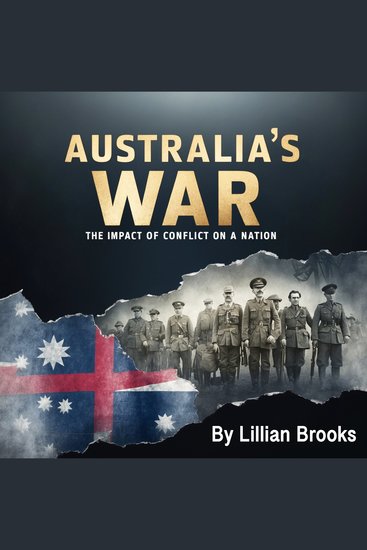
    The early 20th century was a time of great change and tension around the world. As nations sought to expand their influence, new alliances were formed, and existing powers prepared for conflict. Australia, still a young nation and part of the British Empire, found itself drawn into global events far from its shores. The road to war for Australia was shaped by its loyalty to Britain and its growing sense of national identity. 
    At the start of the 1900s, Australia was still under the authority of the British Empire, a relationship that influenced much of its foreign policy. Britain, having secured its position as a world power, was engaged in a series of alliances and military preparations. The rise of Germany as a strong military power created a climate of fear and competition across Europe. Tensions escalated as nations began to stockpile arms, form alliances, and take aggressive stances toward one another. 
    For Australia, the decision to support Britain in times of war was almost unquestioned. The strong ties to the mother country shaped much of the public opinion and government decisions. Australia’s leaders viewed their role as part of Britain’s global defense network, and many believed that supporting Britain in a time of war would strengthen Australia’s position as a member of the Empire. The idea of imperial loyalty was central to national identity, and Australia’s involvement in any potential conflict was seen as a duty to uphold British prestige and security.
    Ver livro
  • The History and Legacy of the British Empire's Most Famous Trading Companies across the World - cover

    The History and Legacy of the...

    Editors Charles River

    • 0
    • 0
    • 0
    Perhaps the most famous trade company in all of history, the East India Company served as one of the key players in the formation of the British Empire. From its origins as a trading company struggling to keep up with its superior Dutch, Portuguese, and Spanish competitors to its tenure as the ruling authority of the Indian subcontinent to its eventual hubristic downfall, the East India Company serves as a lens through which to explore the much larger economic and social forces that shaped the formation of a global British Empire. As a private company that became a non-state global power in its own right, the East India Company also serves as a cautionary tale all too relevant to the modern world’s current political and economic situation. 
    After the Englishman Henry Hudson, under the aegis of the Dutch East India Company, sailed by Manhattan in 1609, he returned home with good news and bad news. Like the other explorers before him, he hadn’t been able to find a water route to the Orient. He had, however, returned with maps (confiscated by the English) and beaver pelts. With that, it became clear that the region around the bay that would take Hudson’s name was a very promising new territory for trade and settlement, which would become a serious bone of contention between the Dutch and the English for the rest of the century. In 1614, another Dutch East India merchant, Adriaen Block, entered through the narrows of the East River between Queens and Randall’s Island, a difficult and dangerous passage that later sank numerous ships and that Block named Hell’s Gate (Hellegat). The European world would know the name “Manhates” when Block returned to the Netherlands with new and improved maps.
    Ver livro
  • Class - A Graphic Guide - cover

    Class - A Graphic Guide

    Laura Harvey, Sarah Leaney

    • 0
    • 0
    • 0
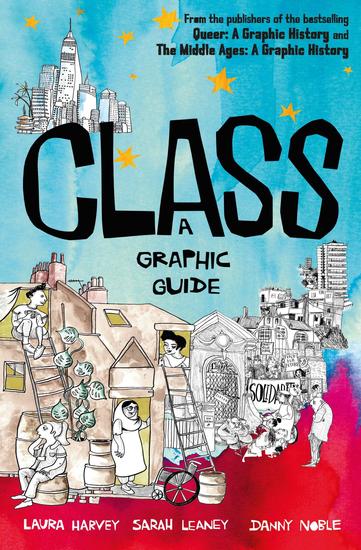
    What do we mean by social class in the 21st century?
    
    
    University of Brighton sociologists Laura Harvey and Sarah Leaney and award-winning comics creator Danny Noble present an utterly unique, illustrated journey through the history, sociology and lived experience of class.
    
    What can class tell us about gentrification, precarious work, the role of elites in society, or access to education? How have thinkers explored class in the past, and how does it affect us today? How does class inform activism and change?
    Class: A Graphic Guide challenges simplistic and stigmatising ideas about working-class people, discusses colonialist roots of class systems, and looks at how class intersects with race, sexuality, gender, disability and age. From the publishers of the bestselling Queer: A Graphic History, this is a vibrant, enjoyable introduction for students, community workers, activists and anyone who wants to understand how class functions in their own lives.
    Ver livro
  • Artificial Intelligence and the Illuminati - cover

    Artificial Intelligence and the...

    Raphael Terra

    • 0
    • 0
    • 0
    This audiobook has been recorded using Text to speech (TTS). 
     
    There is a remarkable and ancient cabal of men who control the world. The majority of power and money is in the hands of the few and the masses must do as they’re told. This secret society we know as the illuminati and they have been manipulating mankind for centuries. In each new generation they have found or developed new methods of control. Now, in the 21st century they have created the ultimate form of control and it is quite possibly the most dangerous ever created – artificial intelligence. 
     
    We are, as normal, being fed a lie and we are eating it as if it were our last meal. The problem is, it may very well be. Mass unemployment, fear, control and manipulation are all on the horizon. Welcome to the nightmare science fiction scenario of the union of he Illuminati and artificial intelligence.
    Ver livro
  • Napoleon Bonaparte’s Most Decisive Land Battles: The History of Austerlitz the French Invasion of Russia Leipzig and Waterloo - cover

    Napoleon Bonaparte’s Most...

    Editors Charles River

    • 0
    • 0
    • 0
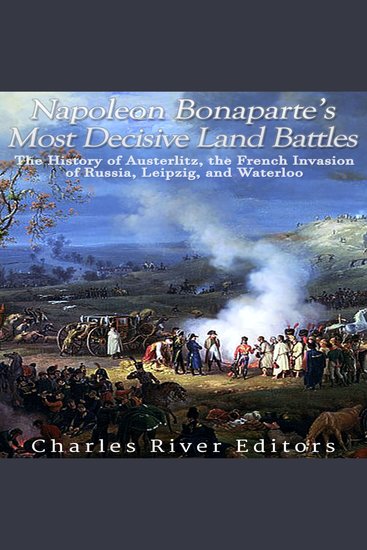
    Nearly 50 years after Napoleon met his Waterloo, generals across the West continued to study his tactics and engage their armies the same way armies fought during the Napoleonic Era. Despite advances in military technology and the advent of railroads for transportation, all of which made defensive warfare more effective, acclaimed military geniuses like Robert E. Lee used flank attacks and infantry charges against superior numbers in an effort to win decisive victories, and it would not be until World War I that concepts of modern warfare made the Napoleonic Era of the early 19th century outdated. 
    For those questioning why generals continued using tactics from the Napoleonic Era even as technology changed the battlefield, the Battle of Austerlitz may provide the best answer. Napoleon is regarded as one of history’s greatest generals, and Austerlitz was his greatest victory. In 1805, Britain, Austria, and Russia allied together to form the Third Coalition against the French, and the Third Coalition’s forces consisted of armies from Austria and Russia, with Britain providing naval support as well as its financial powers. Napoleon had already defeated and mostly destroyed an Austrian army in October at Ulm before it could link up with the Russians, setting the stage for the Battle of Austerlitz to be the culmination of the war against the Third Coalition as a whole in early December. Despite the smashing victory at Ulm, Napoleon’s French army would still be well outnumbered at Austerlitz by a joint Russo-Austrian army in a battle that would also come to be known as the Battle of Three Emperors.  
    At Waterloo, however, it would end disastrously, as Napoleon’s armies were unable to dislodge Wellington and unable to keep the Prussians from linking up with the British. The battle would end with the French suffering nearly 60% casualties, the end of Napoleon’s reign, and the restructuring of the European map.
    Ver livro