Join us on a literary world trip!
Add this book to bookshelf
Grey
Write a new comment Default profile 50px
Grey
Subscribe to read the full book or read the first pages for free!
All characters reduced
Samantha on Children's Rights - Embracing Change: Samantha's Fight for Children's Equality - cover

Samantha on Children's Rights - Embracing Change: Samantha's Fight for Children's Equality

Marietta Holley

Publisher: Good Press

  • 0
  • 0
  • 0

Summary

In "Samantha on Children's Rights," Marietta Holley employs her signature blend of humor and social commentary to examine the pressing issues surrounding children's rights in a rapidly industrializing America. Through the lens of her beloved character Samantha, Holley articulates a progressive vision for childhood that champions justice, education, and emotional well-being. Written in the late 19th century, the book reflects the era's evolving views on childhood and education, deftly combining satire with heartfelt advocacy, while navigating the complexities of legal and social frameworks governing youth at the time. Marietta Holley, often referred to as the "Mark Twain of womanhood," was a prolific author and social reformer whose lived experiences greatly informed her work. Born into a time of significant societal shifts, Holley witnessed firsthand the challenges faced by women and children. Inspired by her own encounters with social injustice, she infused her writing with a fervent desire to spotlight and eradicate inequalities, particularly in the realms of education and children'Äôs rights. Readers seeking an insightful and entertaining exploration of children's rights will find "Samantha on Children's Rights" to be both enlightening and thought-provoking. Holley's approachable style and keen observations encourage critical reflection on contemporary societal norms, making this not only a historical text but also a relevant commentary on ongoing conversations about children's welfare.
Available since: 08/21/2022.
Print length: 225 pages.
Other books that might interest you

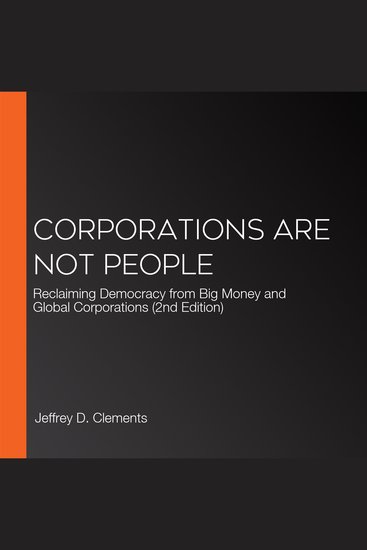
  • Corporations Are Not People - Reclaiming Democracy from Big Money and Global Corporations (2nd Edition) - cover

    Corporations Are Not People -...

    Jeffrey D. Clements, Bill Myers

    • 0
    • 0
    • 0
    A revised and updated edition of the definitive guide to overturning Citizens United. 


    Since the Supreme Court's Citizens United ruling that the rights of things—money and corporations—matter more than the rights of people, America has faced a crisis of democracy. In this timely and thoroughly updated second edition, Jeff Clements describes the strange history of this bizarre ruling, its ongoing destructive effects, and the growing movement to reverse it. 


    He includes a new chapter, "Do Something!," showing how—state by state and community by community—Americans are using creative strategies and tools to renew democracy and curb unbalanced corporate power. Since the first edition, sixteen states, one-hundred-sixty members of Congress, and five hundred cities and towns have called for a constitutional amendment to overturn Citizens United, and the list is growing. This is a fight we can win! 


    "More relevant than ever, this updated edition of Corporations Are Not People chronicles the remarkably vibrant, nationwide grassroots movement to 'get money out and voters in.' " —Katrina vanden Heuvel, Editor and Publisher, The Nation
    Show book
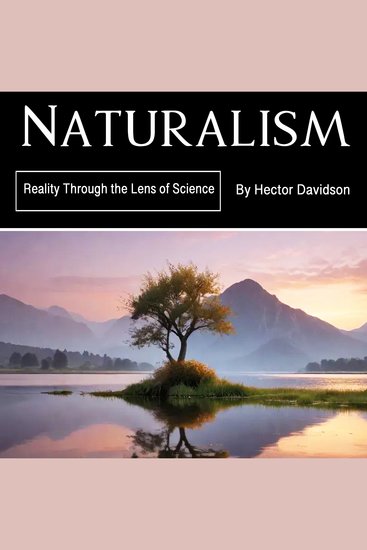
  • Naturalism - Reality Through the Lens of Science - cover

    Naturalism - Reality Through the...

    Hector Davidson

    • 0
    • 0
    • 0
    Naturalism is a philosophical worldview that asserts that everything that exists, and every phenomenon that occurs, is a product of natural laws and processes. It contends that the universe operates without the need for supernatural explanations or interventions. In essence, naturalism posits that the natural world, as observed through science, is all there is. This perspective has deep roots in both philosophy and science, offering a framework for understanding reality that relies heavily on empirical evidence and reasoned inquiry. 
    At its core, naturalism rejects supernatural forces, divine beings, or metaphysical entities as explanations for natural phenomena. Instead, it emphasizes that everything in the universe, from the smallest particles to the vastness of the cosmos, can be understood in terms of physical, biological, and chemical laws. Naturalism also suggests that humans, as part of the natural world, are subject to the same laws governing the rest of the universe. This view aligns closely with the scientific method, which is built upon observation, experimentation, and the continual refinement of theories based on evidence. 
    In defining naturalism, it is essential to recognize its distinction from other philosophical frameworks. Unlike idealism, which asserts that reality is primarily mental or spiritual, naturalism asserts the primacy of the material world. Similarly, it differs from supernaturalism, which attributes the workings of the universe to forces beyond natural laws, such as gods or spirits. Naturalism’s embrace of the empirical allows it to form the foundation for scientific inquiry, fostering advancements in fields ranging from physics and biology to psychology and medicine.
    Show book
  • Germanic Tribes in Antiquity The: The History and Legacy of the Ancient Peoples Who Spread across Europe - cover

    Germanic Tribes in Antiquity...

    Editors Charles River

    • 0
    • 0
    • 0
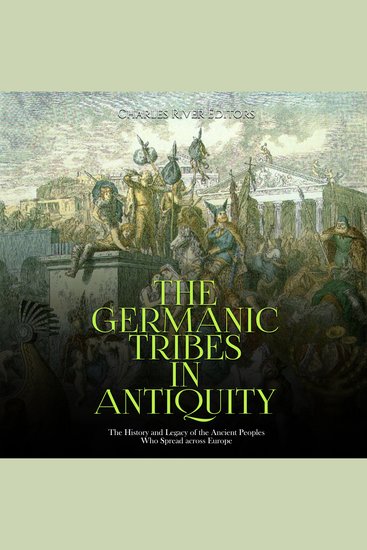
    Despite all the accomplishments and widespread victories and conquests that the ancient Romans accrued over the centuries, one of their most critical failures was the inability to subjugate Germany. Indeed, historians have singled out this one failure as central to the ultimate downfall of Rome, as the constant wars against the Germanic tribes and the need to defend the frontier on the Rhine helped bring the Roman Empire to its knees. 
    There are elements of truth in such a conclusion, but the reality was far more fluid than is often realized. From the 1st century BCE until the collapse of the Western Roman Empire in the 5th century CE, the relationships between the Romans and those living in what is now modern Germany were extremely complicated, involving much more than simple warfare. As a Roman territory, Germania at one point included significant areas of land east of the Rhine, all the way up to the Elbe. The Romans would maintain a significant force on this eastern side until the 3rd century CE, but eventually a Frankish invasion ended that presence, and the term Germania came to refer specifically to the territory west of the Rhine, which included the two provinces of Germania Superior and Germania Inferior, or Upper and Lower Germany. Those provinces were key to the defense of the empire, so much so that Triers provided the location of one of the four seats of government near the end of Rome’s reign. 
    The people that came to be known as Germans originally came from Scandinavia and were mainly shepherds and hunters, but they comprised a number of distinct groups. Within each group, there were separate tribes, and as their populations grew, the land they occupied in Scandinavia was unable to support them, so they began migrating south, settling outside the borders of the Roman Empire. The Germans were fierce warriors who employed rather crude but effective tactics in battle.
    Show book
  • Voting in a Time of Change - cover

    Voting in a Time of Change

    Kevin YL Tan, Terrence Lee

    • 0
    • 0
    • 0
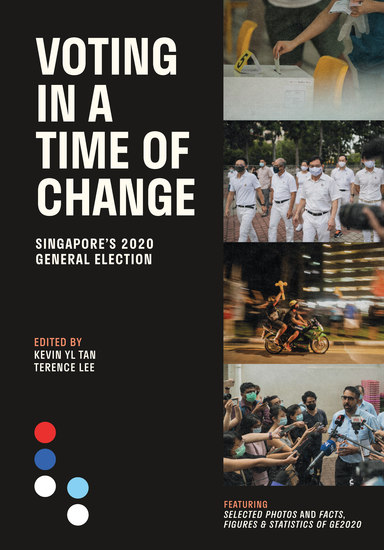
    GE2020: an election that should not be forgotten for yielding startling outcomes, including the appointment of the first Leader of the Opposition. 
     
     
    Voting in a Time of Change is part of a longitudinal study by editors Kevin YL Tan and Terence Lee, who have been assembling trenchant analyses of each General Election by leading academics and commentators since GE2011. Their long game makes possible specific and unique insights. Of GE2020, this is what they have to say: 
     
     
    “The major political shift in Singapore that started in 2011 is marching on, even amidst a Covid-19 pandemic that was to have been a great disrupter. Whether we call this a ‘New Normal’ – as many did back in 2011 – or otherwise is not as important as the momentum for change that has built up since then. Covid-19 thus became a political backdrop to a social and political shift that was merely searching for a catalyst.” 
     
     
    What insights and lessons can we carry forward to the next General Elections? This is an indispensable milestone publication for citizens who wish to commit to even more informed choices, and for political observers who are keeping close tabs on the evolution of our political landscape.
    Show book
  • Extraordinary Wing Women - True Stories of Life-Altering World-Changing Sisterhood - cover

    Extraordinary Wing Women - True...

    Kimothy Joy

    • 0
    • 0
    • 0
    Celebrating the beauty, power, and joy of female friendship 
    Wingman: a pilot who flies behind and outside the leader of a flying formation. 
    While researching her first book, That’s What She Said, Kimothy Joy discovered that the famous women she was profiling were not alone in their success. Each of them were propelled forward by a supporter—a wing woman—a sister, a mom, a best friend, a close confidant. The remarkable partnerships they shared were as multifaceted and complex as the individual women themselves.  
    Extraordinary Wing Women is Joy’s tribute to the importance of female camaraderie. This collection features 33 stories, each varying in length. Some will be familiar power duos—Oprah and Gayle, Helen Keller and Anne Sullivan, Venus and Serena Williams. Others are less known though just as inspiring such as the friendship of Julia Child and her editor Avis DeVoto, Junko Tabei and her all-women mountaineering team, and the Mariposas—the Mirabel sisters who overthrew a dictator in the Dominican Republic. The women featured are from across the world and from diverse periods of history. They are activists, artists, scientists, politicians, athletes, musicians, writers, and more—role models for every woman. 
    Joy dedicates Extraordinary Wing Women to the generations of women who are dismantling the myth that we must compete with one another to pursue and achieve our dreams. History and fiction have shown that we are stronger when we support one another. Joy hopes to inspire and teach us that we, too, have our own wings and can soar higher than ever before with our wing women beside us.
    Show book
  • Unspoken - The Silent Truth Behind My Lifelong Trauma as a Forced Adoptee (Stolen Lives) - cover

    Unspoken - The Silent Truth...

    Liz Harvie, Eve Hatton

    • 0
    • 0
    • 0
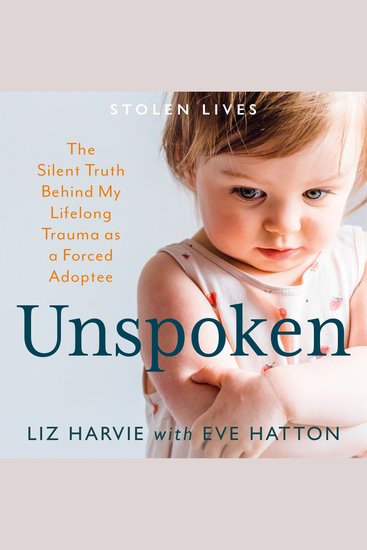
    “I was two when the woman I called Mummy told me, ‘You came out of another mummy’s tummy.’ I grew up thinking that my birth mother didn’t want me. I assumed there must’ve been something inherently wrong with me – why else would a mother give up her baby?” 
    In 1974, Liz Harvie – born Claire Elaine Watts – was given up for adoption by her birth mother Yvonne. Claire was just eight weeks old when her adoptive parents took her in – and renamed her Elizabeth. 
    Although brought up in a ‘perfect’ household, the emotional – and physical – trauma of being taken from her biological mother would never leave Liz. She constantly wondered: what does my real mum look like? Will she come back for me? Why did she abandon me? But whenever Liz voiced such questions, she invariably received the same response: “Your birth parents were not married. They couldn’t look after you.” 
    Years later, aged twenty-eight, Liz reconnected with her birth mother – and finally learned the shocking truth surrounding her adoption. Yvonne had not abandoned her daughter. A social worker had snatched her ten-day-old baby from her arms. “I didn’t even get a final cuddle. She just took her away from me,” says Yvonne. 
    Liz became one of 185,000 victims of forced adoption between 1949 and 1976 in England and Wales. As a young unmarried mum, Yvonne was deemed unfit as a parent by the government, churches, adoption agencies and her father – and made to give up her child against her will. 
    Although reunited, Liz and Yvonne are still struggling to cope with the agony resulting from their devastating separation. As Liz says, “We can’t just skip hand in hand into the sunset. The trauma of being a forced adoptee is lifelong.”
    Show book