Join us on a literary world trip!
Add this book to bookshelf
Grey
Write a new comment Default profile 50px
Grey
Subscribe to read the full book or read the first pages for free!
All characters reduced
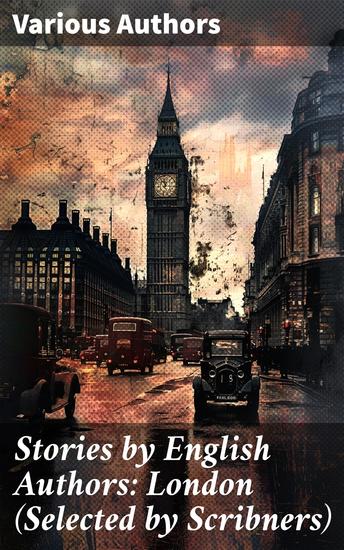
Stories by English Authors: London (Selected by Scribners) - Echoes of Victorian London: Classic Tales from English Authors - cover

Stories by English Authors: London (Selected by Scribners) - Echoes of Victorian London: Classic Tales from English Authors

Marie Corelli, Israel Zangwill, J. M. Barrie, F. Anstey, Arthur Morrison, Arthur Quiller-Couch, Beatrice Harraden

Publisher: Good Press

  • 0
  • 0
  • 0

Summary

Stories by English Authors: London (Selected by Scribners) offers readers a rich tapestry of narratives capturing the essence of London's societal, economic, and cultural layers across different epochs. This anthology comprises a kaleidoscope of stories, each illustrating diverse literary styles ranging from realism to romanticism, and enveloping themes of class struggle, social ambition, and urban life's vibrancy. Such a collection is significant not only for its variety but for its aim to provide readers with profound insights into the universal, timeless narratives that have shaped English literary heritage. The anthology meticulously weaves together these stories, thus forming an intricate narrative of London's multifaceted existence. The anthology features renowned storytellers such as Arthur Quiller-Couch, Arthur Morrison, and J. M. Barrie, whose individual backgrounds bring unique insights into London'Äôs dynamic landscape. Spanning the turn of the century'Äîa transformative period marked by industrialization and societal shifts'Äîthese authors offer a panoramic view of London'Äôs impact on literature and culture. Influenced by movements like modernism and realism, these voices converge to explore complex interactions between individuals and their urban surroundings, enriching readers' understanding of London's literary representation. This collection is an invaluable resource for those seeking to explore London's diverse perspectives and themes from a bygone era. It invites readers into the rich conversations initiated by these influential authors, offering a multifaceted exploration of literary and historical contexts that shape perceptions of empire, social hierarchy, and personal identity. Engaging with this anthology means embarking on a journey through time and class, providing a gratifying and educational experience to both avid literature enthusiasts and those new to English literary studies.
Available since: 08/22/2023.
Print length: 96 pages.
Other books that might interest you

  • A Wicked Woman - From their pens to your ears genius in every story - cover

    A Wicked Woman - From their pens...

    Jack London

    • 0
    • 0
    • 0
    John Griffith Chaney was born on January 12th, 1876 in San Francisco.   
    His father, William Chaney, was living with Flora Wellman when she became pregnant.  Chaney insisted she have an abortion.  Flora's response was to turn a gun on herself.  Although her wounds were not severe the trauma made her temporarily deranged. 
    In late 1876 his mother married John London and the young child was brought to live with them as they moved around the Bay area, eventually settling in Oakland where now, calling himself Jack, he completed grade school. 
    Jack worked hard at several jobs, sometimes 12-18 hours a day, but his dream was university.  He studied hard and borrowed the money to enrol in the summer of 1896 at the University of California in Berkeley. 
    In 1897, at 21, Jack searched out newspaper accounts of his mother's suicide attempt and for the name of his biological father. He wrote to Chaney, then living in Chicago, who claimed he could not be Jack’s father because he was impotent and casually asserted that London's mother had relations with other men.  Jack, devastated by the response, quit Berkeley and went to the Klondike. Other accounts suggest that his dire finances presented Jack with the excuse he needed to leave. 
    In the Klondike Jack began to gather material for his writing but also accumulated many health problems, including scurvy, which together with hip and leg problems he would carry for the rest of his life. 
    During the late 1890's Jack was regularly publishing short stories and by the turn of the century full blown novels. 
    By 1904 Jack had married, fathered two children and was now in the process of divorcing.  A stint as a reporter on the Russo-Japanese war of 1904 was equal amounts trouble and experience. But that experience was always put to good use in a continuing and remarkable output of work. 
    In 1905 he married Charmian Kittredge who at last was a soul and companion who brought him some semblance of peace despite his advancing alcoholism and his incurable wanderlust. 
    Twelve years later Jack had amassed both wealth and a literary reputation through such classics as ‘The Call of the Wild’, ‘White Fang’ and many others. He had a reputation as a social activist and was a tireless friend of the workers.   
    Jack London died suffering from dysentery, late-stage alcoholism and uremia, aged only 40, on November 22nd 1916 at his property in Glen Elen in California.
    Show book
  • Mother and Daughter - cover

    Mother and Daughter

    D H Lawrence

    • 0
    • 0
    • 0
    'Mother and Daughter' can be read as one of Lawrence's diatribes against women. Two women do their best to get along without men but in the end, as Lawrence always proposed, a woman cannot be fulfilled without a dominant man, however unsuitable he may be.
    Show book
  • I'm with Cupid - cover

    I'm with Cupid

    Dawn Blair

    • 0
    • 0
    • 0
    Cupid hates his curse, yet he pulls another feather from his wings. It turns to an arrow in his fingers as his bow comes to his hand. Notching the arrow, Cupid takes aim and fires.  
    It might as well have been targeted at his own heart.  
    People don’t know what it takes to be Cupid. This tough job leads to heartbreak every time. 
    On occasion, Cupid has been known to miss. Sometimes they get away, at least temporarily. Each one leaves him. Always. But for a special, life-changing moment, they can all say they found their true love.  
    He waits for the one who will boldly stand up and claim, “I’m with Cupid.” 
    Will this arrow be the one to bring an end to his curse? 
    Join in this short story urban fantasy about love getting another shot as Cupid claims a love only to lose it again.
    Show book
  • Sun - cover

    Sun

    D H Lawrence

    • 0
    • 0
    • 0
    'Sun' is a sensual story of a woman rediscovering her sexuality through the power of the sun. But for the unexpected arrival of her businessman husband she was ready to give herself to a local peasant but is finally pulled back to respectability by her husband. But she is free to remain apart from him in the sun.
    Show book
  • The Decameron Volume I - cover

    The Decameron Volume I

    Giovanni Boccaccio

    • 0
    • 0
    • 0
    "The Decameron" is a collection of novellas by Italian author Giovanni Boccaccio, written between 1348 and 1353. It is a masterpiece of Italian literature and a significant work of early Renaissance literature. The frame narrative of "The Decameron" revolves around ten individuals who flee plague-ridden Florence and take refuge in a villa in the countryside. To pass the time, they tell one another stories—100 in total—over the course of ten days. These stories encompass a wide range of themes, from love and morality to wit and humor, and they offer a vivid portrayal of Italian society in the 14th century.
    Show book
  • Freckles - From their pens to your ears genius in every story - cover

    Freckles - From their pens to...

    William Pett Ridge

    • 0
    • 0
    • 0
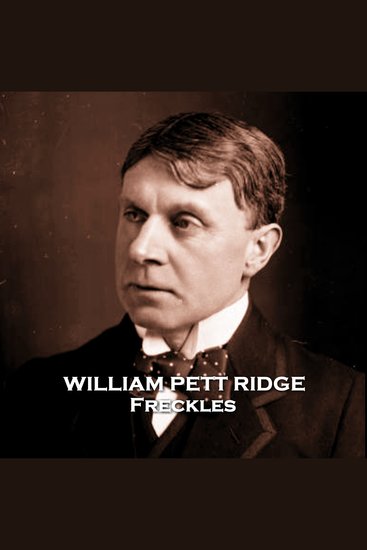
    William Pett Ridge was born at Chartham, near Canterbury, Kent, on 22nd April 1859. 
    His family’s resources were certainly limited. His father was a railway porter, and the young Pett Ridge, after schooling in Marden, Kent became a clerk in a railway clearing-house. The hours were long and arduous, but self-improvement was Pett Ridge’s goal.  After working from nine until seven o’clock he would attend evening classes at Birkbeck Literary and Scientific Institute and then to follow his passion; the ambition to write.  He was heavily influenced by Dickens and several critics thought he had the capability to be his successor. 
    From 1891 many of his humourous sketches were published in the St James's Gazette, the Idler, Windsor Magazine and other literary periodicals of the day. 
    Pett Ridge published his first novel in 1895, A Clever Wife. By the advent of his fifth novel, Mord Em'ly, a mere three years later in 1898, his success was obvious.  His writing was written from the perspective of those born with no privilege and relied on his great talent to find humour and sympathy in his portrayal of working class life. 
    Today Pett Ridge and other East End novelists including Arthur Nevinson, Arthur Morrison and Edwin Pugh are being grouped together as the Cockney Novelists.   
    In 1924, Pugh set out his recollections of Pett Ridge from the 1890s: “I see him most clearly, as he was in those days, through a blue haze of tobacco smoke. We used sometimes to travel together from Waterloo to Worcester Park on our way to spend a Saturday afternoon and evening with H. G. Wells. Pett Ridge does not know it, but it was through watching him fill his pipe, as he sat opposite me in a stuffy little railway compartment, that I completed my own education as a smoker... Pett Ridge had a small, dark, rather spiky moustache in those days, and thick, dark, sleek hair which is perhaps not quite so thick or dark, though hardly less sleek nowadays than it was then”. 
    With his success, on the back of his prolific output and commercial success, Pett Ridge gave generously of both time and money to charity. In 1907 he founded the Babies Home at Hoxton.  This was one of several organisations that he supported that had the welfare of children as their mission.  
    His circle considered Pett Ridge to be one of life's natural bachelors. In 1909 they were rather surprised therefore when he married Olga Hentschel.  
    As the 1920’s arrived Pett Ridge added to his popularity with the movies. Four of his books were adapted into films.  
    Pett Ridge now found the peak of his fame had passed. Although he still managed to produce a book a year he was falling out of fashion and favour with the reading public and his popularity declined rapidly.  His canon runs to over sixty novels and short-story collections as well as many pieces for magazines and periodicals. 
    William Pett Ridge died, on 29th September 1930, at his home, Ampthill, Willow Grove, Chislehurst, at the age of 71. 
    He was cremated at West Norwood on 2nd October 1930.
    Show book