Join us on a literary world trip!
Add this book to bookshelf
Grey
Write a new comment Default profile 50px
Grey
Subscribe to read the full book or read the first pages for free!
All characters reduced
The mind of the child (translated) - cover

The mind of the child (translated)

Maria Montessori

Publisher: ALEMAR S.A.S.

  • 0
  • 0
  • 0

Summary

- This edition is unique;
- The translation is completely original and was carried out for the Ale. Mar. SAS;
- All rights reserved.

"The child is endowed with unknown powers, which can lead to a bright future." In the first years of life, our mind is able to absorb, create, learn in a profound and completely different way than we will do in adulthood. It is on the basis of this pivotal principle of her method that Maria Montessori delves into the mystery of a crucial period in the formation of our identity, at the stage that defines the characters and unsuspected possibilities of future life. With this work, published for the first time in India, where the method met with immediate success - "We are members of the same family", Mahatma Gandhi said of Maria Montessori -, the foundations are laid for an education that must never be constriction and oppression but an aid to life and the development of all the immense potential with which the child is endowed.
Available since: 02/26/2023.

Other books that might interest you

  • How to Live a Happily Ever Afterlife - Stories of Trapped Souls and How Not to Become One - cover

    How to Live a Happily Ever...

    Echo Bodine

    • 0
    • 0
    • 0
    “What happens after we die? What is the Afterlife really like? From her own perspective, Echo shares intimate insights that she has garnered from Spirit about life after death. This book is compelling, thought-provoking, and comforting.”—Chip Coffey, costar, Kindred SpiritsA Psychic's Exploration of Ghosts and How to Prevent It from Happening to You"Echo Bodine is the most genuine psychic I have ever worked with..." —Dennis William Hauck, author of Haunted PlacesWell-known psychic and ghost hunter, Echo Bodine, started seeing spirits as a young girl and has been helping to set them free for decades. Most of these spirits have one thing in common—unfinished business from their lives that leaves them restless, unable to let go and move on. Some souls choose to remain closer to this dimension rather than move into the light when they die.Here, Bodine shares her experiences and compelling investigations that have led her to see the issues from a spirit's living time on Earth which have left them restless and unable to cross over. Each story is accompanied by an exercise that will help the reader avoid the fate of a trapped, angry, or unprepared soul.Some reasons spirits haven't gone through the light include:They don't know they're dead.They are afraid of what could be waiting for them on the other side.They don't believe in an afterlife so they’re stuck in limbo.They are possessive over a person or object.They are terrified of change.How To Live a Happily Ever Afterlife is an eye-opening look at spirits—at what compels and holds them—and what you can do to avoid the same fate. 
    Show book
  • The Mystery of the Apocalypse - cover

    The Mystery of the Apocalypse

    Manly Palmer Hall

    • 0
    • 0
    • 0
    Subjected to more criticism than any other book now incorporated in the New Testament, the Apocalypse--popularly accredited to St. John the Divine--is by far the most important but least understood of the Gnostic Christian writings. Though Justin Martyr declared the Book of Revelation to have been written by "John, one of Christ's apostles," its authorship was disputed as early as the second century after Christ. In the third century these contentions became acute and even Dionysius of Alexandria and Eusebius attacked the Johannine theory, declaring that both the Book of Revelation and the Gospel according to St. John were written by one Cerinthus, who borrowed the name of the great apostle the better to foist his own doctrines upon the Christians. Later Jerome questioned the authorship of the Apocalypse and during the Reformation his objections were revived by Luther and Erasmus. The once generally accepted notion that the Book of Revelation was the actual record of a "mystical experience" occurring to St. John while that seer was an exile in the Isle of Parmos is now regarded with disfavor by more critical scholars. Other explanations have therefore been advanced to account for the symbolism permeating the volume and the original motive for its writing.
    Show book
  • Revolutions - Facts and Historical Details of the Russian and American Revolution - cover

    Revolutions - Facts and...

    Kelly Mass

    • 0
    • 0
    • 0
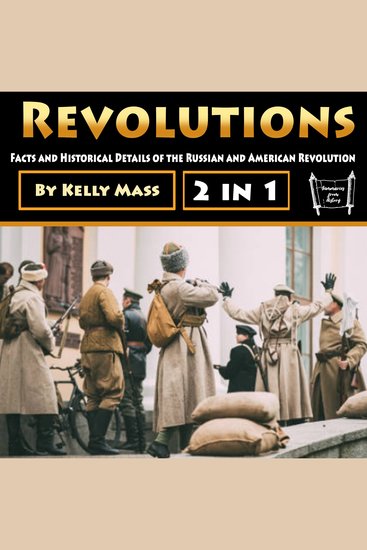
    This book consists of the following two titles: 
    Russian Revolution: The Russian Revolution was a period of political and social revolution that started at the time of the First World War in the previous Russian Empire. The Russian Revolution, which started in the year 1917 with the fall of your home of Romanov and ended in the year 1923 with the facility of the Soviet Union by the Bolsheviks (at the end of the Russian Civil War), was a series of 2 transformations: the first one defeated the royal federal government and the 2nd set up the Bolsheviks in power. The first revolution, which started in the month of February 1917, was focused around the then-capital of Petrograd (now Saint Petersburg). The Russian Army had mutinied after suffering heavy army losses throughout the fight. Subsequently, members of Russia's parliament (called the Duma) took control of the nation and formed the Russian Provisional Federal Government. The interests of significant business owners, and the Russian nobility and upper class, controlled this federal government. 
    American Revolution: Between 1765 to 1791, the American Revolution was an ideological and political revolution in British America. In the American Revolutionary War (between 1775 to 1783), the Americans in the Thirteen Groups established sovereign countries that beat the British, getting independence from the British Crown and establishing the USA of America, the first modern-day constitutional liberal democracy. The tax of American settlers by the British Parliament, a body in which they had no direct representation, provided contention. Before the 1760s, Britain's American groups kept a great degree of internal autonomy, which was managed by colonist legislatures on a regional level. The Stamp Act of 1765 enforced internal taxes on the groups, leading to colonist outrage and the development of the Stamp Act Congress, which united members from different provinces.
    Show book
  • The Legend of Pierre Bottineau & the Red River Trail - cover

    The Legend of Pierre Bottineau &...

    Ted Stone

    • 0
    • 0
    • 0
    The Red River Trail, used approximately between 1820 and 1880 to take supplies and settlers to the West, stimulated commerce in the region and played an important part in the growth of Manitoba and Minnesota.
    		 
    It highlights the role of the Metis in the development of the area and follows the life of Pierre Bottineau a Metis guide and well-known frontiersman and military scout.
    		 
    He traveled the route regularly and was known as the Kit Carson of the North.
    Show book
  • Zeus Grants Stupid Wishes - A No-Bullshit Guide to World Mythology - cover

    Zeus Grants Stupid Wishes - A...

    Cory O'Brien

    • 0
    • 0
    • 0
    Get this: Cronus liked to eat babies. 


    Narcissus probably should have just learned to masturbate. 


    Odin got construction discounts with bestiality. 


    Ganesh was the very definition of an unplanned pregnancy. 


    And Abraham was totally cool about stabbing his kid in the face. 


    All our lives, we've been fed watered-down versions of the classic myths. In reality, mythology is more screwed up than a schizophrenic shaman doing hits of unidentified . . . wait, it all makes sense now. In Zeus Grants Stupid Wishes, Cory O'Brien, creator of Myths RETOLD!, sets the stories straight. These are rude, crude, totally sacred texts told the way they were meant to be told. 


    Here are a few more gems to consider: Zeus once stuffed an unborn fetus inside his thigh to save its life after he exploded its mother by being too good in bed; the Egyptian universe was saved because Sekhmet got too hammered to keep murdering everyone; the Hindu universe is run by a married couple who only stop murdering in order to throw dance parties on the corpses of their enemies; the Norse goddess Freyja once consented to a four-dwarf gangbang in exchange; and there's more dysfunctional goodness where that came from.
    Show book
  • Mutapa Empire - The Strategic Control of Trade Routes - cover

    Mutapa Empire - The Strategic...

    Rolf Hedger

    • 0
    • 0
    • 0
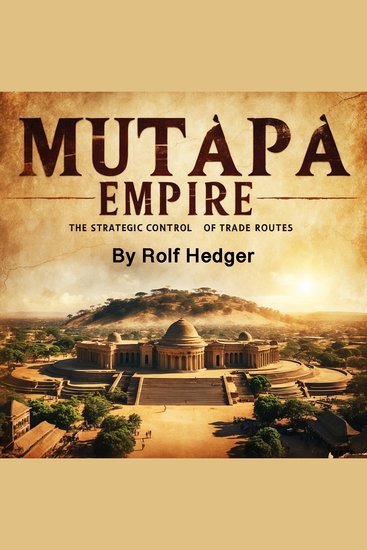
    The Mutapa Empire, also known as the Kingdom of Mutapa, emerged in the 15th century as a powerful Shona state in southern Africa. Its origins are deeply rooted in the earlier civilizations of the region, particularly the Kingdom of Great Zimbabwe, from which it inherited its political structures, trade networks, and cultural traditions. As Great Zimbabwe began to decline due to overpopulation, resource depletion, and internal conflicts, new centers of power arose, with Mutapa becoming the most dominant. 
    According to oral tradition, the empire was founded by a prince named Nyatsimba Mutota, who left Great Zimbabwe in search of new resources, particularly salt. His journey led him northward, where he conquered smaller communities and established a new political center. Mutota’s leadership allowed him to unite different groups under his rule, forming the early foundations of the Mutapa Empire. His successors, particularly his son Matope, expanded the empire further, consolidating power over a vast territory that included present-day Zimbabwe, Mozambique, and parts of Zambia and South Africa. 
    The name “Mutapa” itself carries significant meaning, often interpreted as “conqueror” or “master pillager,” reflecting the empire’s expansionist nature. The title “Mwene Mutapa” was given to its rulers, signifying supreme authority over both the people and the land. Under this leadership, the empire became highly centralized, with the Mwene Mutapa holding absolute power while relying on regional chiefs to manage local governance. This political structure allowed for effective control over its vast territories and trade networks.
    Show book