Join us on a literary world trip!
Add this book to bookshelf
Grey
Write a new comment Default profile 50px
Grey
Subscribe to read the full book or read the first pages for free!
All characters reduced
Twisted Tales From The Universe - cover

Twisted Tales From The Universe

Mari Collier

Publisher: Next Chapter

  • 0
  • 0
  • 0

Summary

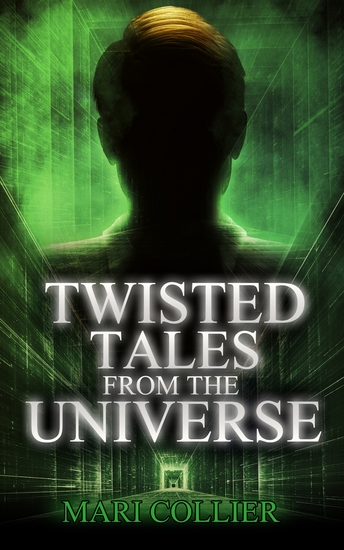
Enter worlds both strange and familiar.
 
Travel through time, encounter witches as they move about their day, be enchanted by childhood fairies, and slay dragons from tales of old. Encounter ordinary people in extraordinary situations, and rocket through space to a wasted planet that auctions its one exportable product... women.
 
As in life, Twisted Tales from the Universe offers a range of stories that include humor, murder, love, and situations that never end quite the way one would expect.
Available since: 01/31/2022.

Other books that might interest you

  • A Flock of Crows - And Other Short Stories - cover

    A Flock of Crows - And Other...

    Devin Cabrera

    • 0
    • 0
    • 0
    A couple wins an all-expense-paid trip to an underwater hotel, but their dream vacation turns into a nightmare when an earthquake unleashes an ancient sea creature from its deep sea prison. Trapped beneath the ocean's surface, they must fight for their lives against a monstrous predator that should have remained buried forever. 


    A boy moves into a house by the swamp, only to discover that the marsh hides a dark secret. As night falls, a mysterious beast emerges, preying on the children that dare enter its territory. 


    When giant, malevolent clowns invade Earth, a teenage girl is thrust into a world of chaos and carnage. With humanity on the brink of extinction, she must outsmart and outrun the bloodthirsty clowns before she becomes their next meal. 


    A prank gone wrong leads a group of friends into a cornfield after they egg the wrong house, but the field is haunted by an evil scarecrow that will do anything to protect its crops. 


    These and more stories await within the pages of this bone-chilling collection. Are you brave enough to listen?
    Show book
  • Her Lover - From their pens to your ears genius in every story - cover

    Her Lover - From their pens to...

    Maxim Gorky

    • 0
    • 0
    • 0
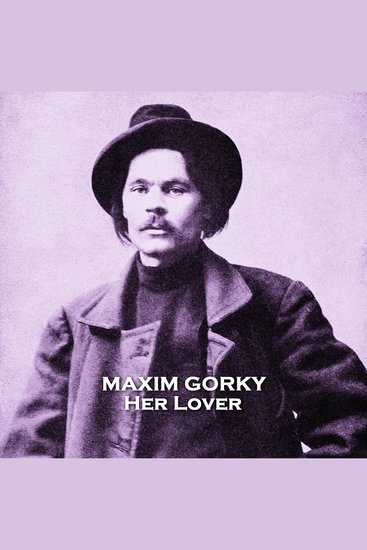
    Alexei Maximovich Peshkov was born on 28th March 1868, in Nizhny Novgorod, Russia. 
    Better known as Maxim Gorky he was orphaned at 11 and ran away from home at 12.  At 19 he had already attempted suicide and thereafter travelled, by foot, across the Russian Empire for 5 years. 
    His first book ‘Essays & Stories’ in 1898 was a sensation and so began a long career as an author of short stories, novels and plays.  Gorky saw writing as a moral and political act that would help to change the unjust world around him.  He was an ardent early advocate of the emerging Marxist movement and publicly opposed the Tsarist regime leading several times to his arrest.  
    In 1904 he began his own theatre but the censor banned every play and Gorky was forced to abandon the project. 
    But Gorky was a financially successful author, editor, and playwright and gave monies to political parties as well as for civil rights and social reform.  The brutal shooting of workers, which set in motion the Revolution of 1905, pushed Gorky more decisively toward radical solutions.  
    In 1906 he went to the United States to raise funds for the Bolsheviks. Those experiences including a scandal over travelling with his lover and not his wife deepened his contempt for the ‘bourgeois soul.’ 
    Gorky now moved to Capri in Italy, both for health reasons and to escape the increasingly repressive times in Russia.  
    An amnesty for the 300th anniversary of the Romanov dynasty saw him return to Russia in 1914. His politics remained close to the Bolshevik cause.  But soon, after the 1918 revolution, his essays referred to Lenin as a tyrant for his senseless arrests and repression.  He was soon appealing to the outside world for food aid after the catastrophic crop failure. 
    In October 1921 Gorky returned to Italy, now in Fascist hands, and settled in Sorrento until 1932.  His health worsened with the onset of tuberculosis. 
    He wrote several successful books there but now decided to find an understanding with the communist regime. Stalin invited him home and his return was hailed as a major propaganda victory.  He was decorated with the Order of Lenin, and a province, a park, and various streets re-named in his honour. 
    But he had his faults too.  In 1933, Gorky co-edited a book on the White Sea-Baltic Canal and denied even a single prisoner died during its construction, but thousands had. As well, knowing that some Nazis were homosexual, a phrase was attributed to him that said ‘exterminate all homosexuals and fascism will vanish’.  Although he was himself was quoting another he was decidedly homophobic. 
    With the increase of Stalinist repression in 1935 Gorky was placed under unannounced house arrest. 
    Maxim Gorky died on the 18th June 1936 from pneumonia.  He was 68. 
    Stalin and Molotov were among those who carried Gorky's urn of ashes at his funeral.
    Show book
  • The Flying Fish - cover

    The Flying Fish

    D H Lawrence

    • 0
    • 0
    • 0
    'The Flying Fish' is unfinished but tells the story of an Englishman, Gethin Day, returning home after years in South America. There is a hint of the home-sickness Lawrence may have felt during his long exile. The bulk of the story is the time spent on the ship which is taking Day back to England. It is a ship of fools, a 'plague ship' and the only positive note is the joy Day sees in the play of the flying fish and porpoises around the ship. It is tantalising to speculate how Day would have adapted to English life again, confined to an old house in an old country.
    Show book
  • Shades A Phantasy - Ukranian born Korolenko creates a fictional dialogue of Socrates to examine lifes biggest questions - cover

    Shades A Phantasy - Ukranian...

    Vladímir Korolenko

    • 0
    • 0
    • 0
    Vladimir Galaktionovich Korolenko was born in Zhytomyr, Ukraine, then part of the Russian Empire on 27th July 1853. 
     
    His father died when he was 13 and life was then often struck with bouts of poverty, which resulted in his education being somewhat erratic.   A spell in exile at 23 was followed by another as the politics of the times opposed his volatile but heart-felt passions. 
     
    Writing was also coming to the fore and in 1879 his debut short story telling of a young Narodnik searching for social and spiritual identity, was published. 
     
    In 1881, Korolenko refused to swear allegiance to the new Russian Tsar and was again exiled, this time much farther afield.  He spent the next three years doing manual work, but took time to study local customs and history.  These impressions in exile provided rich material for his writings. 
     
    In 1885 he was allowed to settle in Nizhny, where again he repeatedly questioned the authorities.  That same year ‘Makar's Dream’ established his literary reputation and was part of his first collection ‘Sketches and Stories’, the following year. 
     
    In the early 1890’s when famine struck Central Russia, he went to work on relief missions, collecting donations, supervising the delivery and distribution of food, opening 45 free canteens, all this while writing the graphic reports that would later be published as ‘In the Year of Famine’ in 1893. 
     
    By 1896 despite some psychological disorders, he was well regarded amongst Russian writers and was even a member of the Russian Academy of Sciences.  Throughout his writing career Korolenko was a staunch advocate of human rights, putting that sacred activity above what he called his 'part-time-writing'. 
     
    In the Revolutionary year of 1905, under his editorship, Russkoye Bogatstvo published the Manifest by the Petersburg Soviet of the Workers' deputies. Korolenko was now repeatedly harassed by the authorities, had his flat raided many times and materials confiscated. 
     
    As a lifetime opponent of Tsarism, he guardedly welcomed the Revolution of 1917.  Once the nature of Bolshevism was established, he soon started to criticize it. During the Russian Civil War that ensued, he condemned both the Red Terror and the White Terror.  
     
    Despite suffering from a progressive heart disorder, he collected food packages for children in famine-stricken Moscow and Petrograd as well as organised orphanages and shelters for the homeless.  
     
    Vladimir Korolenko died in Poltava, Ukraine, of the complications of pneumonia on 25th December 1921.  He was 68. 
     
    In this story Korolenko invokes the characters of Socrates and Elpidias who, after their deaths, involve themselves in a debate on God.  This is a tour-de-force of conception and execution.
    Show book

  • Angel in Disguise An - From their pens to your ears genius in every story - cover

    Angel in Disguise An - From...

    T S Arthur

    • 0
    • 0
    • 0
    The bookshelves of American literature are incredible collections that have gathered together centuries of very talented authors.  From this continent their fame spread and whilst among their number many are now forgotten or neglected their talents endure.  Among them is T S Arthur.
    Show book
  • Greats Abridged The - Robinson Crusoe - cover

    Greats Abridged The - Robinson...

    Daniel Defoe

    • 0
    • 0
    • 0
    Stranded on a deserted island after a violent shipwreck, Robinson Crusoe must face the wild alone. With nothing but his wits, faith, and unyielding determination, he builds a new life in an unforgiving wilderness. This abridged edition brings Daniel Defoe’s groundbreaking tale of survival and spiritual growth to modern audiences with crisp clarity and cinematic pacing. 
    Perfect for listeners of all ages, The Greats Abridged series distills timeless classics without losing their heart. Whether you’re rediscovering Crusoe’s adventures or hearing them for the first time, this edition captures the wonder, danger, and triumph of one of literature’s greatest journeys.
    Show book