Join us on a literary world trip!
Add this book to bookshelf
Grey
Write a new comment Default profile 50px
Grey
Subscribe to read the full book or read the first pages for free!
All characters reduced
WABI SABI GUIDE - A detailed guide in learning Japanese wisdom to understand the beauty of imperfection and find peace and perfection in a - cover

WABI SABI GUIDE - A detailed guide in learning Japanese wisdom to understand the beauty of imperfection and find peace and perfection in a

Mari Campbell

Publisher: BookRix

  • 0
  • 0
  • 0

Summary

In this thought-provoking book, you will discover the beauty and wisdom of the ancient Japanese philosophy of Wabi Sabi. Emphasizing the beauty of imperfection, simplicity, and naturalness, Wabi Sabi offers a powerful lens through which to view the world, fostering a deeper appreciation for the interconnectedness of all things. 
Through engaging insights, practical exercises, and inspiring examples, this book will guide you on a journey of self-discovery and cultural exploration, helping you cultivate a Wabi Sabi mindset for greater contentment, peace, and connection in your daily life. 
From the art of Kintsugi to the principles of Ikebana, you will explore the many ways that Wabi Sabi has influenced Japanese culture and aesthetics, and gain a deeper appreciation for the beauty of imperfection and transience in all things. 
Whether you are seeking greater mindfulness, a deeper connection with nature, or simply a new perspective on life, "Wabi Sabi: Finding Beauty in Imperfection and Simplicity" offers a powerful and inspiring approach to living a more meaningful and fulfilling life. 
 ORDER YOUR COPY NOW
Available since: 12/22/2023.
Print length: 32 pages.

Other books that might interest you

  • Psych2Go Presents: The Psychology of People - The Little Book of Psychology & What Makes You You - cover

    Psych2Go Presents: The...

    Thomas Kang

    • 0
    • 0
    • 0
    Finally understand why you do things differently from the rest! Psych2go created this guide to connect the history of human psychology with practical mental health therapy tools to help you thrive in your everyday life. 


    Discover things about yourself! With The Psychology of People, learn about the history of human psychology—and apply it to your own life. Understand your innate need to conform, the roots of your social anxiety, how to heal and grow emotionally—and so much more! 


    An empath's survival guide to psychology. Written by the creators of the popular YouTube channel, blog, and website Psych2go, The Psychology of People is one of the best mental wellness books that gives practical and applicable methods! From the ethics of experimental psychology to therapy techniques, The Psychology of People helps you develop empathy for yourself and others. 


    Inside, you'll find: 


    ● Your very own therapist on the go, packed with practical methods and experiments 


    ● How to understand and rewire your brain by discovering psychological-based patterns in yourself and others 


    ● One of the best books about psychology, the history of psychology, and the ethics of experimental science
    Show book
  • Psychic Empath - cover

    Psychic Empath

    Jim Colajuta

    • 0
    • 0
    • 0
    Empathy is the ability to emotionally understand what other people are going through, see things through their eyes, and put yourself in their shoes. Essentially, it is placing yourself in another person's shoes and experiencing what they are experiencing. When you witness someone suffering, you may be able to imagine yourself in their shoes and empathize with their situation. While most people are aware of their own sentiments and emotions, getting into another person's head can be more difficult. People who can empathize can "walk a mile in another's shoes," as it were. It enables people to comprehend the feelings of others.Watching another person suffering and reacting with apathy or even hate is unfathomable for many people. However, some people who respond this way plainly show empathy is not a universal response to others' pain. Empathy is thought to have crucial neurological components, according to research. The ability to mirror and duplicate the emotional responses that others would feel if they were in comparable conditions. While empathy can sometimes falter, most people can sympathize with others in many scenarios. This ability to perceive things from someone else's point of view and empathize with their feelings is crucial in our social lives. Empathy permits us to comprehend others and, in many cases, motivates us to act to alleviate another's suffering.
    Show book
  • History for Kids: Sacagawea and the Lewis & Clark Expedition - cover

    History for Kids: Sacagawea and...

    Editors Charles River

    • 0
    • 0
    • 0
    *Perfect for ages 7-10 
    In Charles River Editors’ History for Kids series, your children can learn about history’s most important people and events in an easy, entertaining, and educational way. Pictures help bring the story to life, and the concise but comprehensive book will keep your kid’s attention all the way to the end. 
    It is the most fabled and storied journey in American history. From 1804-1806, the first expedition across the North American continent was commissioned by President Thomas Jefferson, who had recently bought a vast swath of territory from France. Though he knew he had bought a huge amount of land, Jefferson wasn’t entirely sure of what he had bought, so he asked a team led by Meriwether Lewis and William Clark to traverse the continent until they reached the Pacific, studying everything from the ecology to geography along the way to get an understanding of the country’s new region. 
    Lewis and Clark would find far more than they bargained for. The 33 members who made the trip came into contact with about two dozen Native American tribes, many of whom helped the men survive the journey. Though they suffered deaths on their way west, the group ultimately reached the Pacific coast and got back to St. Louis in 1806, having drawn up nearly 150 maps and giving America a good idea of much of what lay west. 
    As a young woman who was married to a French trapper from Quebec, Sacagawea happened to be in the right place at the right time for the legendary Lewis and Clark expedition, which set off for the Pacific coast after President Thomas Jefferson negotiated the Louisiana Purchase with France. The young Shoshone girl acted as a guide and interpreter for the expedition, helping it safely travel thousands of miles west from North Dakota to the Pacific over unfamiliar ground and amongst unfamiliar peoples. Put simply, the expedition could not have succeeded without her.
    Show book
  • Spanish Empire in the Americas The: The History of Spain’s Colonization across Central America and South America - cover

    Spanish Empire in the Americas...

    Editors Charles River

    • 0
    • 0
    • 0
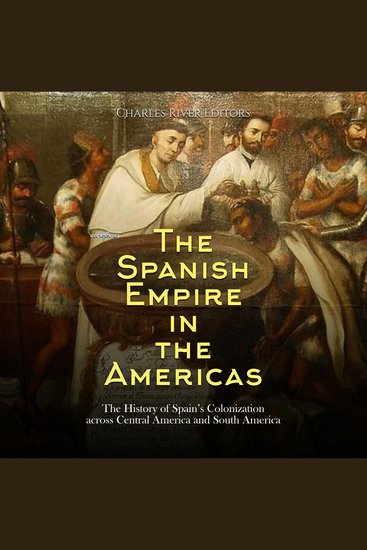
    By the time Christopher Columbus started setting east from the New World, he had explored San Salvador in the Bahamas (which he thought was Japan), Cuba (which he thought was China), and Hispaniola, the source of gold. As the common story goes, Columbus, en route back to Spain from his first journey, called in at Lisbon as a courtesy to brief the Portuguese King John II of his discovery of the New World. King John subsequently protested that according to the 1479 Treaty of Alcáçovas, which divided the Atlantic Ocean between Spanish and Portuguese spheres of influence, the newly discovered lands rightly belonged to Portugal. To make clear the point, a Portuguese fleet was authorized and dispatched west from the Tagus to lay claim to the “Indies,” which prompted a flurry of diplomatic activity in the court of Ferdinand and Isabella. At the time, Spain lacked the naval power to prevent Portugal from acting on this threat, and the result was the hugely influential 1494 Treaty of Tordesillas. 
    The Treaty of Tordesillas was one of the most important documents of its kind of the age, for it established the essential parameters of the two competing empires, the first of the major European imperial entities. The Treaty of Tordesillas drew an imaginary line from pole to pole, running 100 leagues west of the westernmost islands of the Azores. According to the terms of a supporting papal bull, all the lands to the west of that belonged to Spain, and all of those to the east belonged to Portugal. What this meant in practical terms was that Portugal was given Africa and the Indian Ocean while Spain was granted all the lands to the west, including the Americas and the Caribbean, all collectively known as the “Indies,” or the New World. 
    Perhaps inevitably, a regional rivalry had developed as the Portuguese began to establish a colony in Brazil and push its boundaries southwards. 
    Show book
  • The Antichrist - cover

    The Antichrist

    Friedrich Nietzsche

    • 0
    • 0
    • 0
    The Antichrist by Friedrich Nietzsche 
    What if everything you believed about morality, religion, and truth was built on a lie? 
    In The Antichrist, Friedrich Nietzsche unleashes a thunderous critique of Christianity and its moral foundations, challenging the pillars of Western thought with fiery precision. A cornerstone of his late philosophy, this work is both an assault on complacent belief systems and a bold declaration of the will to power, vitality, and individual greatness. 
    Nietzsche, a prophet of existentialism and iconoclasm, invites the listener to confront uncomfortable truths. Through razor-sharp aphorisms, he dissects the psychology of faith, the decay of values, and the rise of decadence disguised as virtue. In powerful passages, he exposes how pity can weaken the spirit, how priestly morality undermines life itself, and how the figure of Christ has been distorted into a symbol of weakness rather than strength. 
    Each chapter is a spark that ignites reflection, rebellion, or revelation—yet never leaves you indifferent. 
    More than a philosophical manifesto, The Antichrist remains a cultural lightning rod. Its bold vision continues to resonate in modern debates about freedom, authenticity, and the role of religion in human progress. For thinkers, seekers, and those who dare to question, this audiobook offers a direct channel to one of history’s most electrifying minds. 
    Narrated with the precision and poise of advanced AI voice technology, this edition ensures clarity, rhythm, and accessibility—ideal for absorbing Nietzsche’s provocative arguments while immersed in thought or motion. 
    Dare to confront the uncomfortable. Challenge the herd. Listen to The Antichrist and enter the mind of a philosopher who burned with the desire to awaken humanity from its moral slumber. 
    Experience it now—let the voice of Nietzsche echo through your mind.
    Show book
  • Empire of Purity - The History of Americans' Global War on Prostitution - cover

    Empire of Purity - The History...

    Eva Payne

    • 0
    • 0
    • 0
    Between the 1870s and 1930s, American social reformers, working closely with the US government, transformed sexual vice into an international political and humanitarian concern. As these activists worked to eradicate prostitution and trafficking, they promoted sexual self-control for both men and women as a cornerstone of civilization and a basis of American exceptionalism. Empire of Purity traces the history of these efforts, showing how the policing and penalization of sexuality was used to justify American interventions around the world. 


    Eva Payne describes how American reformers successfully pushed for international anti-trafficking agreements that mirrored US laws, calling for states to criminalize prostitution and restrict migration, and harming the very women they claimed to protect. She argues that Americans' ambitions to reshape global sexual morality and law advanced an ideology of racial hierarchy that viewed women of color, immigrants, and sexual minorities as dangerous vectors of disease. 


    Drawing on archives in Europe, the United States, and Latin America, Empire of Purity ties the war on sexual vice to American imperial ambitions and a politicization of sexuality that continues to govern both domestic and international policy today.
    Show book