Join us on a literary world trip!
Add this book to bookshelf
Grey
Write a new comment Default profile 50px
Grey
Subscribe to read the full book or read the first pages for free!
All characters reduced
Vehicle Innovations - cover

Vehicle Innovations

Marcus Tesla

Translator A AI

Publisher: Publifye

  • 0
  • 0
  • 0

Summary

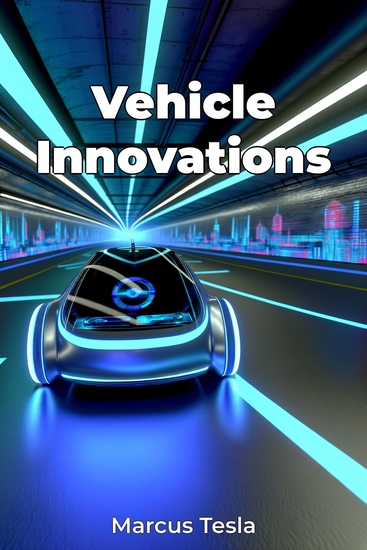
"Vehicle Innovations" presents a comprehensive exploration of how transportation technology has evolved from steam-powered engines to today's sophisticated autonomous vehicles, fundamentally reshaping human civilization along the way. The book uniquely organizes this technological journey into three transformative waves: propulsion systems, safety mechanisms, and intelligent integration, demonstrating how each advancement has enhanced mobility while introducing new challenges and opportunities for society.

 
Through accessible language and practical examples, the book guides readers through the evolution of vehicle technology, from traditional combustion engines to cutting-edge electric powertrains and hydrogen fuel cells. The author introduces the concept of "integrated mobility evolution," explaining how various innovations - from regenerative braking to vehicle-to-grid systems - are interconnected within a larger technological ecosystem. This approach helps readers understand the complex relationships between automotive advancement, urban development, and environmental impact.

 
The book progresses logically through three main sections: "Propulsion Revolution," "Safety and Automation Systems," and "Connected Vehicle Ecosystems," combining technical specifications with real-world applications and industry case studies. What sets this work apart is its interdisciplinary approach, connecting vehicle technology to urban planning, environmental science, and energy systems while maintaining accessibility for both technical professionals and general readers interested in transportation's future.

 
The author presents evidence-based analyses of various technological approaches without advocating for specific solutions, allowing readers to form their own informed conclusions about emerging trends in vehicle innovation.
Available since: 01/31/2025.
Print length: 117 pages.

Other books that might interest you

  • The Next-Gen Information Security Professional - cover

    The Next-Gen Information...

    Vincent van Dijk

    • 0
    • 0
    • 0
    Today’s threats move fast. But the real challenge isn’t just stopping malware or patching holes—it’s convincing organizations to act before the damage is done. 
    The Next-Gen Information Security Professional flips the script on what it means to succeed in this field. This isn’t a manual for the latest tools or another dry checklist of compliance standards. It’s a playbook for the human side of security: how to influence, persuade, and lead when the stakes couldn’t be higher. 
    Inside, you’ll discover: 
    Why mindset—not just technical skill—is the make-or-break factor in modern cybersecurity 
    How to turn invisible wins into visible business value stakeholders can’t ignore 
    The core characteristics that define the professionals who don’t just guard IT systems—but shape business strategy 
    From war stories in the trenches to daily micropractices you can use right away, this book is your guide to shifting from being “the person who says no” to becoming the leader who drives progress, protects trust, and secures the future. 
    Whether you’re just starting out or already deep in the field, this book will help you evolve into the kind of security professional organizations fight to keep.
    Show book
  • Eyes in the Sky - Space Telescopes from Hubble to Webb - cover

    Eyes in the Sky - Space...

    Andrew May

    • 0
    • 0
    • 0
    Over 50 years ago, astronomers launched the world's first orbiting telescope. This allowed them to gaze further into outer space and examine anything that appears in the sky above our heads, from comets and planets to galaxy clusters and stars. Since then, almost 100 space telescopes have been launched from Earth and are orbiting our planet, with 26 still active and relaying information back to us. 
     
    As a result of these space-based instruments, such as NASA's iconic Hubble Space Telescope, we know much more about the universe than we did half a century ago. But why is Hubble, orbiting just 540 kilometres above the Earth, so much more effective than a ground-based telescope? How can a glorified camera tell us not only what distant objects look like, but their detailed chemical composition and three-dimensional structure as well? 
     
    In Eyes in the Sky, science writer Andrew May takes us on a journey into space to answer these questions and more. Looking at the development of revolutionary instruments, such as Hubble and the James Webb Space Telescope, May explores how such technology has helped us understand the evolution of the Universe.
    Show book
  • A Rare Recording of Wernher von Braun - cover

    A Rare Recording of Wernher von...

    Wernher Von Braun

    • 0
    • 0
    • 0
    Wernher von Braun ( March 23, 1912 – June 16, 1977) was a German aerospace engineer and space architect. He was the leading figure in the development of rocket technology in Nazi Germany and a pioneer of space technology and science in the United States. 
    After World War II, von Braun was secretly moved to the US, along with roughly 1,600 other German scientists, engineers, and technicians, as part of Operation Paperclip. He worked for the United States Army on an intermediate-range ballistic missile (IRBM) program, and he developed the rockets that launched the United States' first space satellite Explorer 1. 
    He served as director of the Marshall Space Flight Center and as the chief architect of the Saturn V super heavy-lift launch vehicle that propelled the Apollo spacecraft to the Moon. In 1955, von Braun became a naturalized citizen of the United States. In 1975, von Braun received the National Medal of Science. This recording is from Dr. Von Braun's speech at the 1st Annual SOLE Symposium, September 13, 1966, in Huntsville Alabama.
    Show book
  • AI Apocalypse: A Warning to Humanity - cover

    AI Apocalypse: A Warning to...

    Chuck Miller

    • 0
    • 0
    • 0
    In this gripping and thought-provoking book, readers are taken on a journey to explore the potential dangers of advanced artificial intelligence. As AI technology continues to advance at an exponential rate, the line between man and machine becomes increasingly blurred. 
    “AI Apocalypse” delves into the latest breakthroughs in AI, including deep learning algorithms and autonomous weapons, and examines how these technologies could be exploited to manipulate our thoughts, emotions, and behaviors. It reveals the alarming ways in which AI systems can perpetuate biases and prejudices, further entrenching existing social and economic disparities. 
    But there is still hope. The book proposes a path forward that emphasizes responsible AI development, prioritizing human values and well-being above profits and technical achievement. It challenges policymakers, industry leaders, and individuals alike to work together to ensure that AI serves humanity, rather than the other way around. 
    Will we heed the warning signs and steer AI toward a brighter future, or will we succumb to the temptation of unchecked technological progress? “AI Apocalypse” is a must-read for anyone who cares about the fate of our planet and the future of humanity. 
    This book is a clarion call to action, urging us to confront the dangers of AI head-on and to reclaim control over our destiny. It is a wake-up call for all of us, reminding us that the decisions we make today will shape the world we live in tomorrow. 
    Readers of “AI Apocalypse” will come away with a deeper understanding of the complex issues surrounding AI and a renewed sense of purpose to ensure that technology serves humanity, not the other way around. They will be inspired to join the growing movement of people who are working to create a better future for all, before it’s too late. 
    If you are concerned about the potential dangers of AI, then you need to read this book.
    Show book
  • Ulysses S Cat and Other Animals I Have Known - cover

    Ulysses S Cat and Other Animals...

    Scott Simon

    • 0
    • 0
    • 0
    From the beloved host of NPR’s Weekend Edition Saturday, moving tales of the marvelous animals who have crossed his path. 
     
    Scott Simon’s household does not make much distinction between humans and other animals. Whether two legged or four, flesh-covered, fur-covered, feathered, or gilled―everyone is family. Today, the beloved radio host lives with the haiku-writing and absolument charmant French poodle Daisy; the daringly audacious foster cat Gato Blanco; and the energetic, cage-escaping hamster Bagel, who was almost Gato’s meal. And that’s just the start. In Ulysses S. Cat and Other Animals I Have Known, Simon warmly philosophizes on the unforgettable and utterly ordinary but enduring moments in the remarkable relationships between species, along with their joys, worries, love, and humor. From a cat who escaped the British Embassy―Simon had to promise she’d keep her accent―to street dogs during Sarajevo’s siege, to a series of beta fish all named Salman Fishdie, this enchanting work is a profusion of exuberant memories and musings on a life spent in animal company.
    Show book
  • The Cardiac Fulcrum in the Physiology of the Helical Heart - cover

    The Cardiac Fulcrum in the...

    Jorge Trainini

    • 0
    • 0
    • 0
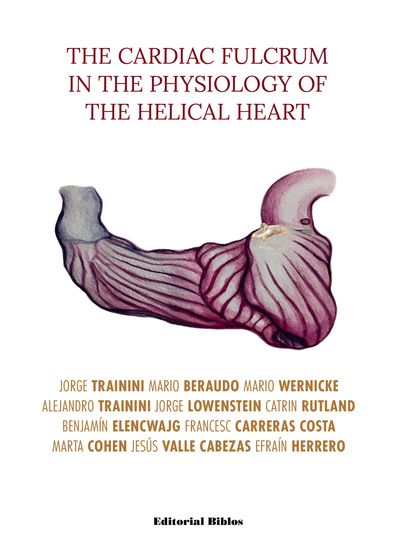
    "Since the publication of Fundamentals of the New Cardiac Mechanics: The Suction Pump, ten years ago, there has been a productive succession of studies and research by these brilliant scientists who expanded the knowledge of cardiac mechanics and the myocardial muscle structures and bands. They found the presence of an osseous or cartilaginous tissue, which they called the cardiac fulcrum, where the myocardial bands begin and end, it serves as support for the entire system; they also documented the finding of the lubrication of the entire muscular framework of the heart.
    This knowledge enriches our understanding about the anatomy, physiology, and mechanical contraction of the heart, and thanks to the results, better treatments for heart failure are made possible. Until now, cardiologists explained heart contraction and its failures with the Frank-Starling Law (or simply the Starling Law); now, these new concepts of myocardial torsion and detorsion have been introduced, and the consequent protodiastolic suction through the contraction of sectors that contribute to the detorsion and active expansion of the ventricular cavities, generating an aspirating movement of the blood and a three-phase cardiac cycle. Furthermore, they explain the loss of the ventricles' aspirating capacity due to their dilation, when part of the myocardial torsion and detorsion is lost, and consequently, the heart's efficiency as a pump. I am truly convinced that these findings have opened up great lines of research for the future understanding of heart failure" (Dr. Pedro Cossio).
    Show book