Join us on a literary world trip!
Add this book to bookshelf
Grey
Write a new comment Default profile 50px
Grey
Subscribe to read the full book or read the first pages for free!
All characters reduced
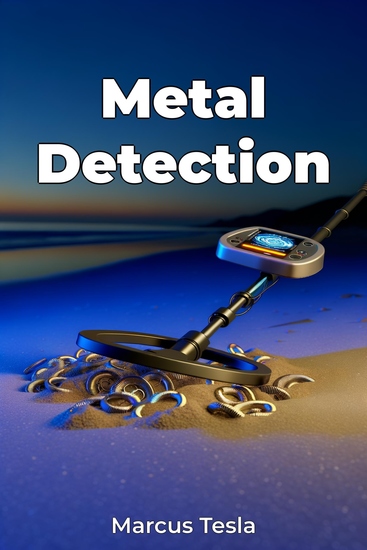
Metal Detection - cover

Metal Detection

Marcus Tesla

Publisher: Publifye

  • 0
  • 0
  • 0

Summary

"Metal Detection" offers a comprehensive exploration of how metal detectors work and their diverse applications in modern society, from airport security to archaeological discoveries. The book masterfully bridges theoretical concepts with practical applications, beginning with fundamental electromagnetic principles and progressing through three primary detection methods: Very Low Frequency (VLF), Pulse Induction (PI), and Beat-Frequency Oscillation (BFO).

 
Through accessible explanations and real-world examples, readers learn how these devices distinguish between different metals, depths, and sizes across various environments. The text weaves together fascinating historical context, including Alexander Graham Bell's pioneering work in metal detection, with cutting-edge developments in quantum sensing and artificial intelligence-enhanced systems.

 
Technical concepts are made approachable through practical tutorials, detailed diagrams, and hands-on experiments that readers can perform. Special attention is given to environmental factors affecting detector performance, such as mineralization and electromagnetic interference, providing crucial insights for both professionals and hobbyists.

 
The book systematically covers applications across multiple industries, from manufacturing quality control to treasure hunting, while maintaining a balanced approach between technical depth and practical utility. Each chapter builds upon previous knowledge, culminating in advanced topics like superconducting quantum interference devices (SQUIDs) and machine learning applications. This progression, combined with thorough coverage of safety considerations and environmental impact, makes it an invaluable resource for everyone from electronics enthusiasts to security professionals.
Available since: 01/04/2025.
Print length: 117 pages.

Other books that might interest you

  • Roman Medicine and Science - Advances of Ancient Civilization - cover

    Roman Medicine and Science -...

    Rogan Fish

    • 0
    • 0
    • 0
    Roman medicine was a blend of practical knowledge, religious beliefs, and influences from earlier civilizations, particularly the Greeks and Etruscans. While early Roman healing methods were deeply rooted in superstition, the expansion of the empire led to the adoption of more systematic medical practices. Over time, Roman medicine evolved into a structured system that combined natural remedies, surgical techniques, and public health initiatives. 
    Greek influence played a significant role in shaping Roman medical knowledge. Before Rome conquered Greece, healing in the Roman Republic was often associated with household remedies and religious rituals. However, as Greek physicians such as Archagathus and later Galen entered Rome, their advanced knowledge in anatomy, surgery, and pharmacology became widely accepted. Many Roman physicians were either trained by Greek mentors or studied Greek medical texts. Hippocratic principles, which emphasized observation and diagnosis, became foundational in Roman medical education. 
    Despite the growing reliance on scientific methods, religion and superstition remained integral to Roman healing practices. The Romans believed that diseases could be divine punishments or warnings from the gods. Temples dedicated to deities like Aesculapius, the god of medicine, served as healing centers where the sick sought divine intervention. Priests and healers performed rituals and sacrifices to appease the gods and cure ailments. Additionally, charms, amulets, and incantations were commonly used to ward off illness. Even as medical science progressed, many Romans continued to rely on religious customs for healing.
    Show book
  • Earth: Over 4 Billion Years in the Making - cover

    Earth: Over 4 Billion Years in...

    Chris Packham, Andrew Cohen

    • 0
    • 0
    • 0
    ‘Combines the natural history of programmes such as David Attenborough’s Planet Earth with the planetary focus of Brian Cox’s Universe’ Guardian 
    A beautiful, full colour book to accompany the 5 part BBC TV series telling the most important story of all, the deep history of our own planet. 
    With the trademark dramatic storytelling techniques of The Planets and The Universe, Andrew Cohen and Chris Packham narrate the biography of the Earth, revealing the most epic moments from its history, from the first seconds of its existence to the arrival of its most incredible inhabitants, us. 
    But humans take a back seat for this story as the Earth takes centre stage. We’ll witness those moments where our planet’s future hung in the balance in the face of massive bombardments from space, extreme changes in climate, the collision of whole continents and more, and we’ll tell the story of how Earth’s most incredible creations – life and intelligence – are set to have the same lasting impact on Earth’s story as any meteorite or earthquake. 
    This is the epic 4 billion year story of the place we call home. 
    Chris Packham's EARTH is a top-tier exploration of the evolution of our planet. This latest contribution to the science genre offers a new perspective, placing Earth and its history at the centre of the narrative. 
    For fans of Andrew H. Knoll (A Brief History of Earth), John Muir Laws (The Laws Field Guide to Sierra Birds), Hamza Yassin (Be a Birder), Isabella Tree (Wilding), and Alice Roberts (The Incredible Unlikeliness of Being). 
    HarperCollins 2023
    Show book
  • Bioinformatics Guide - A Comprehensive Guide to Bioinformatics Techniques and Tools - cover

    Bioinformatics Guide - A...

    James Ferry

    • 0
    • 0
    • 0
    "Bioinformatics Guide: A Comprehensive Guide to Bioinformatics Techniques and Tools" is an indispensable resource for students, researchers, and professionals eager to master the rapidly evolving field of bioinformatics. This guide offers an in-depth exploration of the fundamental techniques and cutting-edge tools that are transforming how we analyze and interpret complex biological data. 
    Starting with the basics, the book covers essential concepts in molecular biology, including the central dogma and the structure and function of DNA, RNA, and proteins. It then delves into advanced topics such as genomics, transcriptomics, proteomics, and metabolomics, providing a thorough understanding of these critical areas. 
    Readers will gain valuable insights into sequencing technologies, from traditional Sanger sequencing to the latest advancements in next-generation and third-generation sequencing. The book discusses the advantages and limitations of various sequencing platforms and their applications in research and medicine. 
    The guide also addresses genome assembly and annotation, detailing the algorithms and strategies used to assemble genomes and predict genes, functional elements, and regulatory regions. It explores sequence alignment and homology searching, explaining the algorithms behind these processes and their applications in evolutionary studies. 
    In the realm of structural bioinformatics, readers will learn about protein structure prediction methods, molecular visualization tools, and the resources available in protein structure databases. The book further covers phylogenetics and evolutionary analysis, including methods for constructing phylogenetic trees and the molecular clock hypothesis.
    Show book
  • Breaking the Medicine Monopolies - Reflections of a Generic Drug Pioneer - cover

    Breaking the Medicine Monopolies...

    Alfred Engelberg

    • 0
    • 0
    • 0
    Breaking the Medicine Monopolies is a lawyer's personal narrative of the events that led to the widespread use of low-cost generic drugs and the current drug price crisis. 


    Breaking the Medicine Monopolies is a personal narrative about Alfred Engelberg's fifty years of legal work in the drug industry. He takes you inside the mysterious world of patents to provide a basic understanding of how drug makers have gamed the laws governing brand and generic competition, misused patents to prolong monopolies, and delayed generic competition on old drugs instead of focusing on discovering new ones. In this book, Engelberg provides listeners with an understanding of how the growing use of low-cost generic drugs led to the highest prices in the world for new drugs, and how middlemen in the drug distribution chain have exploited a lack of price transparency in order to earn excessive profits. Breaking the Medicine Monopolies is a must-listen for anyone who wants to understand how ill-considered policy decisions and an inept patent system led to unaffordable prices for new drugs, and what can be done to correct the problem.
    Show book
  • Dark and Magical Places - The Neuroscience of Navigation - cover

    Dark and Magical Places - The...

    Christopher Kemp

    • 0
    • 0
    • 0
    Inside our heads we carry around an infinite and endlessly unfolding map of the world. Navigation is one of the most ancient neural abilities we have—older than language. In Dark and Magical Places, Christopher Kemp embarks on a journey to discover the remarkable extent of what our minds can do. 


    Fueled by his own spatial shortcomings, Kemp describes the brain regions that orient us in space and the specialized neurons that do it. Place cells. Grid cells. He examines how the brain plans routes, recognizes landmarks, and makes sure we leave a room through a door instead of trying to leave through a painting. From the secrets of supernavigators like the indigenous hunters of the Bolivian rainforest to the confusing environments inhabited by people with place blindness, Kemp charts the myriad ways in which we find our way and explains the cutting-edge neuroscience behind them. 


    How did Neanderthals navigate? Why do even seasoned hikers stray from the trail? What spatial skills do we inherit from our parents? How can smartphones and our reliance on GPS devices impact our brains? In engaging, engrossing language, Kemp unravels the mysteries of navigating and links the brain's complex functions to the effects that diseases like Alzheimer's, types of amnesia, and traumatic brain injuries have on our perception of the world around us.
    Show book
  • LLMs and Generative AI for Healthcare - The Next Frontier - cover

    LLMs and Generative AI for...

    Manish Mathur, Kerrie Holley

    • 0
    • 0
    • 0
    Large language models (LLMs) and generative AI are rapidly changing the healthcare industry. These technologies have the potential to revolutionize healthcare by improving the efficiency, accuracy, and personalization of care. This practical book shows healthcare leaders, researchers, data scientists, and AI engineers the potential of LLMs and generative AI today and in the future, using storytelling and illustrative use cases in healthcare. 


    Authors Kerrie Holley and Manish Mathur, former Google healthcare professionals, guide you through the transformative potential of large language models (LLMs) and generative AI in healthcare. From personalized patient care and clinical decision support to drug discovery and public health applications, this comprehensive exploration covers real-world uses and future possibilities of LLMs and generative AI in healthcare. 


    With this book, you will: understand the promise and challenges of LLMs in healthcare; learn the inner workings of LLMs and generative AI; explore automation of healthcare use cases for improved operations and patient care using LLMs; dive into patient experiences and clinical decision-making using generative AI; review future applications in pharmaceutical R&D, public health, and genomics; and understand ethical considerations and responsible development of LLMs in healthcare.
    Show book