Join us on a literary world trip!
Add this book to bookshelf
Grey
Write a new comment Default profile 50px
Grey
Subscribe to read the full book or read the first pages for free!
All characters reduced
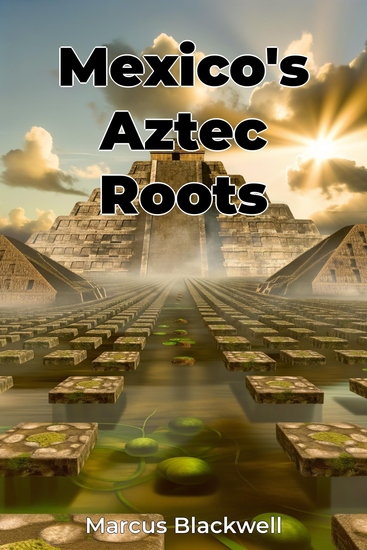
Mexico's Aztec Roots - cover

Mexico's Aztec Roots

Marcus Blackwell

Publisher: Publifye

  • 0
  • 0
  • 0

Summary

"Mexico's Aztec Roots" explores the fascinating transformation of Mexican society from the height of the Aztec Empire through the colonial period, revealing how the collision of two distinct worlds created modern Mexico's unique cultural identity. The book masterfully weaves together archaeological evidence, colonial documents, and indigenous records to present a comprehensive view of this crucial historical period.

 
Through careful examination of recent discoveries at the Templo Mayor site, readers gain unprecedented insights into daily life in Tenochtitlan, from its sophisticated urban planning to its complex market systems and religious ceremonies. The narrative progresses through three major phases, beginning with a detailed examination of pre-Columbian Aztec civilization, challenging simplified historical accounts with evidence of their advanced diplomatic and educational systems.

 
Moving beyond traditional conquest narratives, the book explores the nuanced role of indigenous allies and political dynamics in the Spanish conquest, before delving into the emergence of mestizo culture. Throughout each section, the author draws upon multidisciplinary sources, including linguistics, anthropology, and archaeology, to provide a well-rounded understanding of Mexico's cultural evolution.

 
What sets this work apart is its balanced approach to examining cultural transformation, using regional case studies to demonstrate how indigenous communities maintained their identity while adapting to new systems. The book's accessible academic style makes complex historical processes understandable for both scholars and general readers, while its integration of recent archaeological findings and revised interpretations of historical documents offers fresh perspectives on Mexico's rich cultural heritage.
Available since: 01/08/2025.
Print length: 96 pages.

Other books that might interest you

  • Hindu Mythology Simplified - Vishnu Shiva and the Great Epics of India - cover

    Hindu Mythology Simplified -...

    Johnny Nelson

    • 0
    • 0
    • 0
    Embark on an enlightening journey through the rich tapestry of Hindu mythology with Hindu Mythology Simplified: Vishnu, Shiva, and the Great Epics of India. This comprehensive guide demystifies the complex narratives and profound philosophies that have shaped Indian culture for millennia, making them accessible to modern listeners seeking spiritual insight and cultural understanding. 
    Delve into the captivating tales of Vishnu, the preserver of the universe, known for his ten avatars including Rama and Krishna, each embodying virtues and lessons relevant to contemporary life. Explore the enigmatic persona of Shiva, the destroyer and transformer, whose cosmic dance symbolizes the cycles of creation and destruction inherent in existence. 
    The audiobook also provides a lucid overview of the Mahabharata and the Ramayana, two monumental epics that are not only literary masterpieces but also repositories of moral and ethical guidance. Through engaging storytelling and thoughtful analysis, listeners will gain a deeper appreciation of the characters, themes, and teachings that continue to influence millions around the world. 
    Whether you're a student of religion, a lover of mythology, or someone curious about the spiritual traditions of India, this audiobook offers a balanced blend of narrative and interpretation. It serves as an ideal starting point for those new to Hindu mythology and a valuable refresher for seasoned enthusiasts. 
    With clear explanations and relatable insights, Hindu Mythology Simplified bridges the gap between ancient wisdom and contemporary relevance, inviting listeners to reflect on timeless truths and their application in today's world. 
    Perfect for anyone interested in world religions, comparative mythology, or the philosophical underpinnings of Eastern traditions, this audiobook is a gateway to understanding the enduring legacy of Hindu myths and their profound impact on human thought and culture.
    Show book
  • Healing Way The: A Path to Recovery After Abuse - cover

    Healing Way The: A Path to...

    Lillie Mae Henley

    • 0
    • 0
    • 0
    In The Healing Way I share with you my journey through a life burdened by abuse. My hope is that my journey and all that I learned will be a catalyst for your own growth. If you are read¬ing this, I know you have the desire to live without the pain of abuse. You have the same desire to live a healthy life that everyone has. I also know you have more courage within than you think. And somehow the courage will give you the ability to take the risks necessary to change your life. By sharing my journey and all the things I learned, I want to bring you hope. Hope that you can recover from abuse and live a healthy, functional life. In this book, I write about behaviors and attitudes which will help you become a better person. I am not writing about being a good person. Nor am I saying you will become a person who meets others’ expecta¬tions. Becoming a better person means to me, and I hope it begins to mean to you:a person who is willing to learn new behaviors, become more self-aware, and see other perspectives of the pain deep within. The Healing Way talks about the complexities and dynamics of abuse. The behaviors and practices to learn to become a health¬ier person. Specific steps for healing and simple, human knowledge which we rarely learn from parents, teachers, or peers. I had to author this book, because I have experienced and seen the pain abuse brings to individ¬uals, our culture, and our world. From my heart, I hope The Healing Way will help you live a more fulfilling life. Rev. Lillie Henley
    Show book
  • Frontier Wars and the New Zealand Wars The: The History of the British Empire’s Conflicts against Indigenous Groups in Australia and New Zealand - cover

    Frontier Wars and the New...

    Editors Charles River

    • 0
    • 0
    • 0
    Inevitably, as the British settled in Australia and New Zealand, they entered into conflicts with the indigenous people, and they would learn quite quickly that the Māori were quite bellicose. As such, the New Zealand Wars would last over 30 years.  
    	The history of the indigenous inhabitants of Australia, known in contemporary anthropology as the “Aboriginal and Torres Strait Islander people of Australia,” is a complex and continually evolving field of study, and it has been colored by politics. For generations after the arrival of whites in Australia, the Aboriginal people were disregarded and marginalized, largely because they offered little in the way of a labor resource, and they occupied land required for European settlement.  
    	At the same time, it is a misconception that indigenous Australians meekly accepted the invasion of their country by the British, for they did not. They certainly resisted, but as far as colonial wars during that era went, the frontier conflicts of Australia did not warrant a great deal of attention. Indigenous Australians were hardly a warlike people, and without central organization, or political cohesion beyond scattered family groups, they succumbed to the orchestrated advance of white settlement with passionate, but futile resistance. In many instances, aggressive clashes between the two groups simply gave the white colonists reasonable cause to inflict a style of genocide on the Aborigines that stood in the way of progress. In any case, their fate had largely been sealed by the first European sneeze in the Terra Australis, which preceded the importation of the two signature mediums of social destruction. The first was a collection of alien diseases, chief among smallpox, but also cholera, influenza, measles, tuberculosis, syphilis and the common cold. 
    Show book
  • Fight for Free Speech The: Rock Icon Dee Snider Addresses a 1985 US Senate Hearing On Music Content Labeling - cover

    Fight for Free Speech The: Rock...

    Dee Snider

    • 0
    • 0
    • 0
    On September 19, 1985, a US Senate hearing was instigated by the Parents Music Resource Center (PMRC)--founded by Tipper Gore, wife of Senator and later Vice President Al Gore; and Susan Baker, wife of Treasury Secretary James Baker--who wanted to introduce a parental warning system that would label all music albums containing alleged offensive material. The system was to include letters identifying the type of objectionable content to be found in each album (O for occult themes, S for sex, D for drugs, V for violence, etc.).


    Dee Snider, lead singer and primary songwriter for the rock band Twisted Sister, John Denver, and Frank Zappa all testified against censorship and the proposed warning system. Such a system was never implemented, but the result of the hearing brought about what was known as the "Parental Advisory: Explicit Content" label.
    Show book
  • The Art of Speaking to Someone Dark Psychology - cover

    The Art of Speaking to Someone...

    JOSEPH ALLEN

    • 0
    • 0
    • 0
    In The Art of Speaking to Someone: Dark Psychology, you’ll discover the hidden techniques behind effective communication, persuasion, and influence. This audiobook explores the principles of dark psychology, teaching you how to build rapport, read body language, and ethically influence others. Whether you’re negotiating a deal, leading a team, or simply trying to get your point across, this guide will transform the way you communicate
    Show book
  • Higher Education Research – What Else? - The Story of a LifetimeIn Conversations with Anna Kosmützky and Christiane Rittgerott - cover

    Higher Education Research – What...

    Ulrich Teichler

    • 0
    • 0
    • 0
    Der Begründer der Hochschulforschung in Deutschland, Ulrich Teichler, blickt auf mehr als fünf Jahrzehnte Hochschulforschung zurück. Wirtschaftswunder und Hochschulexpansion, studentische Bewegung, Experimente und Krisen der 1970er Jahre, Organisationsruhe, Wiedervereinigung, Internationalisierung, Ranking- und Management-Kult – all dies sind historische Stationen, die sich in Hochschule und Wissenschaft widerspiegeln. Ulrich Teichler berichtet als unmittelbar Beteiligter mit Offenheit und Humor und liefert zugleich kluge Analysen.
    Show book