Unisciti a noi in un viaggio nel mondo dei libri!
Aggiungi questo libro allo scaffale
Grey
Scrivi un nuovo commento Default profile 50px
Grey
Iscriviti per leggere l'intero libro o leggi le prime pagine gratuitamente!
All characters reduced
Grand Events In History - cover

Grand Events In History

Marcus Blackwell

Traduttore A AI

Casa editrice: Publifye

  • 0
  • 0
  • 0

Sinossi

"Grand Events in History" explores how monumental historical events shape the lives of ordinary people across the globe, focusing on the rise and fall of empires, technological revolutions, and global conflicts. This engaging book argues that seemingly distant historical occurrences have profound and lasting impacts on individuals and societies worldwide, often in unexpected ways. By examining these interconnected themes, readers gain insight into the forces that have shaped our modern world and the patterns that may influence our future.

 
The book's unique approach lies in its global perspective and emphasis on the interconnectedness of events across time and space. It draws on a wide range of primary and secondary sources, including official documents, personal accounts, and cutting-edge research from fields such as data science and network analysis. This interdisciplinary approach provides a holistic view of human history, exploring how historical events influence social structures, economic systems, and collective psychology.

 
Structured into three main sections, "Grand Events in History" progresses from ancient civilizations to modern superpowers, examines technological innovations from the printing press to the internet, and analyzes global conflicts and their far-reaching consequences. Written in an accessible yet scholarly tone, the book balances academic rigor with engaging storytelling, making it appealing to a broad audience seeking to understand long-term trends and their implications in our interconnected world.
Disponibile da: 14/10/2024.
Lunghezza di stampa: 228 pagine.

Altri libri che potrebbero interessarti

  • State of the Union 1988 - cover

    State of the Union 1988

    Ronald Reagan

    • 0
    • 0
    • 0
    The 1988 State of the Union Address delivered January 25, 1988, extols individual rights, the free market, and the value of work, family, and religion, resulting in “the longest peacetime expansion in history”. Reagan stresses unity and common goals, saying there are no Republicans, no Democrats -- just Americans. 
    “We’re for limited government…”, free trade, a balanced budget, and the line-item veto. “[C]ontrol of our schools belongs to the States, local communities and, most of all, to the parents and teachers.” 
     “My friends, some years ago, the Federal Government declared war on poverty, and poverty won.” Our 59 major poverty programs have created a dependency trap that wreaks havoc on the family, the support system most needed to escape poverty. 
    We support a drug-free America, an end to federal funding of abortion, and “believe Congress should pass our school prayer amendment.” 
    “A creative, competitive America is the answer to a changing world, not trade wars that would close doors, create greater barriers, and destroy millions of jobs. … Protectionism is destructionism. America's jobs, America's growth, America's future depend on trade -- trade that is free, open, and fair.” 
    “We must … make adequate, stable defense spending a top goal both this year and in the future.” Our “efforts are to give future generations what we never had -- a future free of nuclear terror. Reduction of strategic offensive arms is one step, SDI another. Our funding request for our Strategic Defense Initiative is less than 2 percent of the total defense budget. SDI funding is money wisely appropriated and money well spent.”  
    We thank God for “this place called America, this shining city on a hill, this government of, by, and for the people. Thank you, and God bless you.” 
    Audio recording courtesy of the Ronald Reagan Presidential Library. 
    AspenLeafMedia.com
    Mostra libro
  • Race Rights and Rifles - The Origins of the NRA and Contemporary Gun Culture - cover

    Race Rights and Rifles - The...

    Alexandra Filindra

    • 0
    • 0
    • 0
    An eye-opening examination of the ties between American gun culture and white male supremacy from the American Revolution to today. 


    One-third of American adults—approximately 86 million people—own firearms. This is not just for protection or hunting. Although many associate gun-centric ideology with individualist and libertarian traditions in American political culture, Race, Rights, and Rifles shows that it rests on an equally old but different foundation. Instead, Alexandra Frilindra shows that American gun culture can be traced back to the American Revolution when republican notions of civic duty were fused with a belief in white male supremacy and a commitment to maintaining racial and gender hierarchies. 


    Drawing on wide-ranging historical and contemporary evidence, Race, Rights, and Rifles traces how this ideology emerged during the Revolution and became embedded in America's institutions, from state militias to the National Rifle Association (NRA). Utilizing original survey data, Filindra reveals how many white Americans—including those outside of the NRA's direct orbit—embrace these beliefs, and as a result, they are more likely than other Americans to value gun rights over voting rights, embrace antidemocratic norms, and justify political violence.
    Mostra libro
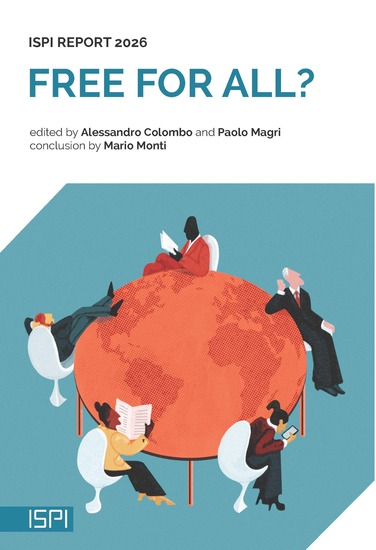
  • Free for All? ISPI Report 2026 - cover

    Free for All? ISPI Report 2026

    Alessandro Colombo, Paolo Magri

    • 0
    • 0
    • 0
    The ISPI Report 2026 portrays a world of "anything goes": a world that seems to have lost its brakes, its rules, and its compass. Donald Trump's return to the White House has accelerated the deregulation of global coexistence, at a time when the post-Cold War order is crumbling without any credible alternative taking shape. In this context, the likelihood of major conflicts is rising, diplomacy is often understood as coercion, alliances have become more fluid, and multilateral institutions are increasingly weakened.
    From the arms race to the climate crisis, from the fragmentation of trade to technological competition, this Annual Report provides an essential lens for understanding why freedom without rules risks turning into permanent disorder.
    Mostra libro
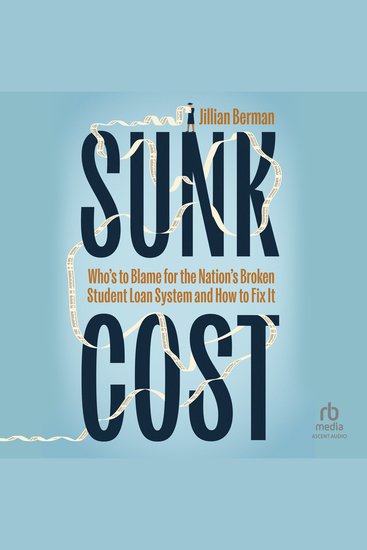
  • Sunk Cost - Who's to Blame for the Nation’s Broken Student Loan System and How to Fix It - cover

    Sunk Cost - Who's to Blame for...

    Jillian Berman

    • 0
    • 0
    • 0
    Student-loan horror stories are a dime a dozen. But students today are faced with a seemingly insurmountable paradox: Research consistently shows that the clearest viable option to financial stability is a college degree. But if and when Americans decide to pursue diplomas, student loan payments quickly follow, and even after securing full-time employment, many borrowers struggle to make ends meet for years. In Sunk Cost, journalist Jillian Berman explores how the nation's student loan program went from a well-intentioned initiative aimed at helping low- and middle-income students afford college to one that traps borrowers in long-term debt. 


    Berman interviewed dozens of borrowers and policymakers and dug into the archives to unearth the true causes of the student loan problem. A couple of generations ago, policy makers generously subsidized Americans' college educations because they knew it would be advantageous for the entire country: a more educated population meant better quality of life for all. But today, higher education is viewed as an individual goal, so students and their families are expected to be on the hook for it themselves. Berman explains how this enormous shift happened, which industries benefit from it, and what it means for college-going Americans today.
    Mostra libro
  • What is Art? - cover

    What is Art?

    Leo Tolstoy

    • 0
    • 0
    • 0
    "Art is not a handicraft, it is the transmission of feeling the artist has experienced."
    
    This essay, first published in English in 1898, challenges the notion that art's value lies solely in beauty or technical skill. Tolstoy redefines art as a moral and emotional force, and argues that true art is the sincere communication of feeling from artist to audience, fostering positive emotions and societal unity, and rejecting the notion that art can be morally corrupting. He argues that the essence of art lies in its ability to convey emotional truth and urges his audience to re-evaluate how art is perceived and practised in society.
    Leo Tolstoy (1828–1910) was a Russian novelist, philosopher, and social reformer, widely regarded as one of the greatest writers of all time. He is best known for his epic novels War and Peace and Anna Karenina, both celebrated for their intricate character development and profound exploration of moral dilemmas and human nature. In his later years, Tolstoy experienced a spiritual awakening which led him to reject materialism and embrace a life of simplicity, seeking to align his life with his beliefs about non-violence and compassion. Tolstoy's legacy endures not only through his literary masterpieces but also through his profound impact on literature and philosophy.
    Mostra libro
  • The End of America? - A Guide to the New World Disorder - cover

    The End of America? - A Guide to...

    Allan Friedman

    • 0
    • 1
    • 0
    America was the shining city on a hill. It was the country at the forefront of the world democratic order, the global policeman, the might of its military matched only by the depth of its financial reserves. America was the one the world listened to, whether it wanted to or not. So, what happened?
    Well, a lot of things. In this searing account, Alan Friedman shows how, from the disastrous Vietnam War to Barack Obama's bungled response to the Arab Spring, American intervention has ceased to be the decisive action it once was. And now, with the rise of China and Russia, coupled with America's prostration of itself following the election of Donald Trump, the decline of its authority is only hastening.
    We move now, Friedman argues, into the New World Disorder. In this dangerous and unstable world, the Washington-enforced liberal order is receding, and a new set of alliances and anxieties are in ascendence. What is America's place in this? Which powers are going to emerge as the leaders? Will the European Union count at all? One thing is for sure: the effects of the New World Disorder will challenge our Western values to breaking point.
    Mostra libro